



YANKTON, S.D. -- It's been more than 35 years since the Rev. Thomas Wordekemper first visited Yankton. His first glimpse of the city remains etched in his memory.
As a high school senior, he drove with his parents from their home in West Point, Neb., to visit Mount Marty College. As they approached Yankton from the south, something in the distance caught his eye.
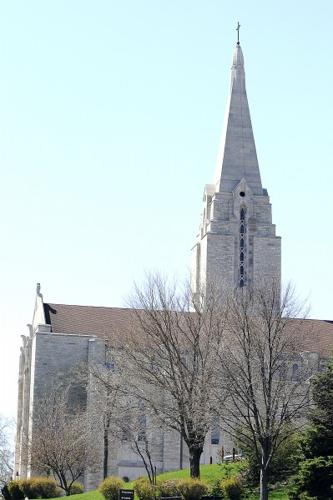
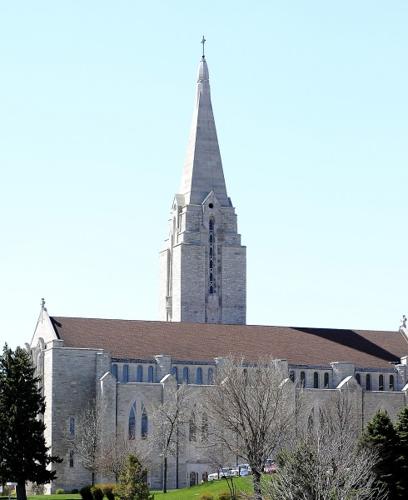
"I remember coming up Highway 81. Seeing that steeple rising above the horizon was a very moving experience," Wordekemper said.
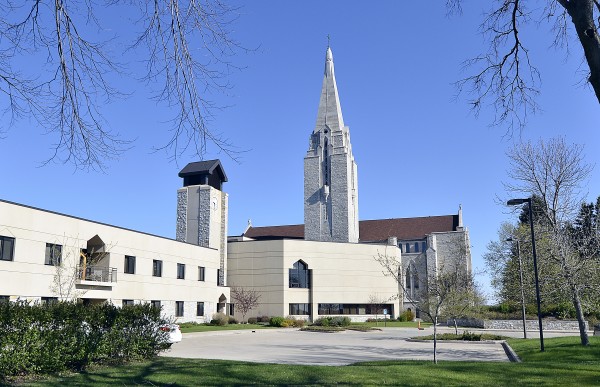
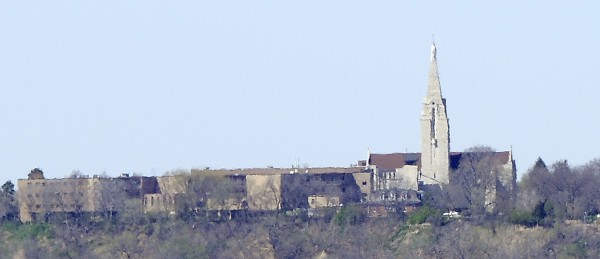
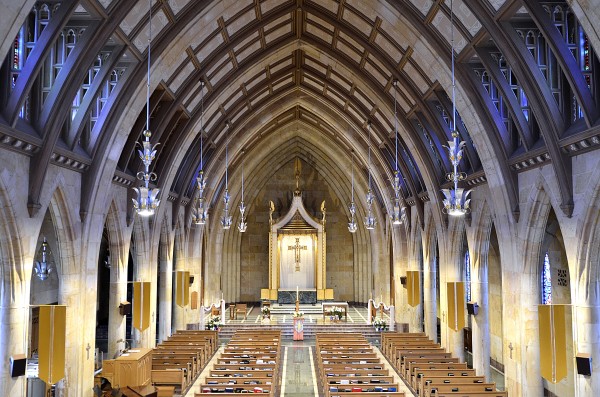
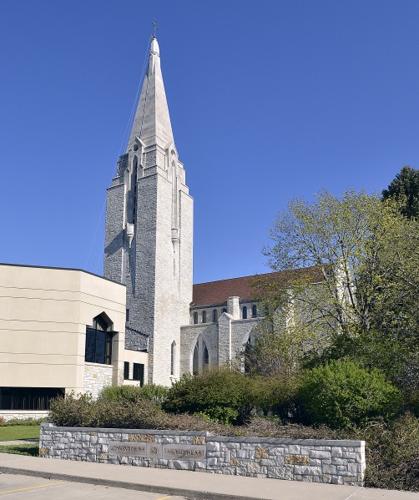
That steeple atop Bishop Marty Memorial Chapel can be seen from miles in all directions. Located on a bluff above the Missouri River, the chapel is a spiritual center for the sisters at Sacred Heart Monastery. It's also a vital part of the spiritual life at Mount Marty next to the monastery.
"It really does stand as a symbol of faith of this community and the sisters who came before us," said Sister Mary Kay Panowicz OSB, the monastery's public relations coordinator.
People are also reading…
It certainly is inspiring.
Built in 1950, the steeple towers 187.5 feet high. A 12.5-foot bronze cross tops it off. Though it belongs to the monastery, it has also become a landmark of Mount Marty, which stretches off to the north, and the city of Yankton itself.
Mount Marty students are lucky to have such a beautiful place to worship, said Wordekemper, who attended Mount Marty from 1975-79. He returned in June 2009 and serves as chaplain at both the college and the monastery.
"The chapel belongs to the sisters, of course," he said. "We're very fortunate they allow us to use it."
The chapel is named after Bishop Martin Marty, the first bishop of the Dakotas. The exterior is built of lannon stone from Wisconsin and bedford stone from Indiana.
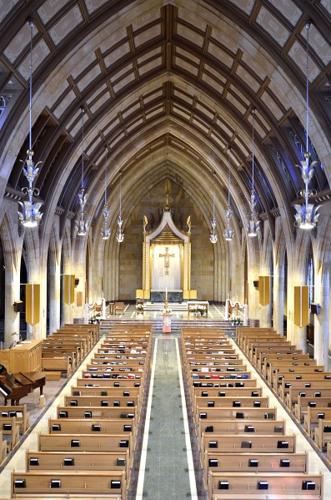
The interior contains sandstone mined in Indiana and white oak, much of it intricately carved. Stained glass windows throughout the chapel depict the daily activities and prayer life of the Benedictine sisters and events from the gospel and life of St. Benedict.
While the college uses the chapel from time to time, there's no doubt of its importance to the monastery and the Benedictine sisters who live there.
"For us, all of our significant events in our religious life take place there," Panowicz said.
The chapel plays a role in the spiritual lives of others as well. During the summer, Panowicz said, it's common to see people who are camping at nearby Lewis and Clark Lake come to Sunday mass there. Though Yankton has two Catholic parishes, some residents attend Mass at the chapel now and then.
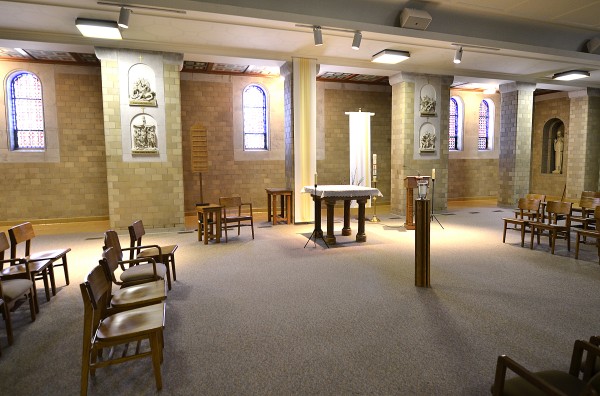
The sisters welcome the chance to share the space with the college students. Mount Marty uses the main upper chapel, which seats 600 people, for special Masses and a Christmas Vespers service. Students attend Sunday afternoon Mass in the smaller Peace Chapel downstairs.
"The faith life of the students is an important part of the college experience. It's important for us to share in their religious life," Panowicz said.
Panowicz said it's a comforting sight to return to Yankton from a trip and see that steeple from miles away.
"When the chapel was built, it was to be a sign of faith, no matter what your denomination," she said.
The monastery itself has also become a place for folks to deepen their faith, though many may not know it.
Some people in Yankton may not know of the existence of the Benedictine Peace Center, a retreat center ensconced on the second floor of the monastery, just down the hallway from the Bishop Marty Memorial Chapel. But the word is getting out, says soothingly sweet-voiced Sister Jeanne Ranek OSB, director of the Peace Center. Ranek said "word of mouth" and the monastery's webpage are how most retreatants find out about the center.
And if it is your peace you are looking for, a comfortable room with private bath and monastic ambience on about 40 acres of land in a beautiful setting on bluffs overlooking the Missouri River, and at a cost that would shame some of the area's better motels, this is where you want to be.
"We wanted a small place where people could get away from their busy lives for some time of prayer and reflection," Ranek said.
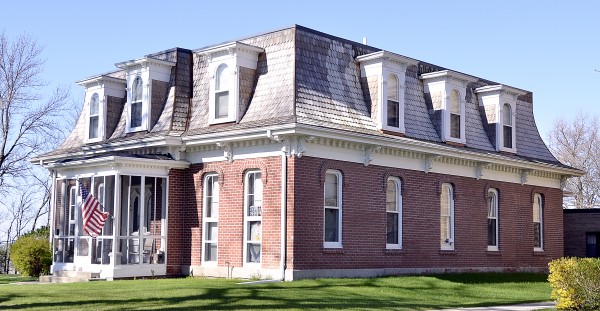
The Peace Center, adjacent to Mount Marty College which the Benedictine Sisters founded in 1936, was built in 2001 when the monastery underwent renovations that included the demolition of two old brick buildings between the Chapel and Bishop Marty's historic residence, replaced by a structure whose exterior stonework matched that of the adjacent Chapel.
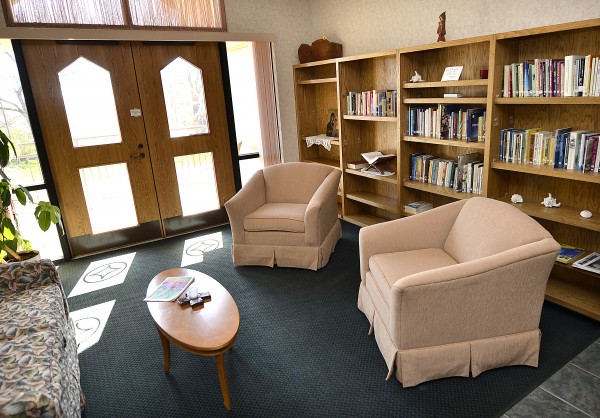
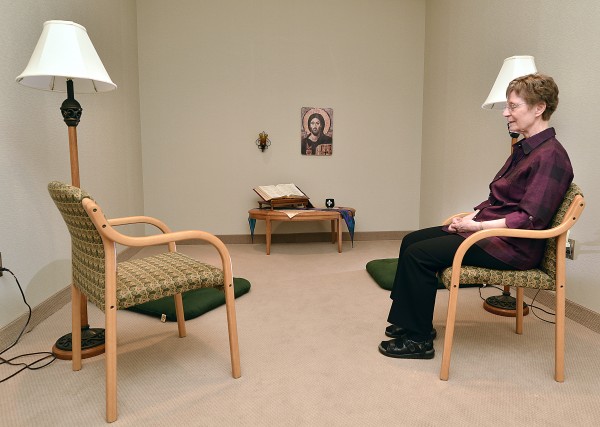
Ranek had plenty of experience doing retreats and spiritual direction training. So she took charge of the new center with its eight private bedrooms, a meditation room, chapels, lounge and libraries. The bedrooms are mostly single rooms, one a double for interested couples.
Spiritual directors available
"We have trained spiritual directors available if people would like to do what we call a directed retreat. They would meet with the spiritual director for an hour a day, talk about their lives, whatever they needed to talk about," Ranek said.
The Peace Center also hosts small groups, and the 10 bedrooms used for visiting family members on the first floor can be used on these occasions. But this is really just a small spirituality center, eschewing the conference retreats often designed for larger groups, Ranek said.
"Something that's missing in people's lives as a rule would be they have to work to find quiet time. They call it the Peace Center for one reason because I think that is what people experience here. You can be ... and do ... a lot," she said.
The retreat can last one day, maybe a couple of hours, or expand to a week, a month, even year-long sabbaticals, she noted. Some repeat visitors drive many miles to periodically consult their spiritual directors ... even if only for an hour.
If there for an unstructured sabbatical, retreatants have access to the prayer life of the monastic community. They can eat with the 109 Benedictine Sisters and join them in recreation activities, too. "Right now, we have somebody who does music, and she has access to the organs to play," Ranek said. "Some people come to do writing. If they're self-directed, we can take somebody for a month, six months, for a year. It works very well."
The Benedictine Sisters also offer a Theology Institute, biannual programs on Saturday mornings in spring and autumn on a variety of theological topics, free to the ecumenical public.
Direction or not
It is easy to integrate long-term retreatants into the community. Short-timers are welcome, too. But if they wish to remain isolated, on their own, without direction, that is another common option.
"It depends on what they need and want," Ranek said. "We can build a structured retreat for people. But most of what we do is people just seeking the quiet. Walk the grounds to read, to sleep, to pray, maybe to meet with a spiritual director. The needs of people are unique, as unique as people."
The center has also offered "dreamwork retreats," which explore the unconscious and subconscious and how dreams are used in your spiritual journey. "Usually there's a lot of symbolism in our dreams that we can unwrap in helpful ways," she said, noting a popular book that called dreams "God's Forgotten Language."
While most retreatants hail from South Dakota, Nebraska and Iowa, some have come for retreat from as far away as New York.
"And we do get a real interesting mix of religions, an ecumenical mix," Ranek said. "We didn't set out to do that, but that's what happened. We really find that very enriching because each of the Christian traditions has nurtured different aspects of the Christian gifts in a special way. There's a lot of mutual enrichment in that."
The sisters also do a lot of outreach work. Some of them do confirmation or creative retreats at different parishes.
"I do a fair amount of retreats or facilitations for other Benedictine communities around the country," she said, noting that she also coordinates retreats for the local sisters with outside retreat directors brought in for that purpose.
Separate retreats are also planned each year for Oblates of St. Benedict, Christians who associate themselves with the Benedictine community in order to enrich their Christian way of life.
As for the cost, even many retreatants tell Ranek that she doesn't charge enough for the experience, she said.
The cost for a private room and bath is $25 a night. An additional $15 is added for three meals a day plus snacks. "But we use the monastery cafeteria. So I don't really control the menus," said, adding that the sisters eat well. "We have good food. But we have kept that price. We like to be available. We don't like to turn people away because of money."
For more information, check out the website: www.yanktonbenedictines.org/center.html.


