
SIOUX CITY -- Placing a small white packet in the lowest level of your home for a few days could save your life.
Scientists estimate that about 20,000 lung cancer deaths per year are related to radon.
The packet, a radon test kit, detects levels of the odorless, colorless gas that is the second-leading cause of lung cancer behind cigarette smoking. Produced by the decay of uranium, radon is usually found in soils, rock and water; and for an unknown reason, that gas is prolific in Siouxland.
The Environmental Protection Agency estimates 6 million to 8 million U.S. homes have elevated radon levels. The Iowa Department of Public Health reports that as many as five in seven Iowa homes have radon levels above 4 pCi/L.
"Our tri-state area, in general, just has higher than average levels of radon," said Alicia Sanders, an environmental specialist for Siouxland District Health Department. "Some people have very low levels and the next door neighbor has a very high level."
People are also reading…
When radon enters homes and other buildings through foundation or basement cracks, it becomes trapped and accumulates in the lowest level, usually basements. Having a walkout basement doesn't ensure low radon levels, according to Sanders. Breathing in radon at high levels over a long period can cause lung cancer. The only way to know if radon is in your home is to test for it.
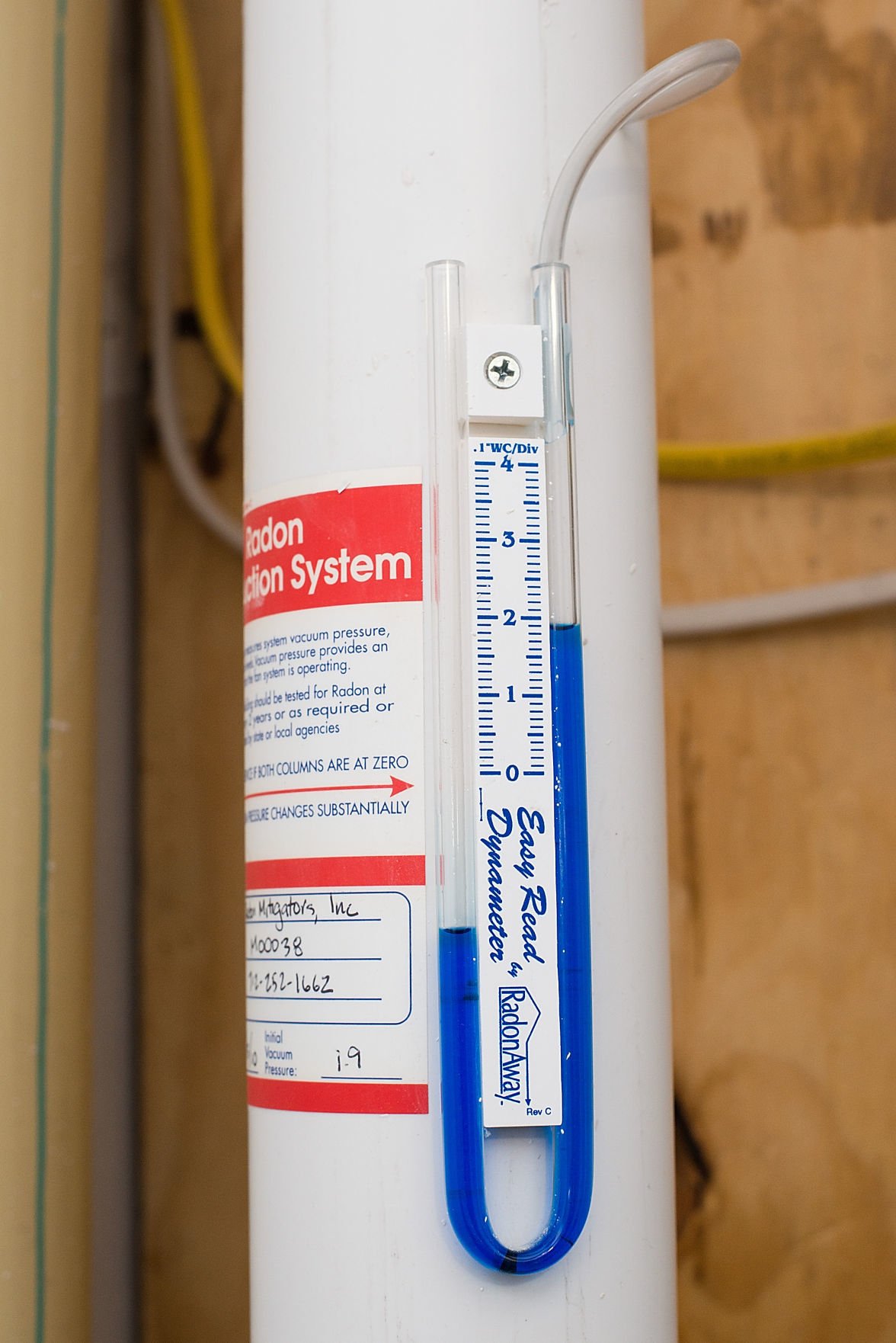
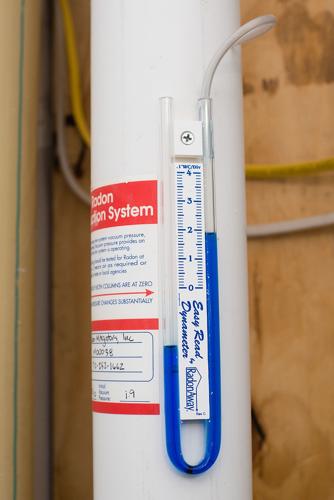
A gauge shows the vacuum pressure inside a radon mitigation system at the home of Nate and Amy Lahrs in Lawton, Iowa.
"Get tested, no matter if you have a walkout basement or if you don't," Sanders said.
Siouxland District Health Department saw a spike in sales of radon test kits from 2015 to 2016, before sales dropped off to 788 in 2018. Although January has been designated National Radon Action Month, short-term radon test kits are for sale year round at the health department for $7. That fee includes postage for sending the kit to a laboratory, testing and results.
"A lot of home buyers are more aware of radon and are requesting that testing be done of the homes before they buy the home to see what the radon levels are," Sanders said. "In addition to that, I've also heard the home builders are also more aware of radon and putting systems in when they build the homes."
Test first
The discovery prompted the EPA to conduct short-term radon testing in homes and basements in 42 states over four years.
The EPA recommends corrective action be taken when radon in the air is 4 pCi/L or higher.
The first step is placing a short-term test kit in your home's lowest level, usually a basement, for three to seven days. Winter is a good time to test because windows are closed.
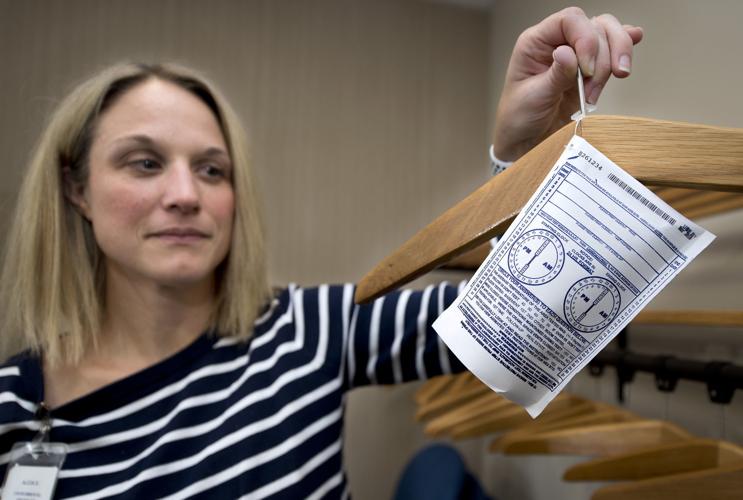
"Usually, what I do is hang it from a hanger. You want to have it at eye level or breathing level," Sanders said. "You want to put it somewhere in your home where it's not real drafty, where you get a lot of air of movement. That can potentially skew the results."

Alicia Sanders talks about the hazards of radon during an interview at Siouxland District Health Department in Sioux City. The department sells radon test kits to homeowners.
If the short-term test reveals an elevated radon level, perform a second short-term test and average the results of the two tests together. If the level is 4 pCi/L or higher, contact a certified radon mitigator. A list of certified radon mitigators can be found at idph.iowa.gov.
Mitigators can install an active radon mitigation system in the home to reduce radon levels. Systems consist of 4-inch PVC pipe that extends from a hole in the basement floor through the roof. A fan sucks the radon gas from below the slab up the pipe and vents it outside. The cost of a radon mitigation system ranges from $800 to $2,500, depending on the characteristics of the home.
"It is an expensive beginning, but it's definitely worth it," Sanders said.
Copyright 2018 The Sioux City Journal. All rights reserved. This material may not be published, broadcast, rewritten or redistributed.

Dolly A. Butz
City Government & Features Reporter