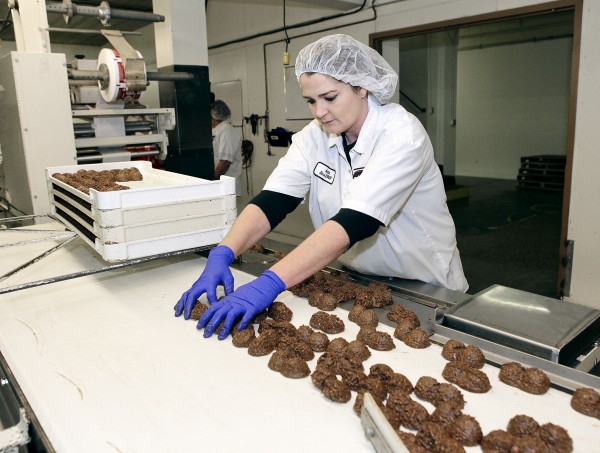
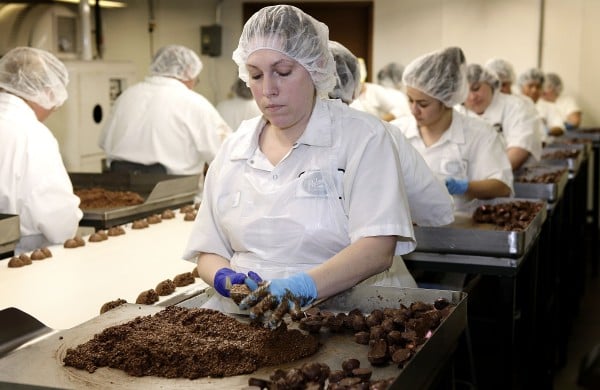
Becky Chicoine makesTwin Bings by hand at Palmer Candy Friday, December 17, 2010. (Jim Lee/Sioux City Journal)
Journal photo by Jim Lee
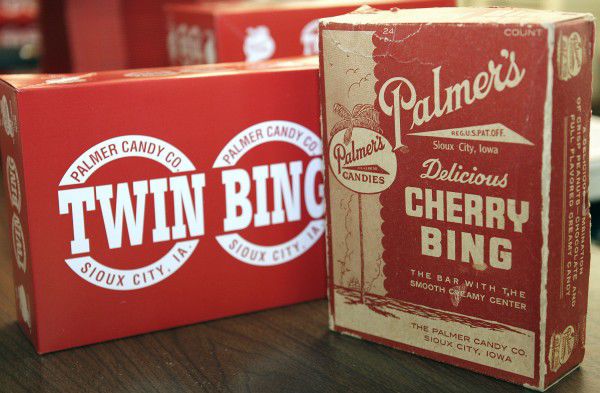
A Cherry Bing box from the 1930s, pictured with a current Twin Bing box.
Journal photo by Jim Lee
Becky Chicoine makesTwin Bings by hand at Palmer Candy Friday, December 17, 2010. (Jim Lee/Sioux City Journal)
Journal photo by Jim Lee
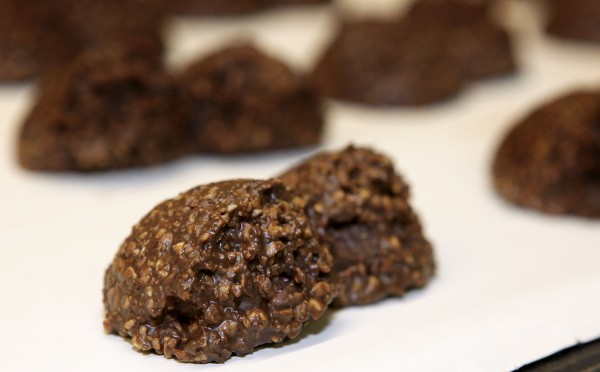
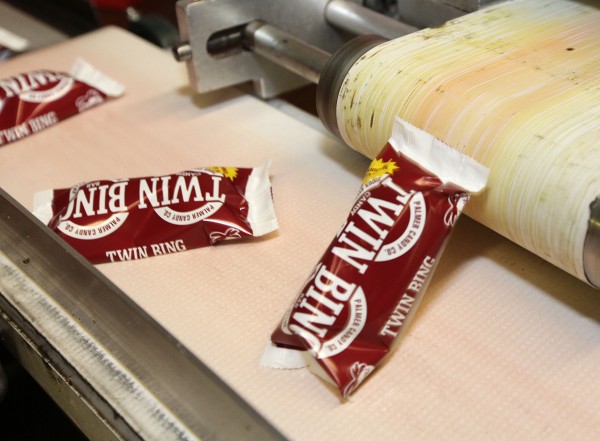
Twin Bings move along the production line at Palmer Candy
Company.
Journal photo by Jim Lee
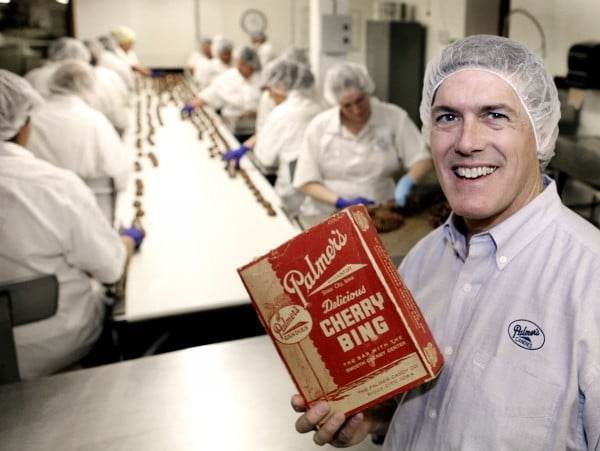
Palmer Candy Co. President Marty Palmer holds a Cherry Bing box from the 1930s as he checks the production line in this file photo. Palmer is the fifth generation to lead the Sioux City-based company, which has produced candy since the late 1800s.
Business Journal photo by Jim Lee
Anita Rose sorts Twin Bings at Palmer Candy Friday, December 17, 2010. (Jim Lee/Sioux City Journal)
Journal photo by Jim Lee
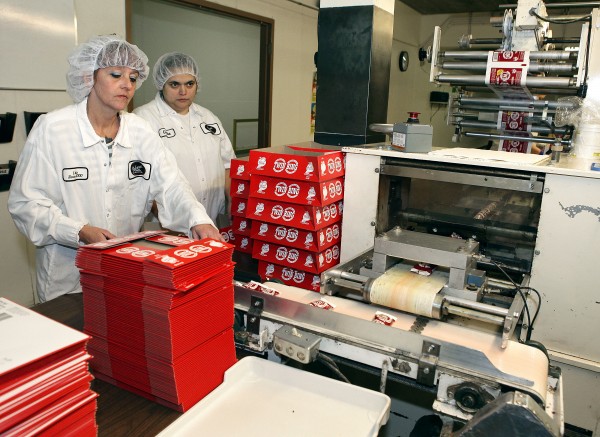
Lisa McCommon and Maria Rodriguez box Twin Bings at Palmer Candy Friday, December 17, 2010. (Jim Lee/Sioux City Journal)
Journal photo by Jim Lee
Twin Bings move along the production line at Palmer Candy Friday, December 17, 2010. (Jim Lee/Sioux City Journal)
Journal photo by Jim Lee
Becky Chicoine makesTwin Bings by hand at Palmer Candy Friday, December 17, 2010. (Jim Lee/Sioux City Journal)
Journal photo by Jim Lee
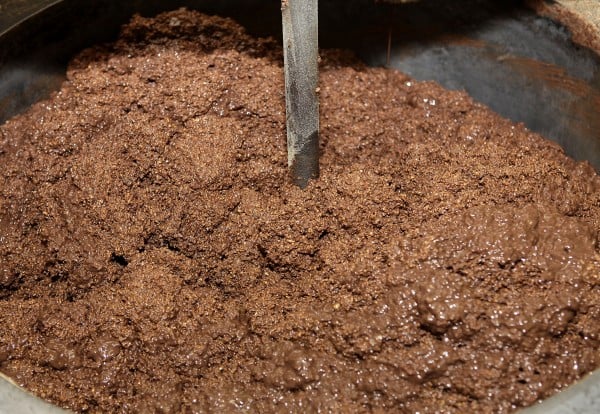
Twin Bings being mixed at Palmer Candy Friday, December 17,
2010. (Jim Lee/Sioux City Journal)
Really, what else could the Palmer Candy Company's most famous confection have been called?
When the decision was made to add a second hump to the Bing candy bar when candy bar prices rose from a nickel to a dime in the 1960s, there wasn't any widespread contest to come up with a name as there might be nowadays.
The Twin Bing name was an in-house decision. Marty Palmer, president of Palmer Candy, was 12 at the time of the name change, which he's been told was in 1969. As far as Palmer can tell, there wasn't any big discussion about what to call the new candy bar once its second hump was added.
“Some clever person here, I don't know who, came up with the idea you could put two together and make it a twin,” Palmer said. “That was just natural. If you look at two of them, they look like twins.”
The change came as candy companies nationwide were raising the prices of candy bars, which, because of the rising costs of ingredients, were becoming smaller and smaller so they could still be sold for five cents. Palmer said making the single Bing larger probably wouldn't have been a good idea. Because of its shape, it already wasn't the best fit in vending machines.
“There wasn't a way to make the single version any bigger,” Palmer said.
Adding the second hump kept the Bing's shape vending-machine friendly. The new name also attracted attention.
“It took off like a heartbeat. And Twin's pretty clever. It's better than 'Bigger,' 'Better' or 'Double,'” Palmer said.
The Twin Bing name markets itself well, Palmer said. It's two short words, a tradition carried on with the larger triple-humped King Bing.
The name also has a playful aspect to it. Palmer said it's not uncommon for new parents give out Twin Bings rather than cigars to celebrate the birth of twins. Minnesota Twins baseball fans are always requesting them.
“People over the years have had a great time making a play on the name,” Palmer said.
And they have a great time eating the chocolate, peanut and cherry-flavored treat. Each day, Palmer Candy makes an average of 40,000 Twin Bings that are then distributed throughout the upper Midwest from Interstate 35 in Iowa west to the Rocky Mountains. The recipe hasn't changed from the time the Bing was invented in 1923, although the other original flavors of vanilla, maple and pineapple are no longer produced.
There are no changes in store for the Twin Bing – name or recipe, Palmer said.
“You don't mess with a formula that's working well,” he said.
Palmer Candy Co. President Marty Palmer holds a Cherry Bing box from the 1930s as he checks the production line in this file photo. Palmer is the fifth generation to lead the Sioux City-based company, which has produced candy since the late 1800s.