

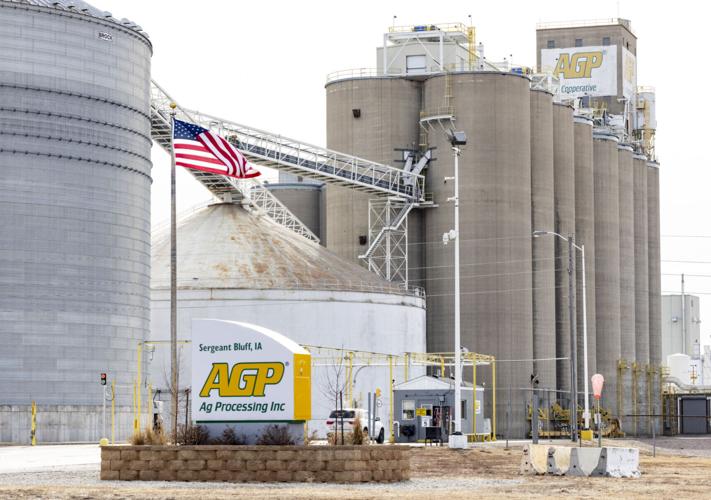
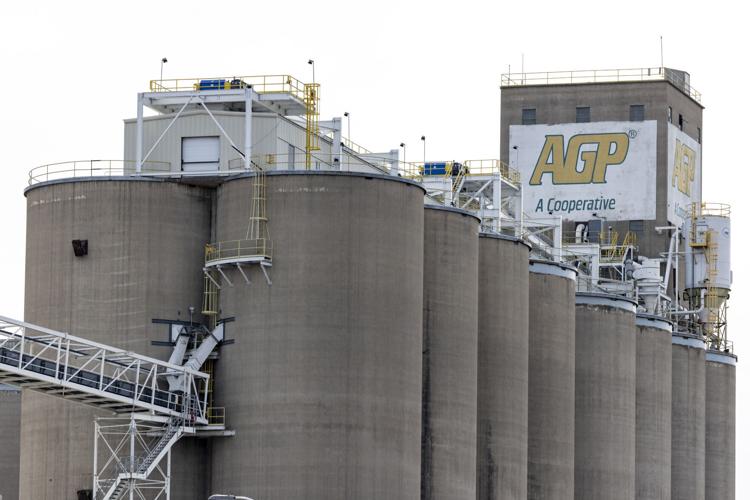
SERGEANT BLUFF -- Through a $71.5 million expansion of its soybean crushing plant at Port Neal, Ag Processing Inc. will process an additional 8 million bushels of soybeans into soybean oil and meal per year.
AGP officials say the added capacity will allow more area farmers to send their beans to the plant for processing, rather than ship them to distant markets.
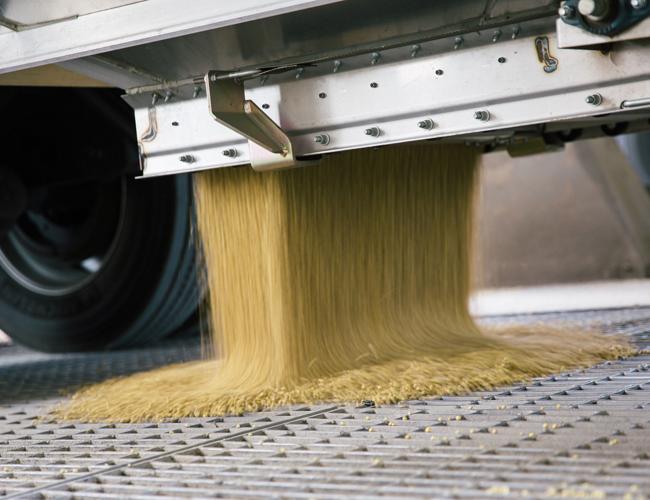
Wayne Johnson, AGP director of marketing, said the upgrades announced last fall will permit the plant to handle around 38 million bushels of beans per year, up from around 30 million at present.
Only a fraction of the region's soybean crop is processed at AGP. A large share of the soybean crop grown in this market -- which, for AGP's purposes, extends west into the Dakotas and Nebraska -- has historically been shipped by rail down to the Gulf of Mexico or to the Pacific Northwest to be exported to countries in the Pacific Rim. When the AGP expansion is complete, more soybean bushels won't have to make that long journey.
People are also reading…
"More local bushels will stay in the local area here and get processed," Johnson said.
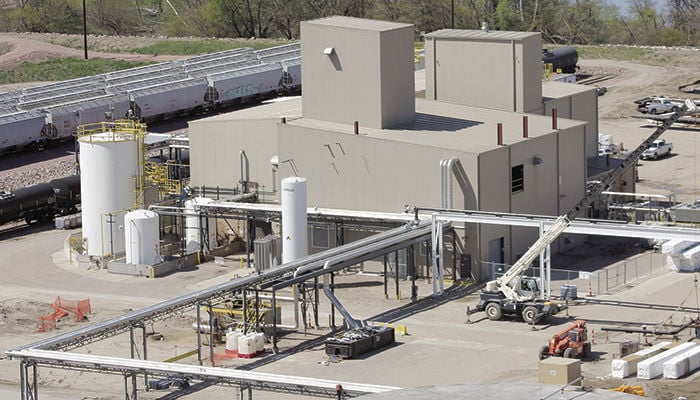
Johnson said the expansion will essentially consist of equipment upgrades -- including a new bean-dryer -- rather than new structures at the farmer-owned cooperative.
"Engineering and some parts of the project are already in motion. There is not a lot of dirt to move on this project, most of it is internal equipment and basically going vertical -- just easier to do it that way," Johnson said. "Engineering is well underway, some equipment has been ordered, and the process is moving very, very quickly."
AGP officials are hoping to have the project wrapped up by the fall of 2023.
State and county officials agreed to financial incentives amounting to around $1.4 million for the project shortly after it was announced. Woodbury County officials furnished a local property tax exemption for up to two years and a rebate of $578,242 over five years.
The Iowa Economic Development Authority, meanwhile, approved $842,000 in incentives, including $500,000 of investment tax credits and the refund of $342,000 in sales, service and use taxes paid during the construction.
The expansion is expected to generate roughly $204,000 in property taxes for the county every year. It's a capital investment more than anything -- amid a very tight labor market, the expansion is expected to create only two to four new jobs. The complex currently employs about 128 people.
"This is the perfect project at the perfect time," Chris McGowan, president of The Siouxland Initiative, said in November.
Other civic and industrial leaders in the area were similarly bullish on the expansion project.
“AGP is a world-class organization with an exceptionally strong presence throughout the upper-Midwest," Mike Wells, CEO of Wells Enterprises and board chair of TSI, said in November. "They had numerous viable options for this particular project, and we are delighted that they chose Siouxland for this $70 million investment."
This will be the third major project at AGP's sprawling complex near Sergeant Bluff since 2014. In that eight-year window, counting this newest project, AGP has invested around $200 million in the facility.
In 2017, the co-op constructed a $90 million vegetable oil refinery, which refines beans at the site, and also completed a $38 million expansion of its biodiesel plant. That was the fourth expansion of the Port Neal biodiesel plant, which was the nation's first commercial-scale biodiesel plant when it opened in 1996.
The bean crushing facility was originally built by Farmland Industries in 1974, and was purchased by AGP in 1983.
One of the nation’s largest cooperatives, AGP is owned by 149 local and regional cooperatives representing over 200,000 farmer-producers across the U.S. It operates 10 soybean processing plants in Iowa, Minnesota, Missouri, Nebraska, and South Dakota, as well as four soybean oil refineries, and three biodiesel plants.
Much of the U.S. soybean crop is exported, with China importing enormous quantities of the oilseed. The total value of U.S. soybean exports reached a record $25.7 billion in 2020, up almost 40 percent in terms of dollars from the year prior, according to U.S. Department of Agriculture statistics. During that same period, the dollar value of soybean exports to China jumped 77 percent.
Stateside, soybean crops are used for much the same purpose as they are in China -- namely, crushed into animal feed or refined into vegetable oil, as well as biofuels. (Smaller quantities are used more directly as human food, in the form of tofu, soy milk, soy sauce, soy protein, edamame and the like).
Johnson said that, while there's a broad spectrum of opinions on the outlook of the soybean market, he sees reason for considerable optimism -- demand is likely to increase for renewable biodiesel products, he said, while Midwestern livestock operations are using more soybean meal as feed than ever before.
The conflict in Ukraine, meanwhile, has already driven soybeans to their highest prices in nearly a decade, and a further rally in the soybean market is very much possible.
"The thing that we don't know right now with -- world events, we'll call them -- it's moving grain prices, soybean prices are as high as they've (been)," Johnson said. "I mean we're near record prices on soybean oil, soybean meal, and corn. So, yeah there's just a lot of uncertainty. Ukraine and Russia produce a tremendous amount of wheat and corn for the world market, and sun(flower) oil, and that's all up in the air. It's very concerning, whether Ukraine gets a crop planted this year."