
SERGEANT BLUFF — The latest expansion at the Ag Processing Inc. soybean crushing plant near Sergeant Bluff is expected to benefit Siouxland farmers in more than one way.
With the annual crushing capacity increased by approximately 7 million bushels, growers will have more marketing possibilities for their soybean crops.
That increase not only means more soybean oil production, but also more soybean meal that will available locally for area producers to feed to their livestock.
"We're owned by local co-ops and elevators in the area, so this will lead to more demand for their local soybeans. This is something that's beneficial to our members," said Adam Piper, AGP vice president of soybean processing.

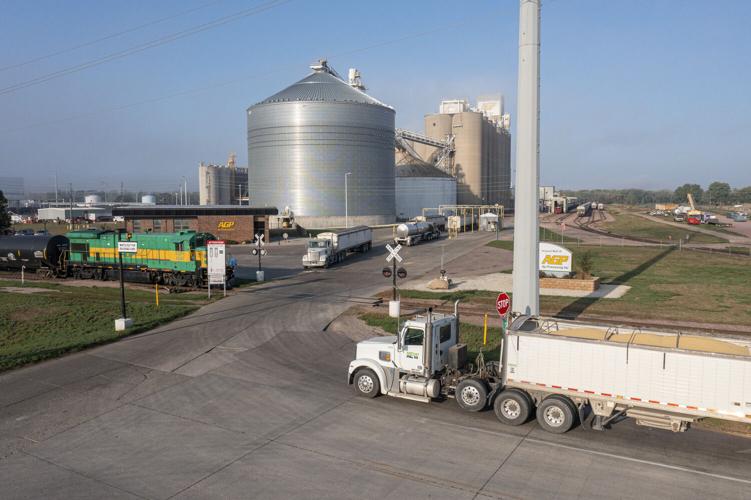
Grain trucks enter and leave the Ag Processing Inc. soybean crushing plant near Sergeant Bluff. The company is nearing completion on a $70 mil…

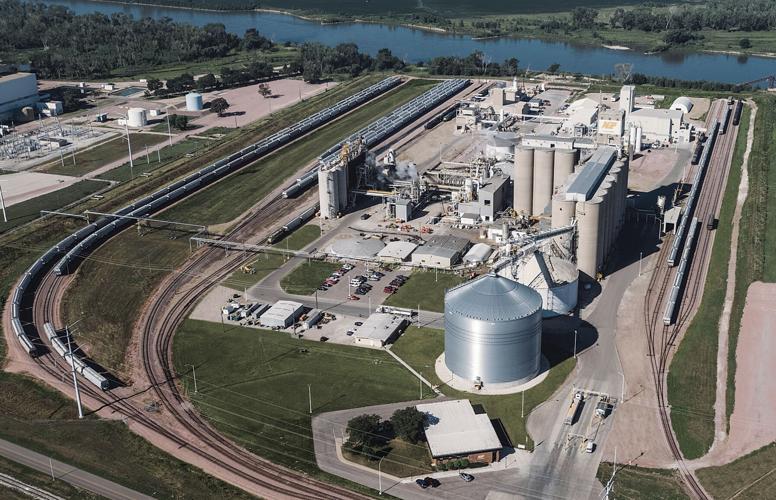
AGP's soy processing plant near Sergeant Bluff is shown in this aerial photo.
Work began last summer on the $70 million expansion. It's expected to be finished late this summer in time for harvest.
People are also reading…
From the outside, it might not appear that an expansion project is taking place. Most of the work consists of revamping and upgrading existing equipment and facilities, not adding to the physical plant.
"We want to be more efficient in what we do," Piper said.
Located in the Port Neal industrial complex south of Sergeant Buff, the bean crushing facility was built by Farmland Industries in 1974, and AGP purchased it in 1983.
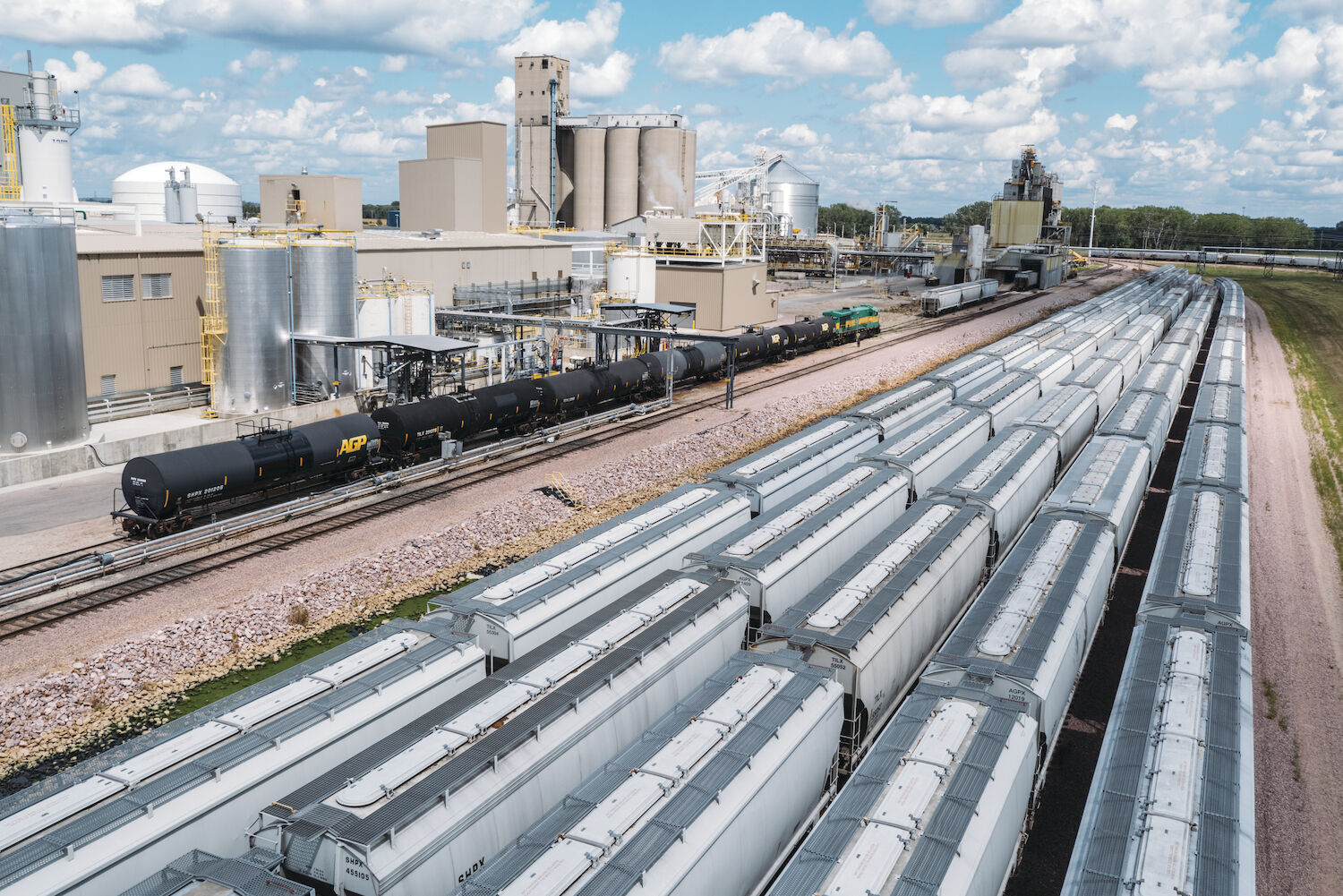
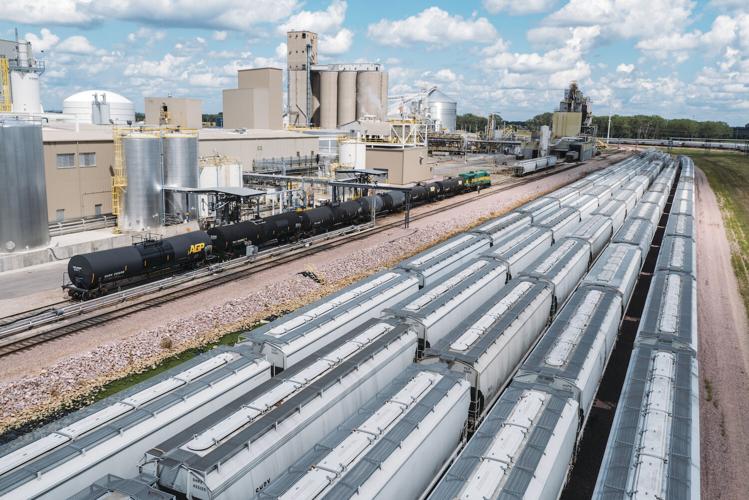
The railyard for AGP's soy processing plant near Sergeant Bluff is shown.
The current project is the third major upgrade at the plant since 2014. Those investments total approximately $200 million.
In 2017, AGP built a $90 million vegetable oil refinery, which refines beans at the site, and also completed a $38 million expansion of its biodiesel plant. It was the fourth expansion of the Port Neal biodiesel plant, which was the nation's first commercial-scale biodiesel plant when it opened in 1996.
Growing markets for soybean products fueled this latest investment, Piper said.
"We're getting more demand for our products in our industry," he said. "As an industry, there's demand that's looking to be filled from an oil standpoint."
AGP also received financial incentives to make the expansion more attractive. State and county officials agreed to incentives amounting to about $1.4 million for the project. Woodbury County officials furnished a local property tax exemption for up to two years and a rebate of $578,242 over five years. The Iowa Economic Development Authority approved $842,000 in incentives, including $500,000 of investment tax credits and the refund of $342,000 in sales, service and use taxes paid during construction.
U.S. Rep. Randy Feenstra talks about ongoing advances in agriculture while touring the Rosen Agriculture Center at Morningside University in Sioux City. Feenstra, a member of the House Agricultural Committee, said the tour was part of a series of visits to gather information as he and fellow legislators work to form a new farm bill.
The support AGP has received from local leaders and area farmers could lead to future expansion.
"We're always looking at what we can add or expand," Piper said. "We feel strongly about the Sergeant Bluff area. It's a good spot for us in terms of demand and supply. We look forward to the future, and we're certainly committed to that area."
One of the nation’s largest cooperatives, AGP is owned by local and regional cooperatives representing more than 200,000 farmer-producers across the United States. It operates 10 soybean processing plants in Iowa, Minnesota, Missouri, Nebraska and South Dakota, as well as four soybean oil refineries and three biodiesel plants. It will break ground in David City, Nebraska, on its 11th plant later this year.