
NORTH SIOUX CITY -- Kevin Pons, an audiologist at Ear, Nose & Throat Consultants in Dakota Dunes, said denial and cost are two of the main reasons why many people who struggle with hearing loss put off seeking treatment.
Hearing loss is a growing public health problem that increases with age and affects a person's health, independence and quality of life, as well as their ability to communicate. An estimated 48 million Americans -- 15 percent of the population -- experience some degree of hearing loss, which is caused by a number of factors, including aging and noise exposure.
The Committee on Accessible and Affordable Hearing Health Care for Adults estimates that 67 to 86 percent of adults who could benefit from a hearing aid don't use one. If hearing loss goes untreated, patients have an increased risk of dementia, depression and falling.
Medicare doesn't cover hearing aid fittings or hearing aids, which range from $1,500 to $3,200 individually. Medicare Part B only covers diagnostic hearing and balance exams ordered by a health care provider. Private health insurance plans are unlikely to pick up any portion of the cost of hearing aids either.
People are also reading…
"Essentially they're saying, 'Well, that's just one of those senses that you just don't need.' It's very frustrating," said Reason Ford, an otolaryngologist who works with Pons. "(Hearing aids) can cost money. There's no question about it."
Patients who are ready to give hearing aids a try may turn to a big-box store at first. While the hearing aids these retailers offer could be of a similar quality as those sold by a specialist, Ford said the follow-up care the sellers provide, if they provide any at all, isn't. Patients may never return to the retailer for an evaluation or they may have to wait several months for an appointment.
"It's similar to glasses -- some people can buy the cheaters and do just fine. Other people need more and need a specialist to actually program (hearing aids) so that they're satisfied," he said. "There are also concerns that in some of these over-the-counter-type hearing aids that although it looks the same and has the same company name, the technology is actually older. You're actually not getting all the features you could be getting."
Configuring a hearing aid to an individual's specific needs, Ford said isn't an easy task. He said it often takes multiple visits to an audiologist to get the settings just right.
"In order to satisfy our patients, we need them to come back, because we expect them to feel like the money they're spending is worth it," Ford said.
Pons, who can adjust a hearing aid with the click of a computer mouse, said his protocol is that patients return to the clinic once a week for up to a month until they're satisfied with the quality of sound their hearing aid provides. Then he insists they return three months later for another appointment.
"The body changes to sound. What they might consider just right when they first get their hearing aid might in three months actually be a little bit too soft," he said. "The sophistication of the hearing aid these days allows us to do that."
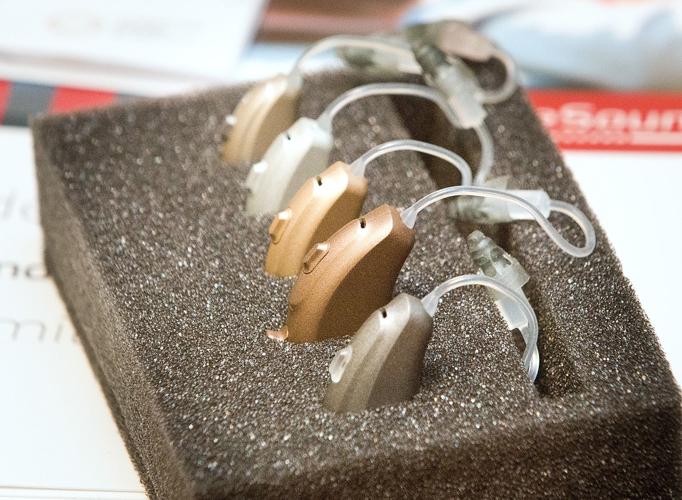
Although hearing aids can't replicate the crispness and understanding that normal hearing does, Ford said the technology has come a long way over the years. Rechargeable hearing aids offer 24 hours of operation with batteries guaranteed to last for four years. Volume can be adjusted by pressing a small switch on the hearing aid down to make it softer or up to make it louder.
"Hearing aids today are very sophisticated. Back in the day, I liken (a hearing aid) to essentially a speaker that increased volume on everything. Patients would be very dissatisfied that in certain areas it was good but in other areas everything was too loud," he said. "Now the programming allows you to increase those areas that are needed without causing too much volume in the areas that are not."
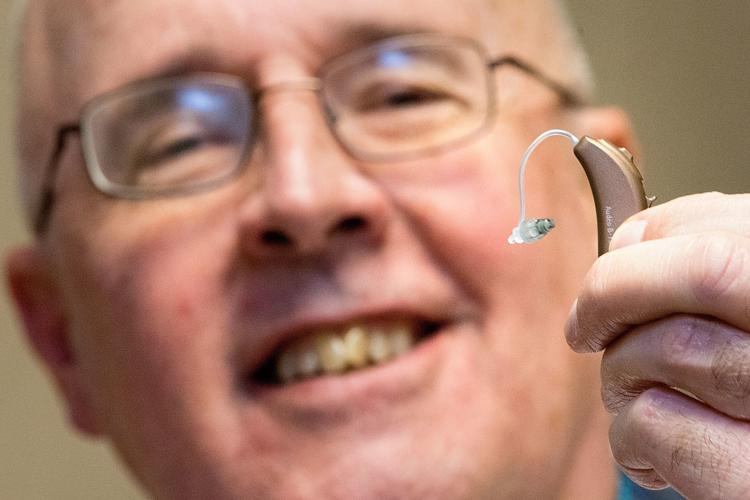
There are a lot of features packed into these tiny devices, almost all of which are barely visible when worn. Pons said hearing aids can recognize different situations -- whether the wearer is sitting in an auditorium, listening to music or eating in a noisy restaurant -- and make adjustments accordingly.
"The hearing aid says, 'I'm here. I better behave this way,'" he said. "Patients feel much more relieved knowing all they have to do is be able to put the hearing aid in their ear, make sure it has a good battery and they're off and running."