


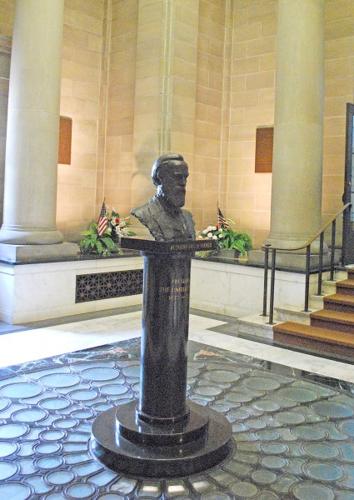
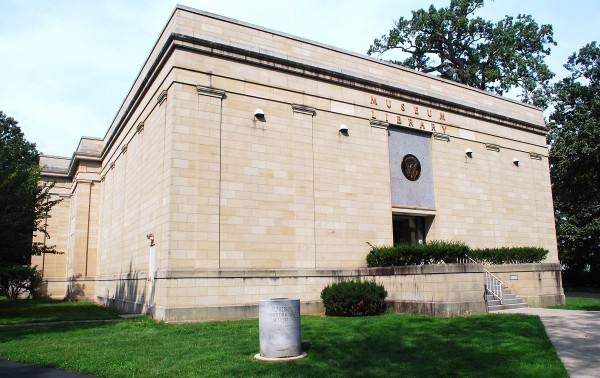
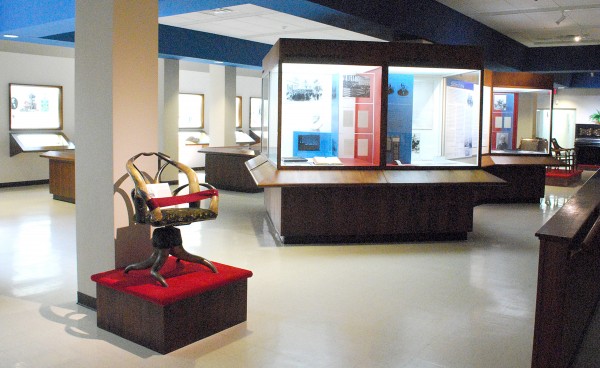
FREMONT, Ohio | The first presidential museum and library in the U.S. opened here in 1916. The Rutherford B. Hayes Presidential Center was founded by the president's second son, Colonel Webb Cook Hayes and his siblings. The family deeded Spiegel Grove, the estate of the president to the state of Ohio for the center. A museum was built and underwent expansions in 1922 and again in 1968 to its current size of two floors of exhibits, a research library and four floors of storage holding 19,000 artifacts. The display area has 1,785 artifacts relating to the life and times of Hayes and the history of Ohio.
Rutherford B. Hayes the 19th president of the United States was born Oct. 4, 1822, in Delaware, Ohio, the fifth child of Rutherford and Sophia Hayes. Just two months before he was born his father died. Young Rutherford and his sister Fanny Arabella were raised by their mother and her younger bachelor brother Sardis Birchard who was a successful businessman in Lower Sandusky.
People are also reading…
Rutherford Hayes graduated from Harvard Law School in 1845 and began a law practice in Lower Sandusky. Not finding enough opportunity there he moved to Cincinnati in 1849 where he became a successful lawyer. His opposition to slavery drew him into the Republican Party.
In 1852, Hayes married Lucy Ware Webb of Chillicothe. She was the youngest daughter of Dr. James and Maria Cook Webb and a graduate of Cincinnati's Wesleyan Women's College. She was the first wife of a president to graduate from college. They became the parents of eight children.
When the Civil War began in 1861, Hayes volunteered his services to the Union cause. Ohio governor William Dennison appointed him to the rank of major in the 23rd Ohio Volunteer Infantry. He was involved in many decisive battles and was severely wounded in the Battle of South Mountain. Hayes rose to the rank of major general and while still in the Army was elected to Congress in spite of the fact he refused to campaign for the position. He did not take the post until the war was over and was reelected in 1866. He later served as governor of Ohio and was elected president in 1876. The close vote during the election included disputed electoral votes. Because of the tension caused by the election Hayes secretly took the oath of office on Saturday, March 3, 1877 in the Red Room of the White House.
During his presidency Hayes had to deal with the aftermath of Reconstruction in the South, the problems of minority citizens including African Americans and American Indians. Before his election Hayes pledged not to run for reelection and kept his promise.
Hayes believed ex-presidents should be active in local and national affairs and to this end traveled the country participating in veteran's affairs, promoting prison reform and advocating vocational and scholastic education for everyone regardless of race or economic status.
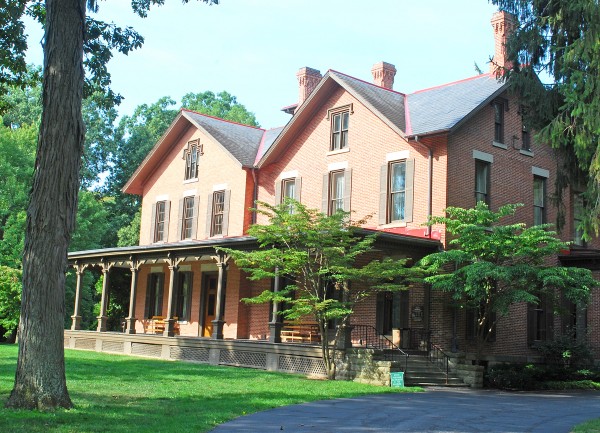
The Rutherford B. Hayes Presidential Center is located on Spiegel Grove, the estate of the former president. The land and the 31-room brick mansion was first owned and built by Hayes' uncle and guardian Sardis Birchard who built the original portion of the home between 1859 and 1863. Hayes moved his family into the home in 1873 and lived there for two years before becoming Governor of Ohio and later president of the United States.
When his term as president was nearing its end Hayes made plans to expand and remodel his home. An addition included a library to house his 12,000 books, a large reception room, three bedrooms and something not found in most homes of the time, indoor plumbing. The new addition also included a spectacular four-story walnut and butternut staircase leading to a rooftop lantern offering a 360 degree view of the property.
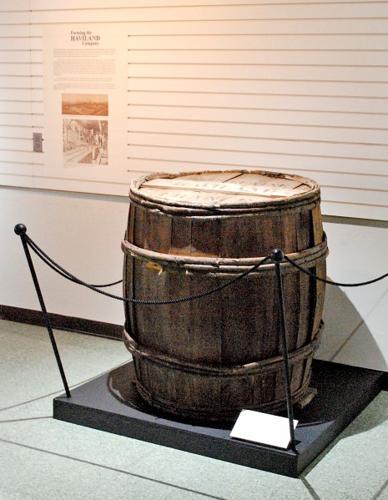
The Rutherford B. Hayes Presidential Center includes not only the mansion but the Hayes Museum featuring a collection of over 1,700 artifacts relating to Hayes, his family and the history of Ohio. The museum also has a presidential library containing President Hayes' 12,000 volume personal library along with papers from his military and political career. The library has been expanded to include over 80,000 books dealing with local history, genealogy and the Gilded Age in which Hayes lived.


