


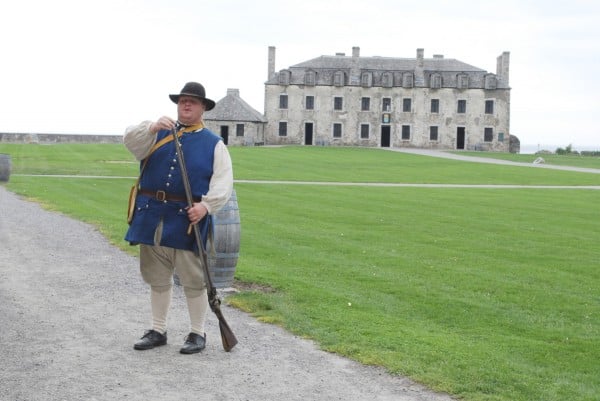
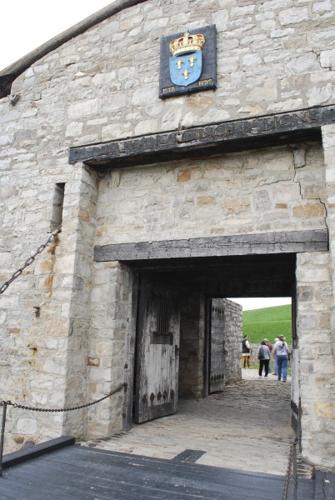
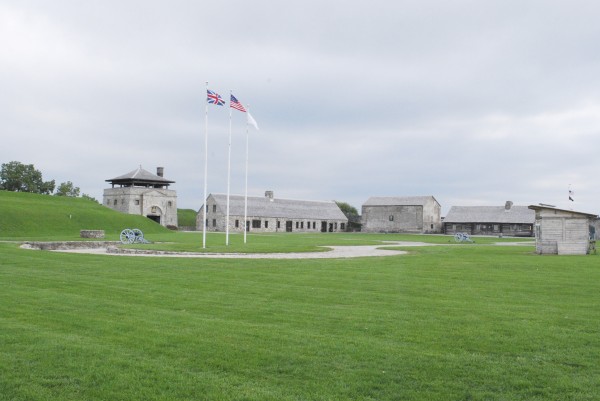
YOUNGSTOWN, N.Y. | Not far from Niagara Falls on a bluff overlooking Lake Ontario is Old Fort Niagara a fortress that has guarded the entrance to the Niagara River since 1726. Today the fort is a National Historic Landmark and a New York State Historic Site that welcomes more than 100,000 visitors each year. The buildings and artifact collections offer a unique look into military fortifications of the 18th and 19th centuries along with spectacular scenery and views of the Niagara River.
The fort played an important role in the fight by France, Great Britain and the United States to control the Great Lakes region of North America. The fort was also a key factor in shaping the future of the Iroquois Nation and Canada.
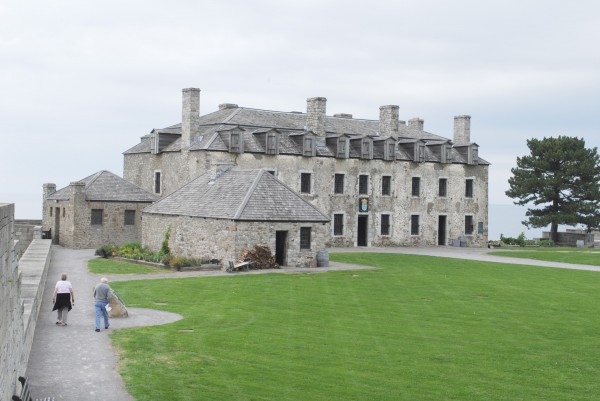
The French constructed the first building known as the Castle on the site in 1727. It was designed to look like a large trading house to calm any fears the local Iroquois might have about a military presence there. In reality the building was a strong fortress capable of repelling an Indian attack. The fort was expanded from 1755 to 1757 and a portion of the Castle was converted for use as officer’s quarters.
People are also reading…
The fort was in fact used as a trading post as well as a military garrison while under French control. A large number of Indians came to exchange furs for manufactured goods at the Castle. The vestibule of the Castle contains a 25 foot deep well that provided water for occupants and visitors from 1726 to about 1815. A popular legend tells the story of a headless ghost of a murdered French officer who is said to haunt the well. When the moon is full, so the story goes, he walks the halls of the Castle is search of his missing head.
On the second floor of the Castle is a Chapel which was the earliest permanent church in western New York. Rooms for soldiers at the fort are also on the second floor. A narrow room at the end of the hall was used briefly in 1768 as a cell for Robert Rogers who gained fame as a ranger during the French and Indian War and was the hero of the historical novel Northwest Passage written by Kenneth Roberts. Rogers was accused of treason by the British and kept chained and guarded at the fort until he was taken to Montreal for trial.
The British gained control of the fort after a 19 day siege in 1759 during the French and Indian War. The British maintained control of the fort during the American Revolution but were forced by treaty to yield it the United States in 1796. Fort Niagara played an important role in the War of 1812 in guarding the entrance to the Niagara River. It was during one of the battles at the fort that Betsy (Fanny) Doyle, a wife of one of the soldiers helped load a canon and became a heroine of the war. The fort was recaptured by the British in 1813 but was turned back to the United States following the War of 1812. That was the last armed conflict involving Old Fort Niagara but it continued to serve as a peaceful border post.
After the Civil War a “New Fort Niagara” was built outside the walls of the existing compound. The new facility was used to train troops for the Spanish-American War and World War I. During WWII it was used as an induction center and later a POW camp for German prisoners captured in North Africa. After the war the fort was used as housing for returning veterans. In the early 1950s the new fort was used as a headquarters for anti-aircraft and later Nike missiles. The fort was deactivated in 1963. Today the only military presence at the fort is the U. S. Coast Guard.
Old Fort Niagara was restored between 1926 and 1934 to its 1727 appearance. There are a total of 16 buildings on the property open to the public. Along with guided tours by costumed and knowledgeable guides the fort offers on site educational programs for groups. Inside the visitor’s center is a museum with artifacts and displays telling the history of the fort. The visitor’s center also has a large gift shop.
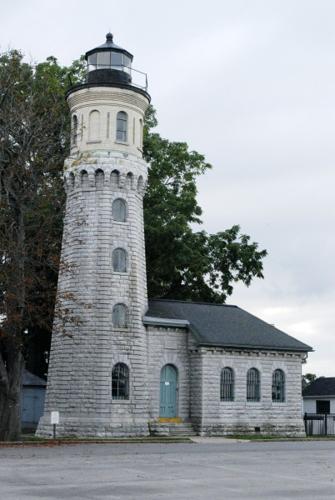
Just outside the entrance to the fort and next to the parking lot is the Old Fort Niagara Lighthouse built in 1872. The tower is 61 feet high and when the light was operating it could be seen for 25 miles. The light was put out of service in 1963.


