


OKOBOJI, Iowa | Nestled on the western shore of West Lake Okoboji, across the water from the hustle and bustle of Arnolds Park, is the Iowa Lakeside Laboratory, a century-old Iowa institution that deserves a little more attention, say the people who work there.
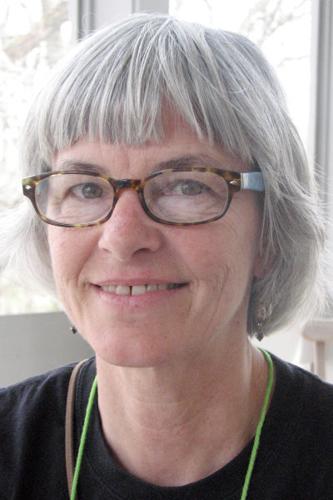
“We’re unfortunately one of Iowa’s best-kept secrets,” said Lisa Roti, the campus coordinator of the treasure place owned by the state but operated through the Board of Regents.
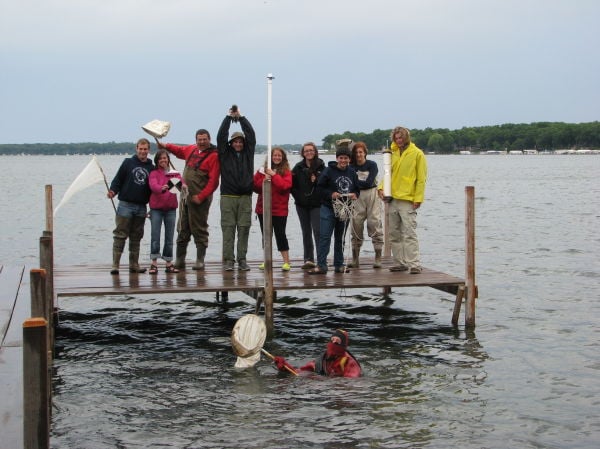
The campus is open to students and the public all-year long, but things really start jumping in the summer when Lakeside, a 147-acre campus which encompasses scenic Little Miller’s Bay and adjacent natural areas, its labs and outdoor classrooms becomes a magnet for college students from around the world.
When founded in 1910 by Dr. Thomas Macbride and other University of Iowa colleagues, it was a 10-acre site first owned by a private stock company and designed for the “study of nature in nature.”
People are also reading…
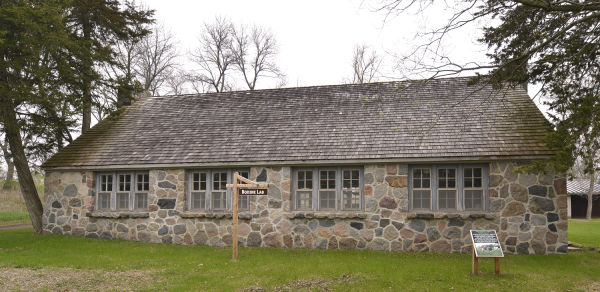
Lakeside has 12 structures on the National Register of Historic Places, including five stone classrooms built by the Civilian Conservation Corps.
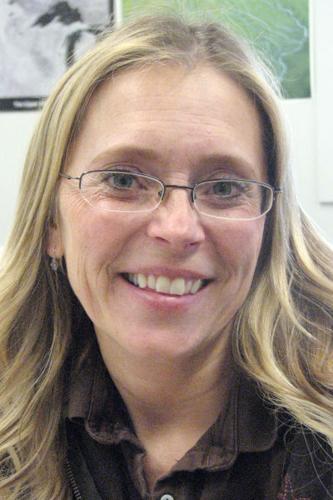
“This is the part we call the teaching campus,” said Jane Shuttleworth, the Lab’s education coordinator, of the Waitt Water Quality Lab, the site’s newest building which stands out on a high knoll that slopes down to the bay.
There is also a residential campus where the students and staff live. Then there is the ecological studies campus, or nature preserve, that occupies more than three-fourths of the land mass at Lakeside Lab, including the entire northern portion, also called “The North 40” by faculty and staff.
THE WAITT LAB
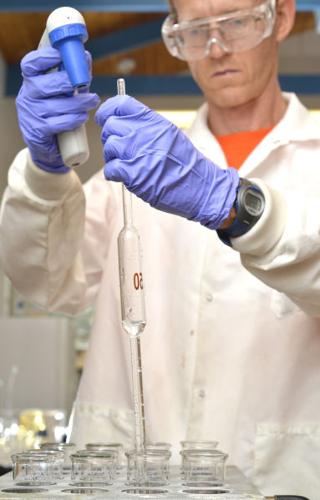
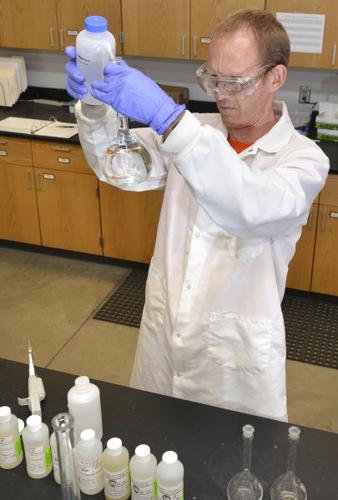
A successful fundraising campaign by Friends of Lakeside Lab led to construction of the Waitt Water Quality Lab, Lakeside’s first year-round teaching and research facility that houses classrooms, offices and the Richard Bovbjerg Water Chemistry Lab. It was completed in 1998.
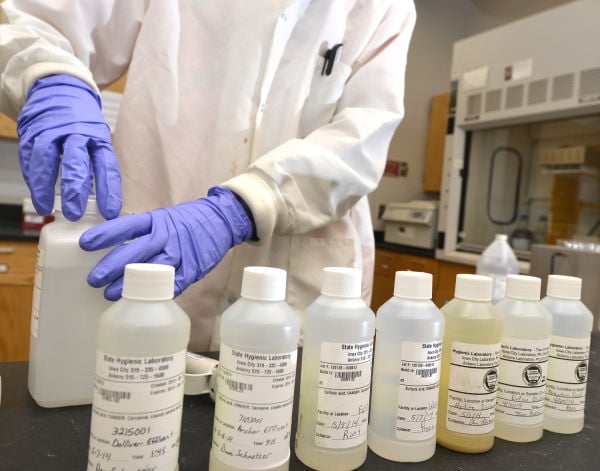
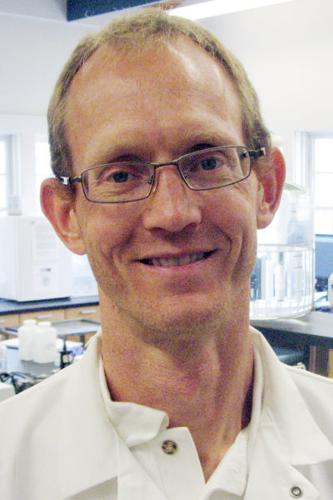
Dennis Heimdal, the environmental lab specialist who runs the water chemistry lab, works for Iowa’s State Hygienic Lab. He does testing for drinking water at private wells and public water supplies in addition to water quality testing on area lakes and watersheds.
“The summer’s when we start doing some of the state beach monitoring for bacteria for the DNR, and so we’ll be getting samples from mostly the northwest region,” he said. “I’m more in a lab setting now, doing analysis, but I really enjoy it, especially up in this part of the state. It’s really nice.”
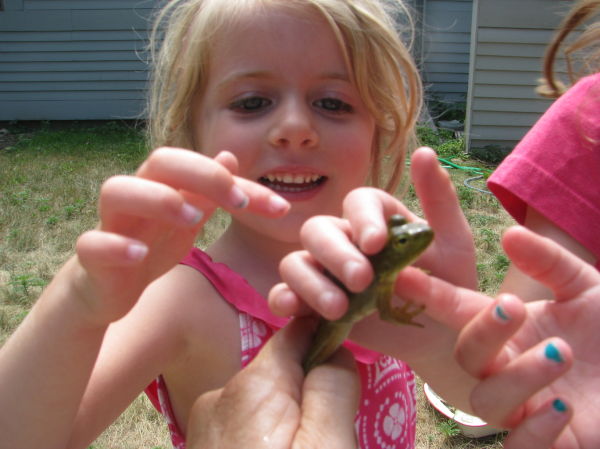
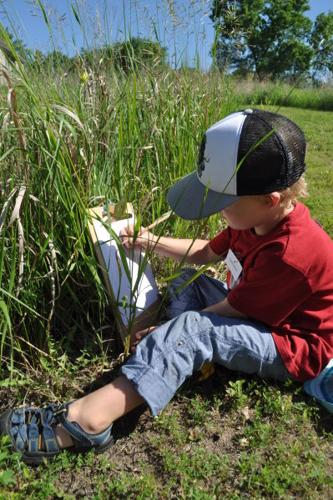
During the rest of the year, Shuttleworth noted, K-12 students are regular visitors, and she has developed a number of hands-on programs with classrooms in the great outdoors.
“You see how everything’s connected,” she said. “Like if you’re studying botany, you can’t help but learn about the soils. And if you learn about the soils, you can’t help but learn about geology. You learn that in the real world things aren’t just separated into just plants or just animals or just weather. It’s all related, and that’s how the learning takes place here.
And if you want to learn how this unique lake turns upside down every year, just ask and she has the charts to explain it.
While the science-educated programs at the Regents resource center change a bit over the years, natural science is not the only attraction. Shuttleworth noted that there is an Entrepreneurship Institute held in the summer. An Artist in Residence program has been started. "There are artists that come and work with the scientists in trying to communicate science through art," she said.
The one employee who spends more time at Lakeside than any other, even Heimdal, is Matt Fairchild, the facilities manager for the past five years.
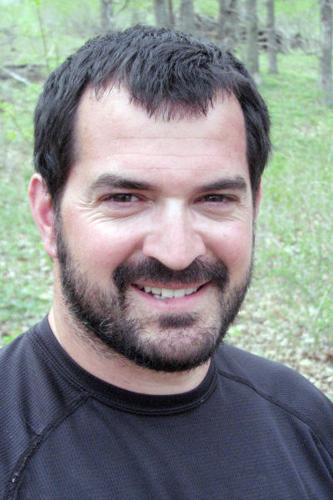
“My day varies from fixing a toilet to fixing Internet problems to burning prairie. It’s a wide range of things,” the Terrill, Iowa, native said. He just finished up a lakeside trail project that was dedicated in May. “I put up with the toilets and the maintenance so I can burn prairie and work on that kind of thing. I would rather be outside any day.”
Fairchild recalls that his grandfather went to Lakeside back in the ’70s to take the world-renowned diatoms course. And when he was working for the wildlife bureau, the DNR, his supervisor took a summer class there. Both of them influenced his decision to accept the Lakeside job.
DIATOMS
“We have one class that is really internationally famous, and that is for the study of diatoms,” said Shuttleworth, who first came to Lakeside as a college student and has worked there since 1999.
That class, started in 1963, is on diatoms, microscopic, single-celled organisms, the state of which in bodies of water tells us a lot about the quality of the water. They encase themselves in glass shells, providing an important link in the food chain and they remove dioxide from the air and water and turn it into oxygen. Growing in specific temperatures and water chemistry, diatoms can stay intact in the sediments of a lake for millions of years.
“So it can be used to study environmental change. It can be used to solve murders and in a lot of other ways. The lab is the only place in the whole world where there’s a full course in their taxonomy and ecology," she said. With a cell wall made out of glass, when diatoms grow, they can’t get bigger. They just get small, she said. “It’s the only organism that I know of that gets smaller as it grows older,” she said. “And then when they get really small, they have sex and get big again. They’re very weird, beautiful, interesting organisms.”
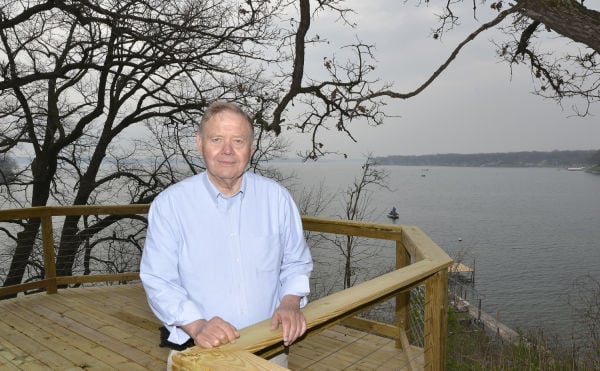
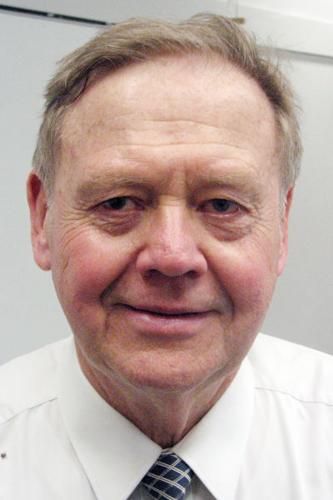
Three years ago, Lakeside hosted the North American Diatom Symposium, said Chet Rzonca, Lakeside’s director from the University of Iowa.
Summer students, he noted, come to Lakeside increasingly from independent colleges and universities, and not just the three Iowa Regents institutions: Iowa, Iowa State and Northern Iowa.
“One of our issues is it’s got a short season and we’re trying to develop the relationship with the three Regents institutions so that when students come up for the summer, they get an expensive field experience. The classes are small. And the courses are a month long.
“I think with the concern for the environment that there’s more need for a place like this and actual field courses. So I think it’s just a matter of time there’s more interest in it.” And Lakeside is no longer Iowa’s best-kept secret.


