


SIOUX CITY -- Deep in a rehearsal mode, Barb McKenney is getting in touch with her inner alley cat.
"You have to think like a cat and you have to move like a cat," the Hinton, Iowa, woman said as she taught steps to a group of tap dancers at the Siouxland Center for Active Generations.
"Barb is so good at moving like a cat," Sharon Georgeson said in admiration as the song "Alley Cat" played in the background. "My dogs at home would be very confused."
McKenney was the instructor and team leader for a weekly class taught at the 313 Cook St. center.

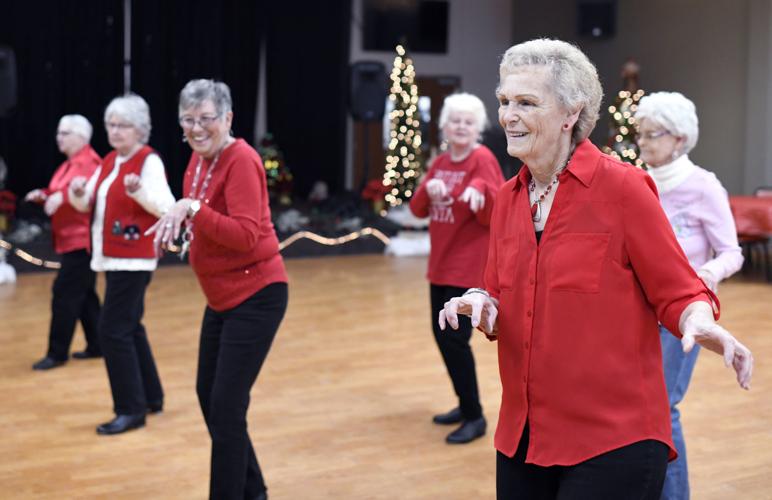
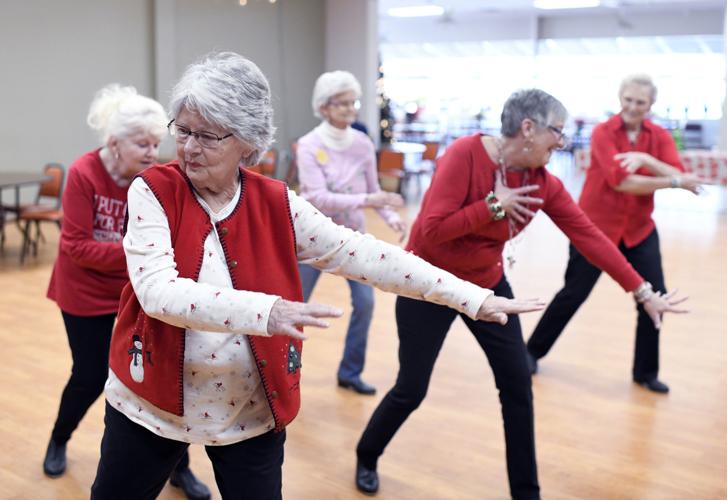
Frances Madison tap dances with The Center Stage Tappers as they rehearse "Alley Cat" at the Siouxland Center for Active Generations in Sioux City. The tap dance groups performs at the Center's "Fall Follies" as well as other events.
"We call ourselves the Center Stage Tappers," McKenney said with a laugh. "We used to call ourselves the Happy Hoofers but changed it for obvious reasons."
A dancer since childhood, the 70-something McKenney has been teaching the Tuesday dance class for years.
People are also reading…

"My mom got me into dancing as a little girl," she explained. "Then, it was for fun. Now, it is for fun and for exercise."
McKenney isn't kidding. She and her fellow tappers quickly move from routine to routine, all set to such songs as "Cab Driver," "Sugar" and, even, Roy Orbison's "Pretty Woman."
"You're getting a nice physical workout but you have to remember complicated moves while dancing to the music," she noted.

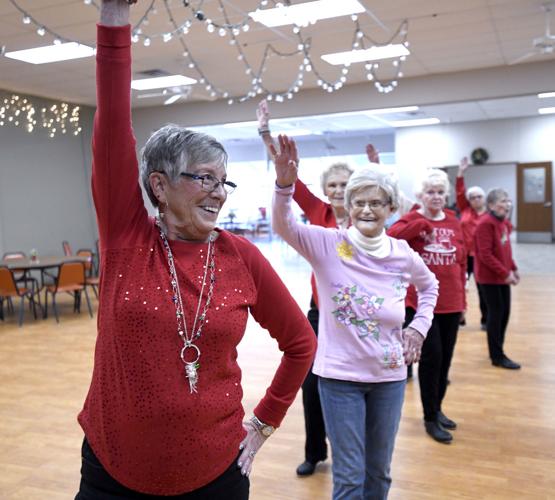
Frances Madison dances with The Center Stage Tappers as they rehearse songs like "Cab Driver", "Alley Cat", "Pretty Woman", and "Sugar" at the Siouxlagnd Center for Active Generations in Sioux City.
That's not easy for Frances Madison, who is diligent when it comes to dance.
"When you get off, literally, on the wrong foot, people do notice," she allowed.
Perhaps because she's so focused on her feet, Madison sometimes forgets to smile.

"Everyone thinks I'm so serious when I tap," she said. "I like dancing but I do have to remind myself to smile more often."
This is especially true for the times in which the Center Stages Tappers perform at the Siouxland Center for Active Generation's Fall Follies or whenever they book a gig at a school, church or retirement community.
Like McKenney, Sharyn Volk took dance lessons as a child. However, as an adult, she seldom had the opportunity to trip the light fantastic.

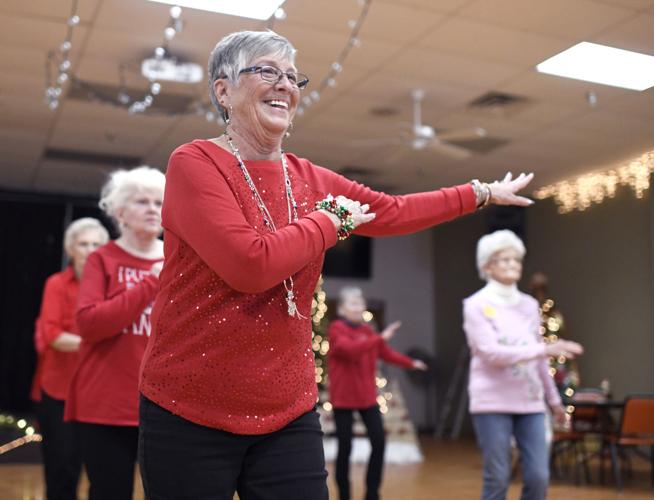
Barb McKenney dances with The Center Stage Tappers to songs like "Cab Driver", "Alley Cat", "Pretty Woman", and "Sugar" at the Siouxland Center for Active Generations in Sioux City.
"Guess my performing is limited to what I do at the center," she said with a sigh.
Always outgoing, Georgeson picked dance skills fairly quickly.
"I've always been musical," she said. "Dancing just meant adding steps to rhythm."

The Center Stage Tappers dance to "Alley Cat" at the Siouxland Center for Active Generations in Sioux City.
As the tappers practiced their show-stopping "Pretty Woman" dance, Carol Hughes couldn't help but smile.
"I would never picture myself as a tapper who would perform in public," the Hubbard, Nebraska, woman said. "That just isn't anything I ever thought about doing."
Instead, Hughes sees the Center Stage Tappers as an extension of her circle of friends.

The Center Stage Tappers dance to songs like"Cab Driver", "Alley Cat", "Pretty Woman", and "Sugar" at the Siouxland Center for Active Generations in Sioux City.
"When I come to dance class, I'm having fun and meeting with my friends," she said.
This is also true for Madison, who is as adept at tap dancing as she is at line and ballroom dancing.
"It's easy to get hooked on dancing," she said. "I know it's a way to stay active but it doesn't feel like exercise."

"You're simply having fun while dancing to music," Madison added.
For McKenney, creating choreography allows her to teach others what she loves to do.
"When I was small, I had curly hair just like Shirley Temple," she remembered with a smile. "Then you grow up, get married, raise a family and the things you enjoyed as a girl become just a distant memory."
"Being able to dance again makes me feel like a kid again," McKenney said.
PHOTOS: 42 historic images of Sioux City schools
Sioux City first school
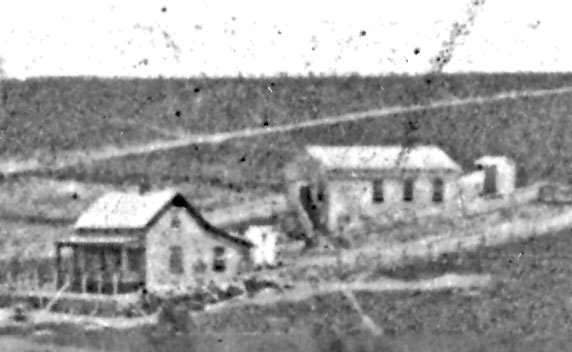
The first Sioux City schoolhouse is seen on the right in this early photograph.
Sioux City Central School

Sioux City's first brick school building, called Central School, opened its doors circa 1870. It operated for 20 years.
West Third Street School

The West Third Street School at West Third and Bluff streets, opened in 1880.
West Side Brick

The First Ward School, also called West Side Brick, opened in 1872 on the Market Street site where the LAMB Arts Regional Theatre is located. It was torn down in the late 1930s.
East Third Street School

The East Third Street School at Third and Chambers (later at Sixth and Morgan) streets opened in 1883 and operated until 1929.
Eighth Street Primary

The Eighth Street Primary School (known by several names in its time) opened at Eighth and Pierce streets in 1882.
Wall Street School

The Wall Street School, at Seventh and Wall streets, opened in 1880 and operated until 1925.
Fifth Ward School

The Fifth Ward School opened at Wall and Dace streets in 1885. It operated until 1938.
East Side Brick

East Side Brick, later to be renamed Irving, opened at 11th and Jennings streets in 1886. It was one of several Sioux City schools that underwent extensive renovations in the following century and was in use until 2006.
Everett School

The former Everett Elementary school opened in 1888, sharing the exact building plan of the Cooper school in Greenville, which was also built in the same year. Both buildings still stand, but underwent such extensive remodeling during the 20th century that they do not look at all like Everett seen in this photo.
Cooper School

The Cooper School in Greenville opened in 1888. It shares an identical building plan as the former Everett School on the west side. Both buildings still stand, but do not have their original appearance.
West Eighth Street School

Opened in 1887, the West Eighth Street School operated until 1934. Today, the McDonalds on Hamilton Boulevard sits near the site of the school.
Pearl Street School

The Pearl Street School, later named Bancroft after the statesman George Bancroft, opened in 1888.
Cole's Addition School

The Cole's Addition School, later called Franklin, opened in 1889 at Ninth and Plymouth streets. It was one of the schools that underwent extensive remodeling in the 20th century before it closed in 1982.
Bryant School

The Bryant School, named for poet William Cullen Bryant, opened in 1890.
Longfellow School

Named for Henry Wadsworth Longfellow, the original Longfellow school opened in 1890. It lasted only three years.
Hawthorne School

Hawthorne School opened in 1891 and operated until 2008. It was one of the schools that underwent 20th century remodeling.
Longfellow School (second)

A second Longfellow School was built in 1893 to replace the previous one, which was built only three years earlier. It was one of the schools that was remodeled in the 20th century and remained in use until 2012.
Riverside School

Riverside School opened sometime in the 1890s at Hornick Street and Nash Avenue. It closed in 1914.
Hornick's Addition School

The Hornick's Addition School opened at West First and Leonard streets in the mid-1890s.
Floyd School

The Floyd School, named for Sgt. Charles Floyd, opened in 1902. It later underwent extensive remodeling before it closed in 1980.
Smith Villa School

The Smith Villa School, in the former home of early Sioux City resident William R. Smith, opened in 1899.
Whittier School

The Whittier School opened in 1902. It was remodeled in the 20th century and closed in 2015.
Crescent Park School

The Crescent Park School opened in 1906, as did Hunt School. Unlike Hunt, however, the wood-framed Crescent Park School closed after only 14 years.
Hunt School

The Hunt School was one of Sioux City's oldest school buildings when it closed at the end of the last school year. It opened in 1906.
Joy School

The Joy School, which opened in 1912 and closed a century later, is today an apartment complex.
Lowell School

Lowell School opened in 1910 and closed in 2008.
Follett House

The Follett House, 1309 Nebraska St., became the first building in Sioux City to house a high school (without other grade levels) in 1890. Classes were held there for two years.
Riverview School

Riverview School opened in 1914 and closed in 2002.
East Junior High School
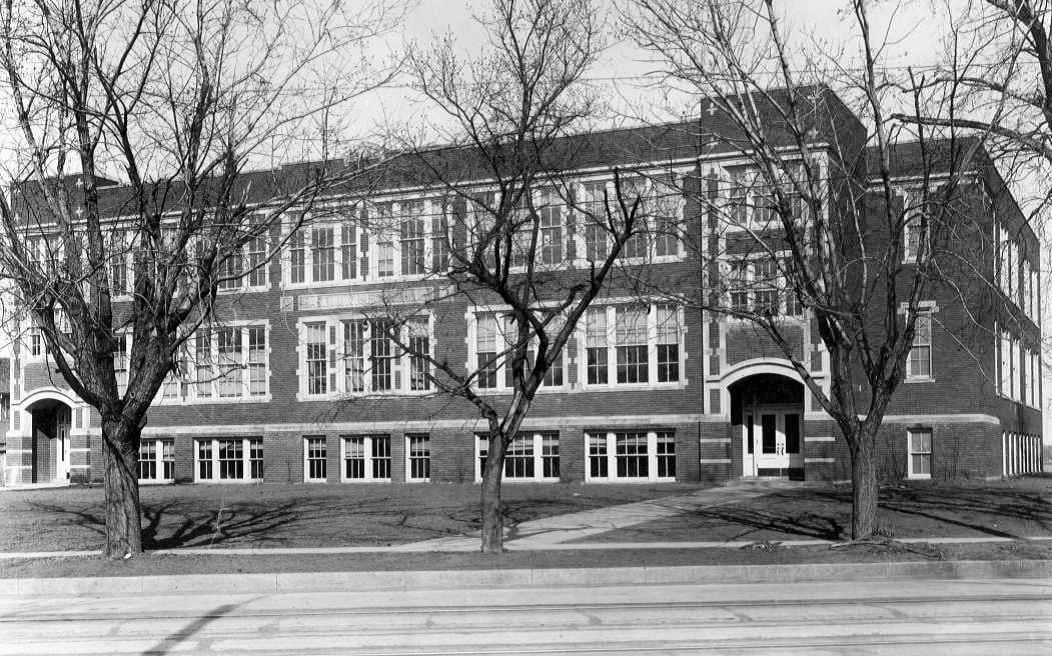
Sioux City's East Junior High School opened in 1917, just eight years after the first-ever junior high school opened in the U.S. It closed in 1972.
West Junior High School

Sioux City's West Junior High School opened in 1919. It closed in 2003.
Roosevelt School

Roosevelt School, named for Theodore Roosevelt, opened in 1920. It remained open until 2014.
Crescent Park School

Another Crescent Park School, later called Bryant, opened at 27th and Myrtle streets in 1920.
Emerson School

Emerson School opened in 1921. It closed in 2014.
McKinley School

McKinley School, named for president William McKinley, opened in 1921.
Washington School

Named for George Washington, Sioux City's Washington School opened in 1921. It closed in 2013.
East High School

East High School opened in 1925 and remained open until 1972.
Grant School

Grant School, named for Ulysses S. Grant, opened in 1925. It closed in 2008.
Woodrow Wilson Junior High School

Sioux City's Woodrow Wilson Junior High School opened in 1925. It closed in 2005.
Leeds High School

Leeds High School opened in 1939, one of only a few high schools to be opened in Sioux City during the 1930s and 1940s. It closed in 1972.
Webster Elementary
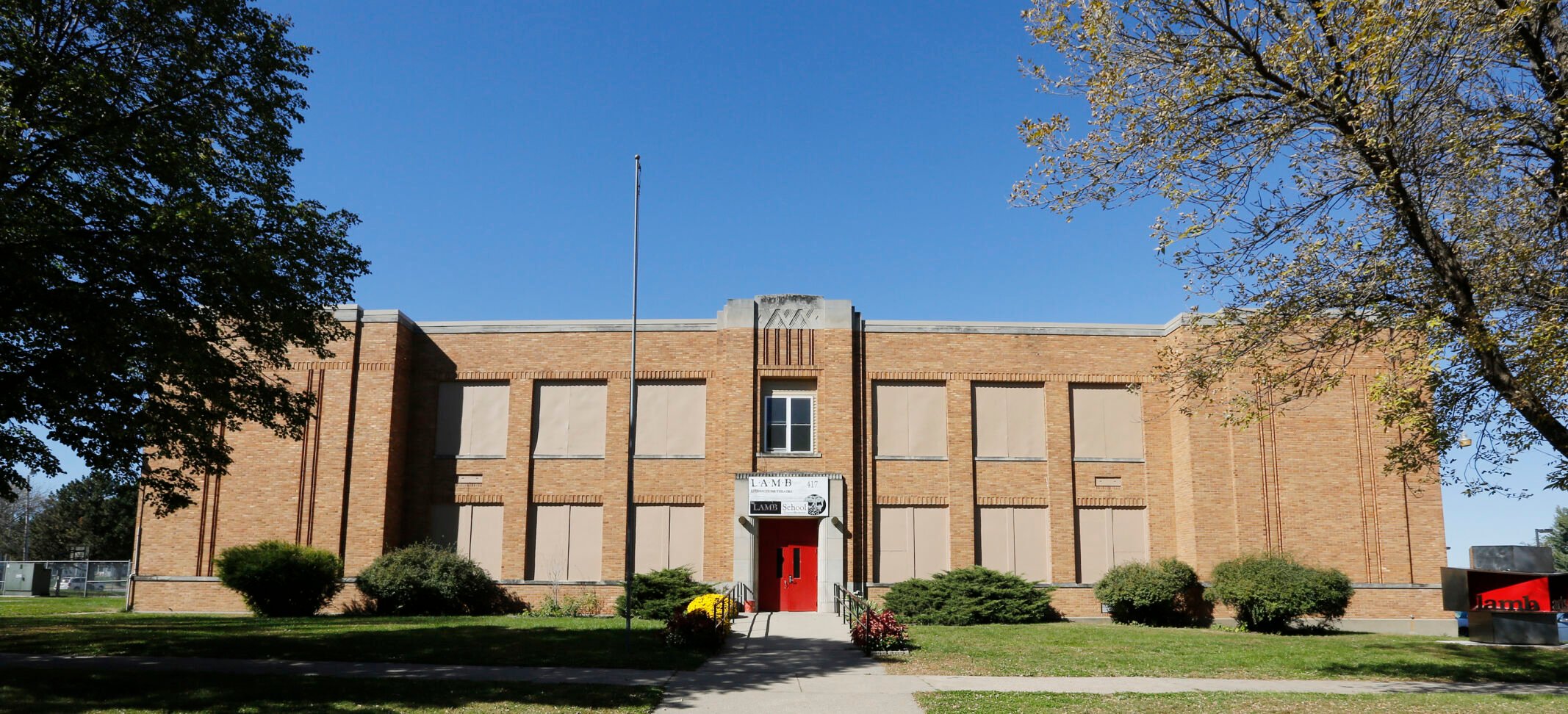
The Webster Elementary school, built in 1939, has served as the home of the LAMB Arts Regional Theatre for decades.
Hunt Elementary School goodbye hug

Students hold hand while circling Hunt Elementary School to give it a "hug" Wednesday, May 29, 2019, on the last day of classes at the school.

LEARN all about the history of schools in Sioux City: The first school, Central, West Third Street, Riverside, and more.