
VERMILLION, S.D. -- Detecting concussions in the brain remains, to date, a somewhat imprecise science, based largely on behavioral and physiological observations.
But a more accurate means of diagnosing a concussion -- an injury commonly associated with football -- might someday lead to better outcomes for those who suffer such injuries. A researcher at the University of South Dakota is working to develop such a diagnostic technique.
USD associate professor of basic biomedical sciences Lee Baugh, who studies the brain, is leveraging special MRI scanning sequences and other testing, to make a diagnosis. His research on the subject remains in the "pre-clinical stage."
"One of the things that is really difficult from a diagnostic perspective is, if you scan an individual's brain that we think has had a concussion, we really don't see much at all," Baugh said.
People are also reading…

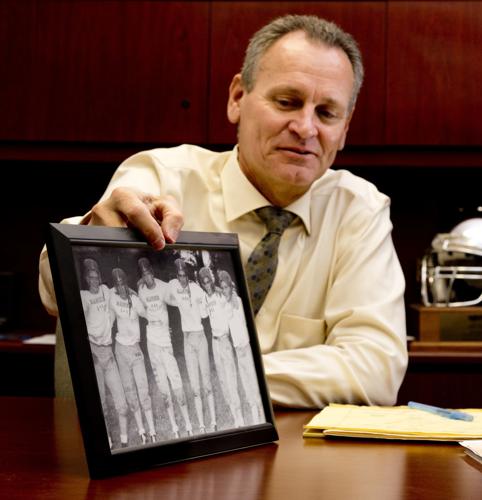
Bob Neilson, USD head football coach, displays a photograph of this father showing the leather football helmet he wore when playing during an interview Dec. 13, in the football offices at the University of South Dakota's DakotaDome in Vermillion, South Dakota.
Football has been, for years, beleaguered by accusations that concussions sustained in the game can cause serious, lasting damage to the brain, and that not enough has been done to prevent them. Some players have been found to suffer chronic traumatic encephalopathy, or CTE, which can cause cognitive and emotional impairment.
The late Aaron Hernandez, a Patriots tight end and convicted murderer, was known for his erratic and criminal behavior in the years before he committed suicide in prison in 2017. A post-mortem examination of the 27-year-old's brain found a high degree of CTE damage.

Photos of Hernandez's dissected brain showed its interior was unusually cavernous for a man his age.
USD head football coach Bob Nielson maintains that, although football is the best-known sport where players suffer concussions, the rate of concussions in football is, at least, no worse than what's seen in other sports.
"You have a similar, if not higher rate of concussions in other contact sports, such as wrestling, and hockey, as you do in football," said Nielson, a head coach of 27 years.

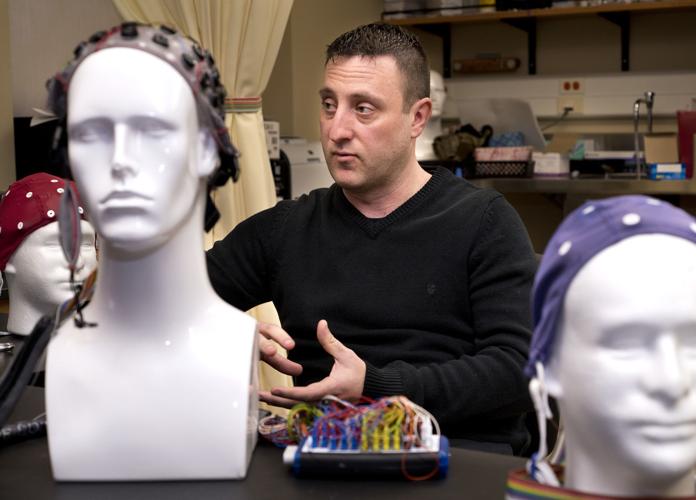
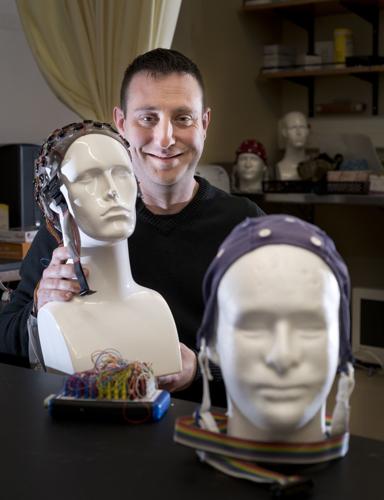
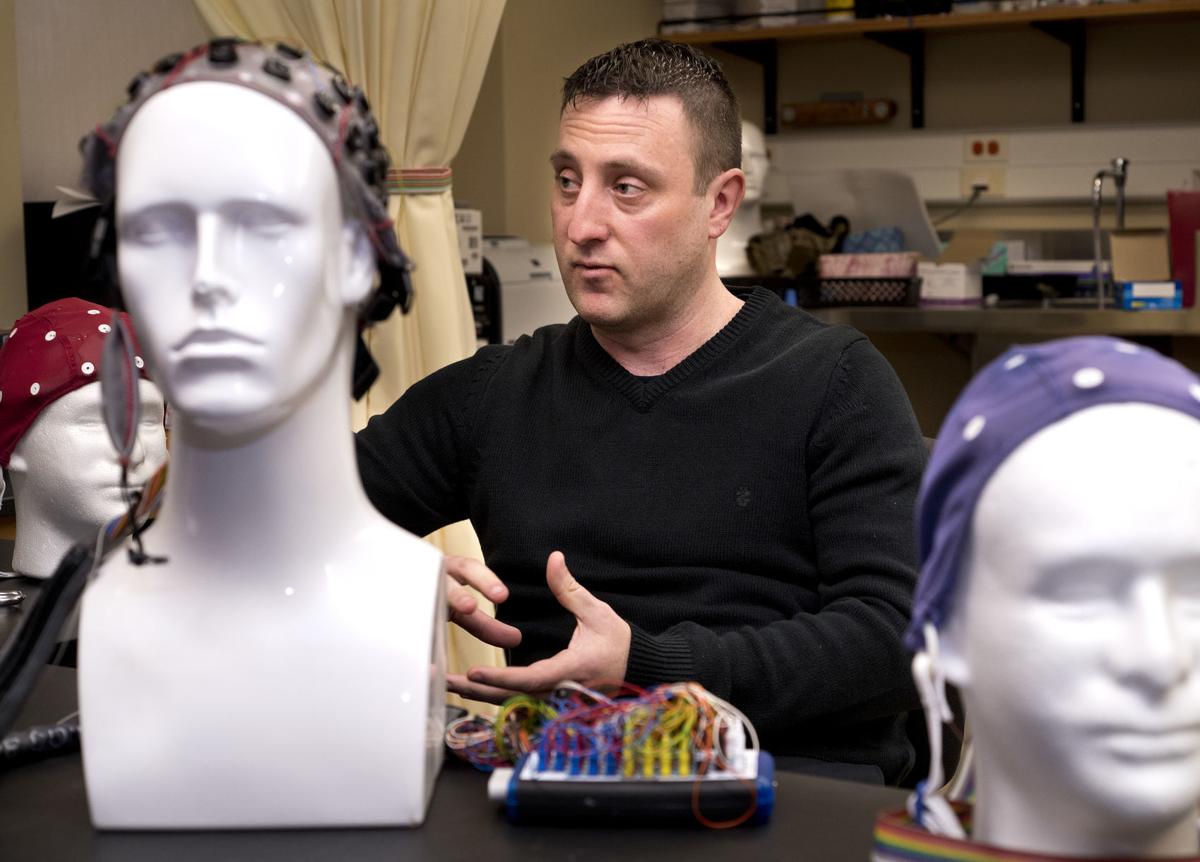
Professor Lee Baugh, director of USD's Center for Brain and Behavior Research poses with gear used to measure electrical pulses in the brain Dec. 13 at the Sanford School of Medicine on the University of South Dakota campus.
His assertion is true -- an NCAA study found that concussions are more prevalent in wrestling and in men's and women's hockey than in football.
Nielson said the team has put a lot of stock into the detection of head injuries.
"I'm assuming that every year we've dealt with at least one concussion or head injury. The thing that has happened more recently is, I think, that, we've done more in terms of our training of health staff to be able to identify those kinds of situations or potential situations, more so than 20 years ago," he said. "Therefore, every school now is required to have a protocol to deal with potential concussion-type injuries."

Colby Keegan, an athletic trainer at USD, said sideline officials take note of the players' behavior and symptoms in their assessment of whether a concussion has occurred.
"We had one this year where he got hit. Just watching, they went to run the next play, he wasn't lined up right. He obviously, no idea what was going on, so we pulled him. And we look at the symptoms, you know, memory, vision, you look at balance, and then just emotional -- a lot of people, after they get hit, they're just angry or sad for some reason, and don't really know why," he said.

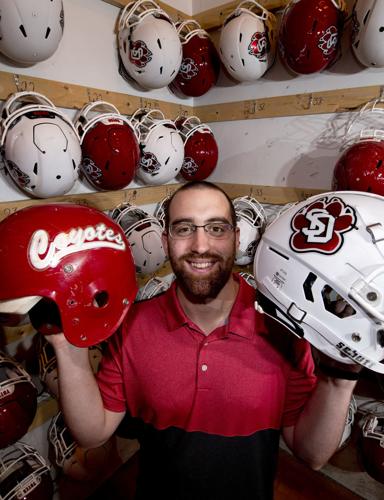
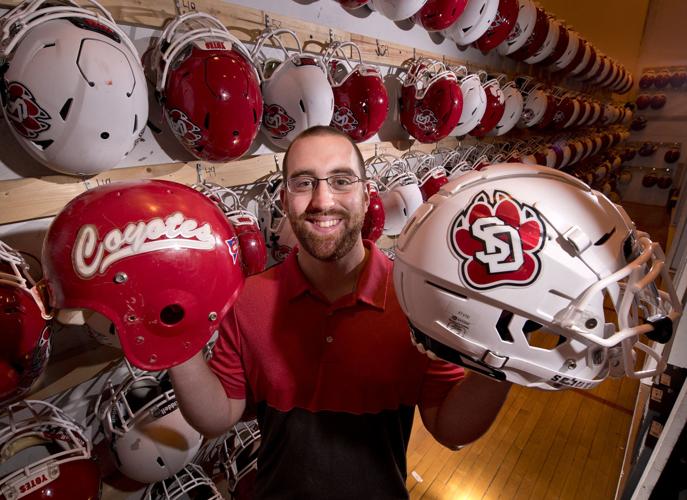
Nick Roth, equipment manager for the USD football team, displays the differences between a 1970's era football helmet and a modern helmet Dec. 13 in an equipment storage room at the University of South Dakota's DakotaDome in Vermillion, South Dakota.
"And then we do the impact test, which is, test reaction time, recall memory, and stuff like that, on a computer, for a definite diagnosis."
Players who suffer concussions are entered into the "concussion protocol," Keegan said, and must meet certain criteria, including being free of symptoms of concussions, before they can return to the game. Concussed players are even held out of classes for a few days after the fact: "Most of our guys bounce back very quickly."
After a concussion, players will be out of the game for at least six days, though normally they're unable to play for about two weeks. Some have neurological symptoms "for a month," by which point the players may be directed to a neuropsychologist.

More broadly (and not necessarily referring to USD players), Keegan said there are cases in college football where, for one reason or another, players' symptoms linger for quite a while, while an unfortunate few never totally recover.
"Those are always really sad to see," Keegan said. "It's not necessarily the big hits that cause the worst concussions.
"You've seen kids who just don't bounce back the same."

Nick Roth, equipment manager for the USD football team, displays the differences between a 1970's era football helmet and a modern helmet Dec. 13 in an equipment storage room at the University of South Dakota's DakotaDome in Vermillion, South Dakota.
Often, Baugh said, the most effective way to determine if someone has suffered serious brain damage is to examine their brains on autopsy. Even then, deceased players' brains might appear to have only subtle changes -- unusual patterns in the tissue, atrophy of the white matter (one of the substances the brain is made of) and signs of past bleeding.
"They're all very small differences that you're looking at," he said.
Physically small and hard-to-notice though the injuries may be, these changes can wreak catastrophic damage.
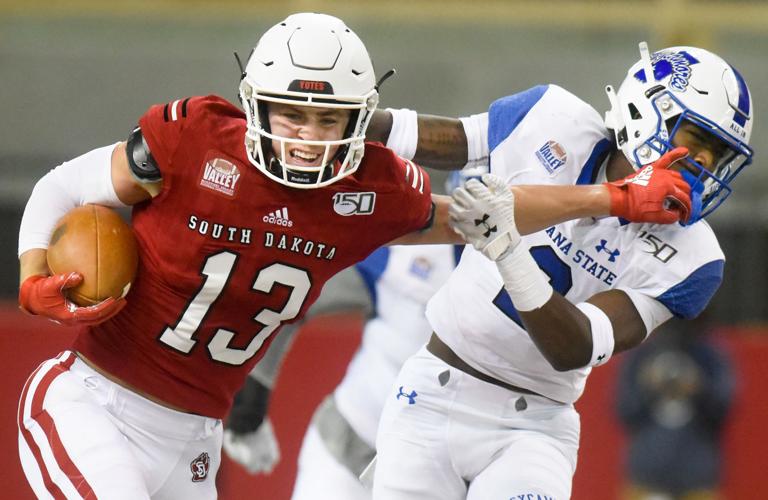



"Even after a single concussion, it's possible to develop what's known as post-concussive syndrome, where people have difficulty with attention, they may experience headaches, sleep disorders, anxiety, depression, it increases the prevalence of substance abuse. Very difficult problems to tackle when there isn't an underlying cause," Baugh said.
"There've been studies now that show that even at the amateur high school level, it's not unusual for a patient or a player to experience an injury that could result in post-concussive syndrome."
Abdul Hodge, USD's outside linebackers coach and NFL liaison who played for the Green Bay Packers, the Cincinnati Bengals and the Carolina Panthers during an NFL career spanning from 2006 to 2010, expressed a high degree of optimism about the state of concussion prevention at the college level.
"Today, the game of football is as safe as it's ever been," Hodge said. In his years with the NFL, Hodge said he never suffered a concussion.
Nielson maintains that technology has come a long way in shielding the brain. He pointed to a decades-old photo of his father and teammates in old-fashioned helmets, the kind which offered the wearer not even a face mask: "That's what my dad wore when he played."
"Now you have a helmet that's created with a system that is designed to provide greater protection to the head," Nielson said. "Helmet systems have changed substantially to create a safer protective device."
PHOTOS: 42 historic images of Sioux City schools
Sioux City first school
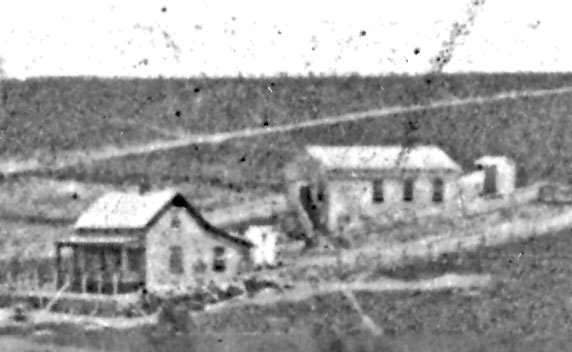
The first Sioux City schoolhouse is seen on the right in this early photograph.
Sioux City Central School

Sioux City's first brick school building, called Central School, opened its doors circa 1870. It operated for 20 years.
West Third Street School

The West Third Street School at West Third and Bluff streets, opened in 1880.
West Side Brick

The First Ward School, also called West Side Brick, opened in 1872 on the Market Street site where the LAMB Arts Regional Theatre is located. It was torn down in the late 1930s.
East Third Street School

The East Third Street School at Third and Chambers (later at Sixth and Morgan) streets opened in 1883 and operated until 1929.
Eighth Street Primary

The Eighth Street Primary School (known by several names in its time) opened at Eighth and Pierce streets in 1882.
Wall Street School

The Wall Street School, at Seventh and Wall streets, opened in 1880 and operated until 1925.
Fifth Ward School

The Fifth Ward School opened at Wall and Dace streets in 1885. It operated until 1938.
East Side Brick

East Side Brick, later to be renamed Irving, opened at 11th and Jennings streets in 1886. It was one of several Sioux City schools that underwent extensive renovations in the following century and was in use until 2006.
Everett School

The former Everett Elementary school opened in 1888, sharing the exact building plan of the Cooper school in Greenville, which was also built in the same year. Both buildings still stand, but underwent such extensive remodeling during the 20th century that they do not look at all like Everett seen in this photo.
Cooper School

The Cooper School in Greenville opened in 1888. It shares an identical building plan as the former Everett School on the west side. Both buildings still stand, but do not have their original appearance.
West Eighth Street School

Opened in 1887, the West Eighth Street School operated until 1934. Today, the McDonalds on Hamilton Boulevard sits near the site of the school.
Pearl Street School

The Pearl Street School, later named Bancroft after the statesman George Bancroft, opened in 1888.
Cole's Addition School

The Cole's Addition School, later called Franklin, opened in 1889 at Ninth and Plymouth streets. It was one of the schools that underwent extensive remodeling in the 20th century before it closed in 1982.
Bryant School

The Bryant School, named for poet William Cullen Bryant, opened in 1890.
Longfellow School

Named for Henry Wadsworth Longfellow, the original Longfellow school opened in 1890. It lasted only three years.
Hawthorne School

Hawthorne School opened in 1891 and operated until 2008. It was one of the schools that underwent 20th century remodeling.
Longfellow School (second)

A second Longfellow School was built in 1893 to replace the previous one, which was built only three years earlier. It was one of the schools that was remodeled in the 20th century and remained in use until 2012.
Riverside School

Riverside School opened sometime in the 1890s at Hornick Street and Nash Avenue. It closed in 1914.
Hornick's Addition School

The Hornick's Addition School opened at West First and Leonard streets in the mid-1890s.
Floyd School

The Floyd School, named for Sgt. Charles Floyd, opened in 1902. It later underwent extensive remodeling before it closed in 1980.
Smith Villa School

The Smith Villa School, in the former home of early Sioux City resident William R. Smith, opened in 1899.
Whittier School

The Whittier School opened in 1902. It was remodeled in the 20th century and closed in 2015.
Crescent Park School

The Crescent Park School opened in 1906, as did Hunt School. Unlike Hunt, however, the wood-framed Crescent Park School closed after only 14 years.
Hunt School

The Hunt School was one of Sioux City's oldest school buildings when it closed at the end of the last school year. It opened in 1906.
Joy School

The Joy School, which opened in 1912 and closed a century later, is today an apartment complex.
Lowell School

Lowell School opened in 1910 and closed in 2008.
Follett House

The Follett House, 1309 Nebraska St., became the first building in Sioux City to house a high school (without other grade levels) in 1890. Classes were held there for two years.
Riverview School

Riverview School opened in 1914 and closed in 2002.
East Junior High School
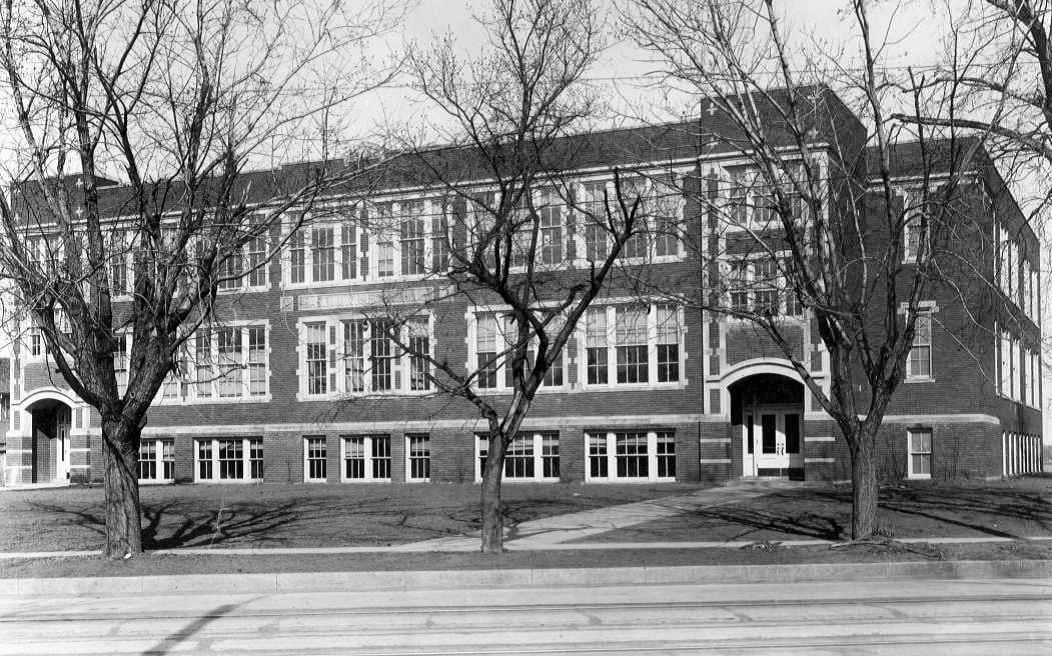
Sioux City's East Junior High School opened in 1917, just eight years after the first-ever junior high school opened in the U.S. It closed in 1972.
West Junior High School

Sioux City's West Junior High School opened in 1919. It closed in 2003.
Roosevelt School

Roosevelt School, named for Theodore Roosevelt, opened in 1920. It remained open until 2014.
Crescent Park School

Another Crescent Park School, later called Bryant, opened at 27th and Myrtle streets in 1920.
Emerson School

Emerson School opened in 1921. It closed in 2014.
McKinley School

McKinley School, named for president William McKinley, opened in 1921.
Washington School

Named for George Washington, Sioux City's Washington School opened in 1921. It closed in 2013.
East High School

East High School opened in 1925 and remained open until 1972.
Grant School

Grant School, named for Ulysses S. Grant, opened in 1925. It closed in 2008.
Woodrow Wilson Junior High School

Sioux City's Woodrow Wilson Junior High School opened in 1925. It closed in 2005.
Leeds High School

Leeds High School opened in 1939, one of only a few high schools to be opened in Sioux City during the 1930s and 1940s. It closed in 1972.
Webster Elementary
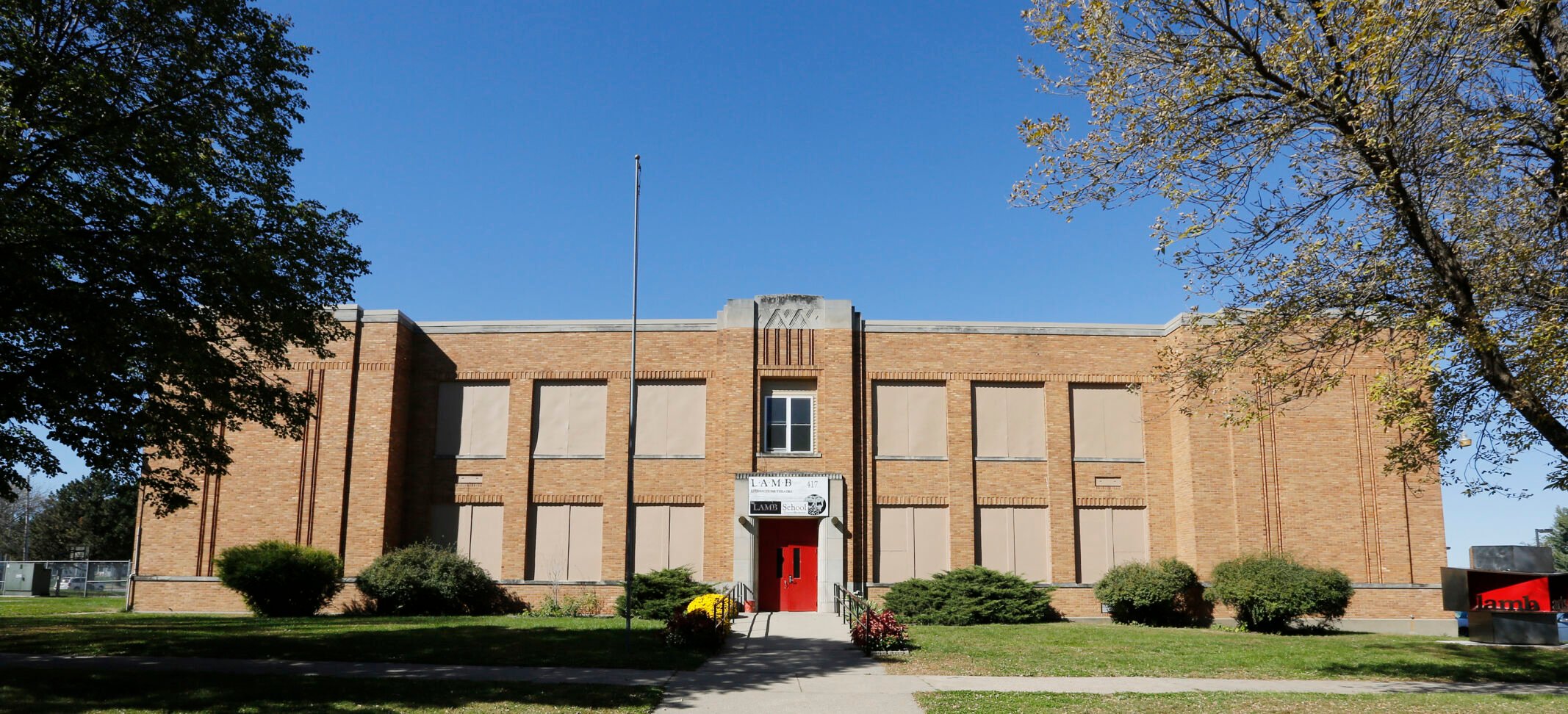
The Webster Elementary school, built in 1939, has served as the home of the LAMB Arts Regional Theatre for decades.
Hunt Elementary School goodbye hug

Students hold hand while circling Hunt Elementary School to give it a "hug" Wednesday, May 29, 2019, on the last day of classes at the school.

LEARN all about the history of schools in Sioux City: The first school, Central, West Third Street, Riverside, and more.