

ORANGE CITY, Iowa | Twenty-some years ago Dave and Helen Huitink decided they wanted to have an animal that was little different than the standard sheep, goats and ponies that reside at their pumpkin farm's petting zoo.
They thought a llama might be a good addition. They purchased their first llamas at an exotic animal sale in Sioux Center for $150.
Four or five llamas roamed the farm at a time for several years, wowing young children who frequent Pumpkinland, 4123 Jackson Ave., in the fall with their families. The llamas produced a few baby llamas, that Dave Huitink said were always popular with visitors.
"If you could get one in the fall, that was a big hit for the kids," he said of a baby llama. "If you had a little one running next to mommy, that was pretty impressive for the kids."
People are also reading…
One summer the Huitinks hauled a baby llama to Sheldon for a petting zoo held in conjunction with a Fourth of July celebration.
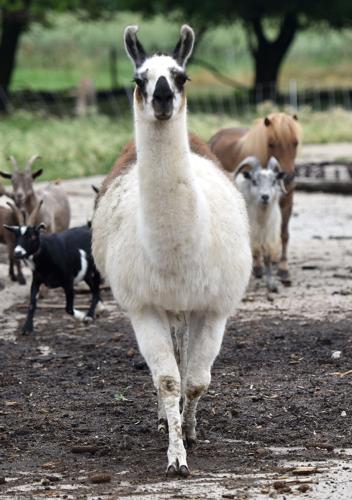
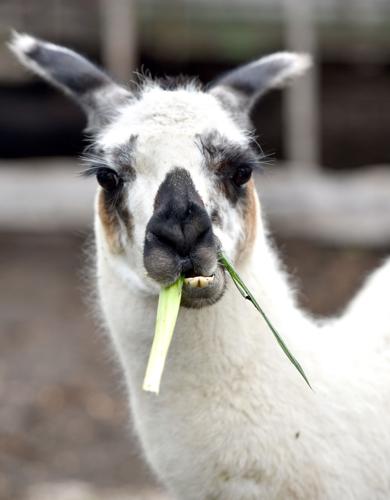
Now the Huitinks are down to a single llama named Chloe, who was born on the farm more than a decade ago. Llamas, Helen Huitink said, tend to live 20 to 25 years. She's hoping to add alpacas to the petting zoo by the fall.
A llama, Dave Huitink said, can cost up to $30,000. He said he was once quoted $10,000 for an alpaca that was registered and had papers.
Helen Huitink said an alpaca is sort of a smaller version of a llama.
"I feel they're a little more kid-friendly," she said as Chloe trotted near the barn among a slew of goats, stopping to munch on green cornstalks lying on the ground. "Because we're down to the one llama, we think it's a good time to transition."
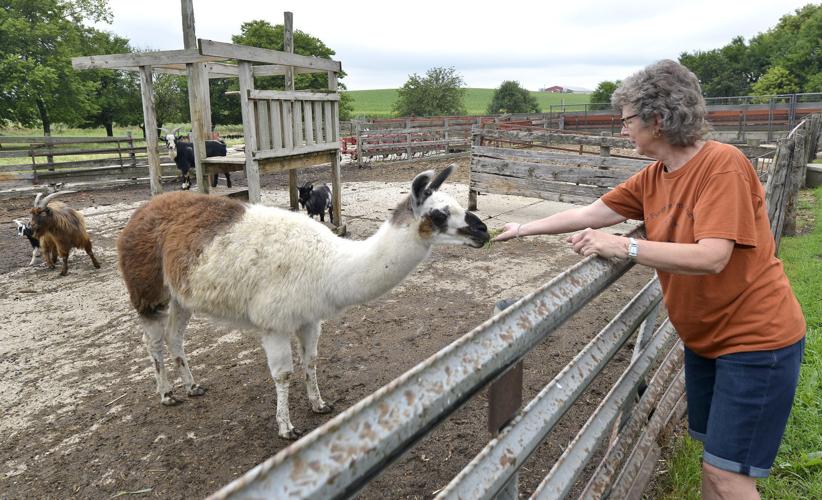
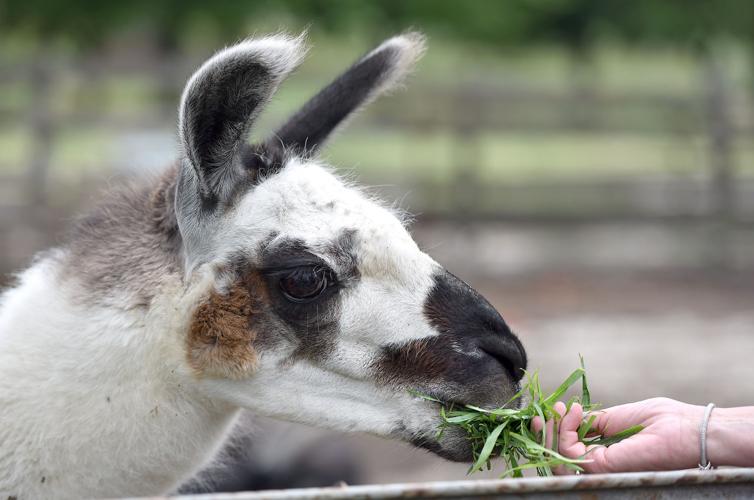
Chloe, in contrast to a male llama the Huitinks once owned, is quite friendly. Helen Huitink said their grandchildren, ages 3, 4 and 5, will sit along the fence and feed grass to Chloe.
When Helen Huitink called Chloe by name, she came over to the fence and ate grass out of her hand. Dave Huitink said some children have tried to engage Chloe in a spitting contest, which he said isn't a good idea.
"(Llamas) get knocked on for spitting, but you really have to work hard to make them spit. It's not a first reaction for the animals. You don't win a spitting contest with a llama, you always lose," he said with a chuckle.
Overall, Dave Huitink said llamas are low-maintenance. He said they eat grain and hay and pretty much anything green. Their wool doesn't contain lanolin, a waxy substance that coat's a sheep's wool. He said a llama's coat serves as a good material with which to make sweaters and blankets that are hypoallergenic.
"It's really not a big deal for us for the wool," he said. "A couple of times over I gave somebody a bag of wool ... I've never gotten anything back from it."
Llamas, Dave Huitink said, are good at protecting other farm animals. He said they're very social animals that don't like being alone.
"They get a little schizo if they're alone themselves. They have to be in a group setting," he said.
Anyone considering adding a llama to their farm, Helen Huitink said, needs a sturdy fence. Her biggest nightmare is for Chloe to get lose.
"They run like deer," she said. "Over the years, I had them out a few times. Even with a four-wheeler you can hardly catch them."