


Walking the Great Wall of China, riding camels in Morocco, feasting on crepes in France, drinking absinthe in Amsterdam and taking siestas in Spain – studying abroad promises a host of unforgettable experiences for college students.
But what is it like when studying abroad means coming to America, or more specifically, Sioux City? Do international students return to their home countries with delightful tales eating their weight in La Juanita’s burritos and Twin Bings, surrounded by the cornfields of summer before they’re buried by six feet of snow?
Nearly 975,000 international students studied at American colleges and universities in 2014-2015, according to the most recent data from the Institute of International Education. One out of three studied in California, New York or Texas with a majority of the students coming from China, India, South Korea or Saudi Arabia.
People are also reading…
Here in Sioux City, Briar Cliff University had 50 students from 18 countries for the 2015-2016 school year.
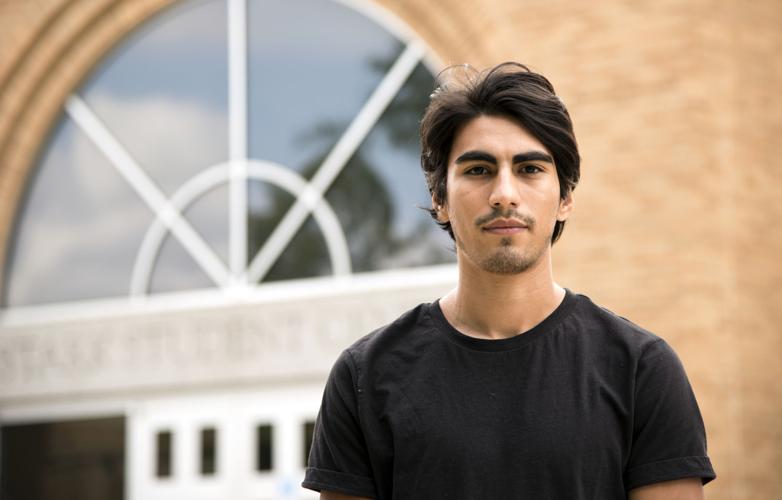
One of those students was Max Pizarro.
While he is Catholic, he didn’t attend Briar Cliff for its Franciscan values. He received academic and athletic scholarships that covered about 60 percent of his tuition.
“It was a good offer,” he said. “And I really, really, really wanted to play soccer.”
Having the soccer team gave him instant friends who understood the struggle of assimilating to American culture because many of them were going through it too, coming from other countries like Ecuador, Spain, Scotland, England, Ireland, Peru and Canada.
On a map, Sioux City was far away from Valencia, the third largest city in Venezuela, a country caught in an economic crisis. Pizarro didn’t know Iowa from Idaho. It was all the same to him. It was the United States.
He hoped to hone his English skills and didn’t expect to hear much Spanish in the Heartland. Boy, was he wrong. It was Miami all over again. In middle school, his mom sent him to the seaport city for one year, thinking he would learn English. Most of the classes were taught in Spanish.
He picked up words and phrases from watching episodes of “Friends” and “Two and a Half Men.” Still, Ross and Rachel could only teach him so much. The first year he struggled to understand what the professors were saying.
“The big thing was the classes, taking the classes in English,” he said. “That really threw me off.”
As a senior, he’s adjusted.
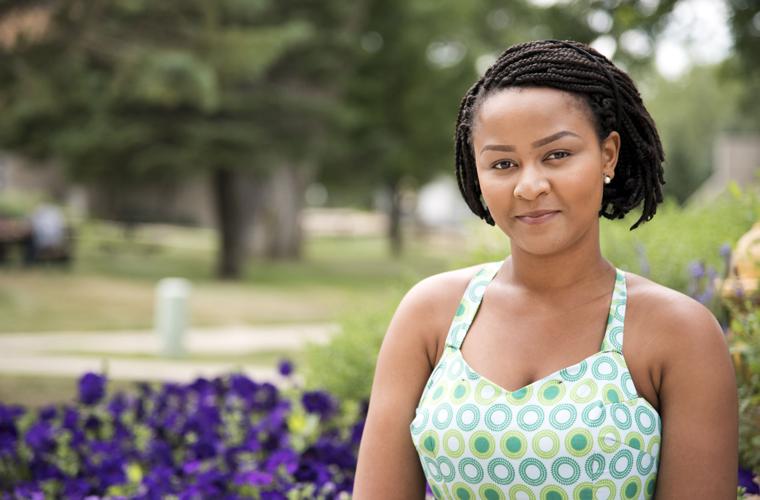
Meanwhile, Esther Mboa closed out her first year at Briar Cliff, feeling the pressure Pizarro once felt. She’s still struggling with eating American cuisine and the language barrier.
She speaks French, Swahili and Lingala. She knew a little bit of English and tried to learn more by listening to American music, particularly Beyonce and Rihanna. Two years ago, she left her home in the Democratic Republic of the Congo to study English for seven months in Orlando, Florida, at The Language Company.
Mboa was looking at attending a state school but determined they were too big and too expensive.
“With a little university, you can go see the professor. You can talk. They give you that attention that you need, and they really care about what you’re saying,” she said. “When you go to them and you tell them, ‘You know what, I’m from Africa. I don’t really speak English.’ They’re like, ‘OK, you’re not the first person (to have this problem).’ And they’re really there for you.”
Admittedly, though, Mboa didn’t want to live in Iowa. “I hate cold,” she said. And she had never seen snow. But one of her friends was enrolled at Briar Cliff and liked it.
Her friend’s vote of confidence – and an academic scholarship – was enough to convince her to give it a try.
Mboa had already gone to college in Kinsasha, the capital and largest city of the Democratic Republic of the Congo. She studied economics there for three years out of five, but her credits wouldn’t transfer.
So, she was a 24-year-old freshman.
“I really hate that, but I don’t have any choice,” she said. “When you have an American diploma, you have a lot of doors open (to you), job opportunities, things like that.”
Once she earns her business degree, she wants to return to the Congo. She hasn’t been home in two years.
Mboa and Pizarro stayed in Sioux City over the summer to work.
She lived on campus. He rented a house with a three friends from the soccer team, who are from Ecuador and England. She has time to figure things out, but he’ll have some big decisions to make in the coming months.
There’s nothing for him in Venezuela. His mom moved to Panama. His sister is moving to Spain or Miami.
“Right now, the country’s in a really bad place. You don’t want to live in a place where you can’t even go out because you’ll get mugged or kidnapped,” he said. “For a lot of people, you can’t even get basic products at the supermarket. You can’t get soap. You can’t get shampoo. You can’t get food, some food. It’s crazy to think of.”
The State Department issued an updated travel warning in July, detailing country-wide shortages of food, water, medicine, electricity and other basic necessities that have led to violence, riots and looting.
Recently, McDonald’s stopped selling Big Macs in Venezuela because it couldn’t get buns. Even more alarming, some zoo animals – the ones that haven’t starved to death – have been reportedly killed for food.
“The quality of life is just really, really low,” Pizarro said.
He hopes to stay and work or study in the United States after completing his bachelor’s degree in biology.


