

Tom Munson admitted that many of the report cards, school papers and art projects he accumulated as a kid are likely residing in either the attic or the basement of his mom's house.
"Those are absolutely the two worst places to house things you want to keep," the Sioux City Public Museum archival clerk said. "An attic will be too dry and too hot to store keepsakes and a basement will be too cold and too damp."
And both places violate Munson's cardinal rule when it comes to archiving: Do no harm.
"Those three little words say everything you need to know about archiving," he said inside the museum's research center. "It doesn't matter whether you're talking about preserving a historically important document or the watercolor art you did in the first grade, never do anything you can eventually undo."
Having said that, Munson said environment is key.
People are also reading…
Don't want to see your junior high school book report turn yellow? Store it in a safe environment.
"Dark is good when storing important things," Munson maintained. "A closet is fine since it will likely have a consistent temperature."
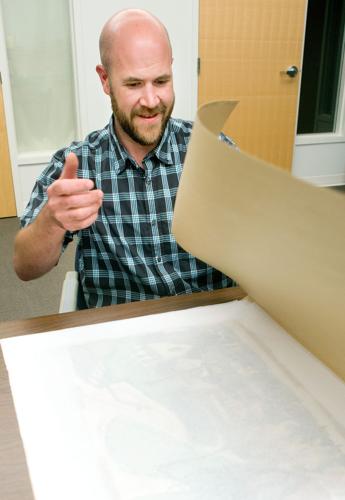
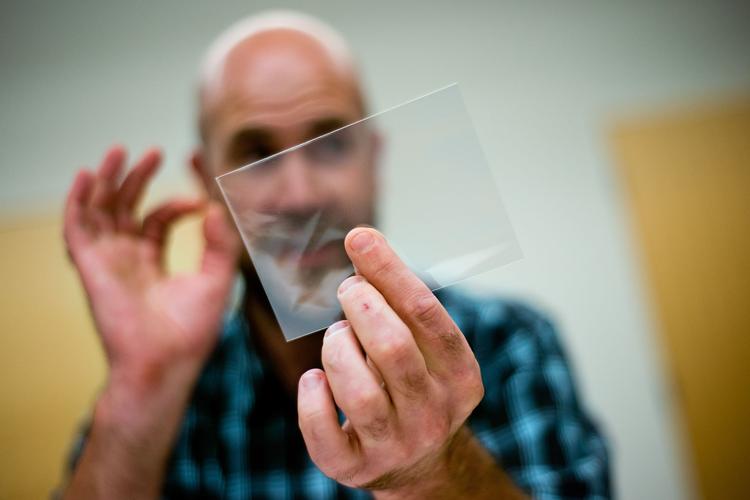
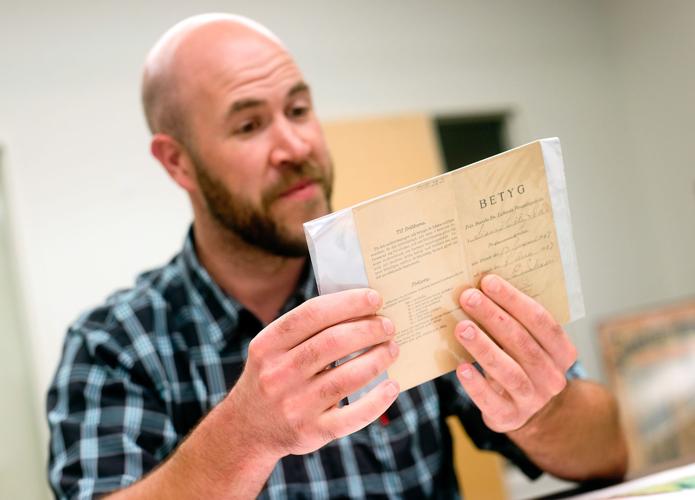
But before you stick it in a closet, he recommends investing in some gallery-quality protectors like archival folders, envelopes and sleeves.
"There are any number of online sites that have quality products that will keep photographs and important records from discoloration or disintegration," Munson said.
Just make sure that folders are both acid-free and lignin-free.
Why? Munson said acid causes paper and photos to disintegrate. This aging process is significantly slowed when the acid is removed from paper during the manufacturing process.
The same is true for lignin -- a natural bonding element that holds wood fibers together.
"Newspaper contains lignin and you may have noticed that newspaper can become brittle and discolored with age," Munson said. "Like acid, lignin can be removed during the manufacturing process so suitable products should be labelled lignin-free or archival quality."
And two things that you should never use on perishable collectibles: pens and tape.
"Never write using permanent ink and never tape something to a page," Munson said. "Remember the cardinal rule for archiving? Do no harm."
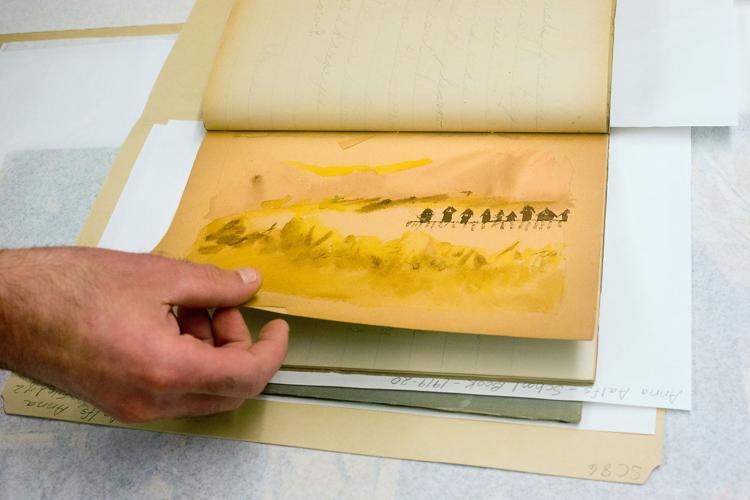
Checking through his collection, Munson pulled out art pieces and stories produced by a teenage girl from the early part of the 20th century.
"It's really remarkable to see how well preserved this is," he said. "The only yellowing I can see is on the artwork."
Munson said the watercolor piece dated back to 1917.
"It's nearly 100 years old but doesn't look it," he said.
So, how does Munson think his old school material looks like after considerably less time?
"Oh, my stuff probably looks 100 year old if it's been kept in a basement or in an attic," he said with a shrug.
Yet, if something's important to you, Munson said preserve it.
"We all have mementos from our school years," he said. "You can keep them looking crisp with just a little time and effort."