

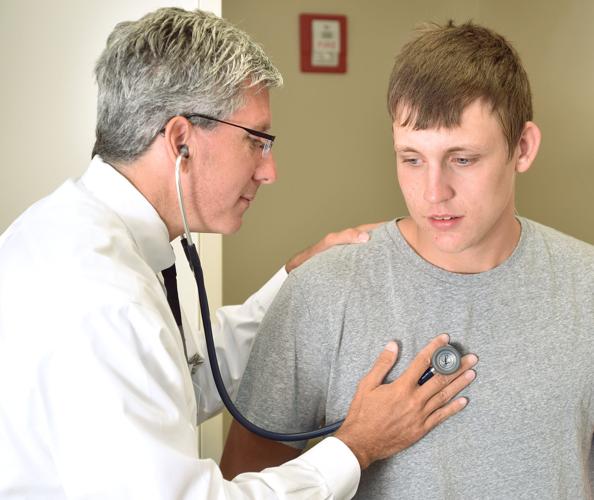
SIOUX CITY | Every other year, from kindergarten through college, students should typically receive physicals, said Steven Joyce, an internist and pediatrician at Mercy Medical Center.
What's takes place during a physical exam, he said, doesn't change too much as the child ages. During the teenage years, he said doctors are especially on the look out for orthopedic issues, including scoliosis, sideways curvature of the spine.
"In the younger age groups we focus more on growth and development," he said. "We'll do some of the growth in the adolescent and pre-adolescent group as well because of the obesity epidemic."
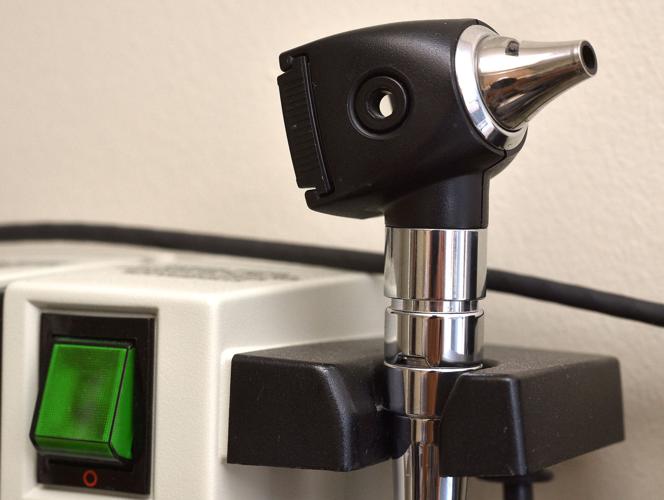
Joyce said a child's hearing and vision should be checked before they start kindergarten. He utilizes vision charts at Mercy and an otoscope to look inside ears. He said hearing testing is traditionally done at school through the Northwest Area Education Agency.
People are also reading…
Staying up-to-date on immunizations is important for maintaining a child's health.
A 5-year-old will need the following vaccinations, according to Joyce:
Tdap vaccine (Combines Tetanus, Diphtheria and Pertussis vaccines) -- prevents lockjaw, a bacterial disease that affects the nervous system, and pertussis, a highly contagious bacterial infection that causes severe coughing spells.
- MMR (Measles, Mumps, and Rubella) -- Protects against all three viral diseases that can be very serious. Measles and a mumps have reemerged in the United States in small clusters in recent years. Mumps is a highly contagious disease that is spread through the air by droplets of saliva or mucus from the nose, mouth or throat of an infected person. The disease causes fever, swollen and tender salivary glands and headache. The measles virus mimics symptoms of the common cold and causes a rash.
Varicella -- Protects against chicken pox, a highly contagious viral infection that causes itchy, red blisters to form on the skin.
- Polio -- Polio is a vaccine-preventable disease that causes paralysis. Polio was declared eradicated in the United States in 1979.
At this age, Joyce said, children will also have blood drawn to check for lead exposure. The source of most lead poisoning in children is dust and chips from deteriorating lead paint in the home.
Except for an annual flu shot, Joyce said no other vaccines are needed for about another six years. At age 11, children receive another dose of Tdap vaccine and a meningitis shot. Joyce said the HPV vaccine, given in a series shots, is also recommended. The vaccine protects against certain types of human papillomavirus, a common sexually transmitted virus associated with cervical and throat cancers, as well as genital warts.
If students have received all of these vaccinations, Joyce said they shouldn't need any others when they enter college.