
SIOUX CITY — The Fourth Street Mall was a 1970s urban renewal project that had potential, but that potential was never fully realized.
As part of the project, Brandeis, an Omaha-based department store chain, planned to build at Fourth and Jackson streets. Toy National Bank and Morey's and Raymond's, a men's clothing store, were among the buildings that were razed to make way for it. A hole was also dug in 1976 in preparation for construction.
"In what is now the Ho-Chunk Centre, the city had cleared all of the buildings. We have pictures of most of them coming down. It was actually a real fight to save the Badgerow Building," said Haley Aguirre, the Sioux City Public Museum's archival records clerk, who noted the Badgerow held First Federal Bank at that time. "So they leveled all of those and left a big hole, because they were going to put Brandeis there."
People are also reading…
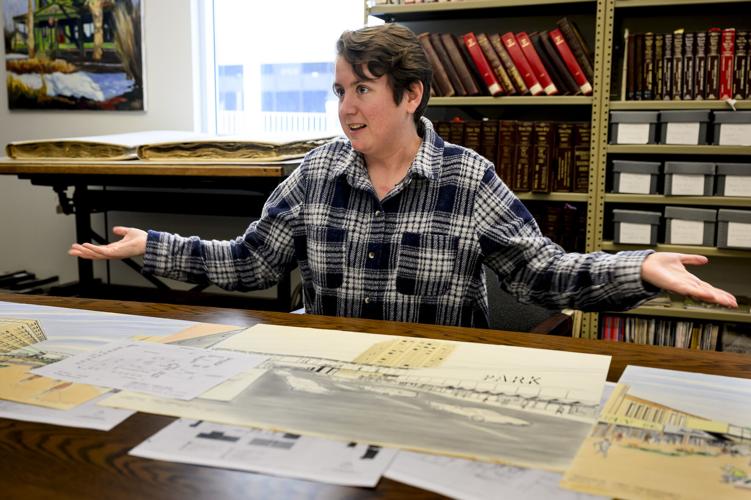
Colorful artist renderings depict a bustling city center, where shoppers mill about outdoor plazas positioned in the middle of the department stores. The mall, as drawn, featured small pools, greenspace, trees and benches.
"It was an urban space to encourage people to spend time downtown. We weren't the only player in the game. Lots of cities were doing this," Aguirre said.

Haley Aguirre shows artist's renderings of the then-proposed Fourth Street Mall.

Haley Aguirre, archival clerk at the Sioux City Public museum, gestures while talking about artist's renderings of the then-proposed Fourth St…

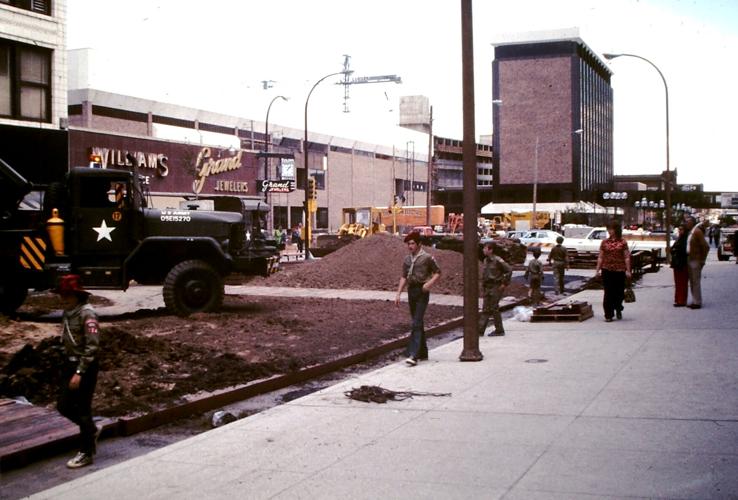
Haley Aguirre points to a photo of a portion of the Fourth Street Mall being built. 2000s.

Haley Aguirre, archival records clerk at the Sioux City Public Museum, will present a program on Feb. 15 on how Sioux City went from having ju…
The plan fell apart the following year. Brandeis pulled out of the deal, after the Sioux City Council decided to allow construction of Southern Hills Mall on the city's east side.
What was left was an eyesore that locals called "Lake Brandeis," a hole filled with stagnant water and a lot covered with weeds. Someone even reportedly put carp in the hole.
In 1978, the city declared the lot a nuisance and cleaned it up. Eventually, the $18 million Terra Centre -- now the Ho-Chunk Centre -- was built on the site.
"Urban renewal is controversial because it's this idea of removing urban blight, removing old crusty buildings, buildings that are falling apart. Sioux City had some urban blight," Aguirre said. "There was this idea that we were going to progress and bring all this up and totally revitalize Sioux City's downtown. The idea was there. In the execution, people started to question: does change equal progress? Are you actually improving things or are you just changing them?"

Don Willoughby, Chris McGowan and Roger Cauldron are shown in front of the JC Penney and Jackson Plaza Buildings on July 27, 2004.
Breaking down the mall
Aguirre said the mall can be best thought of in three separate parts:
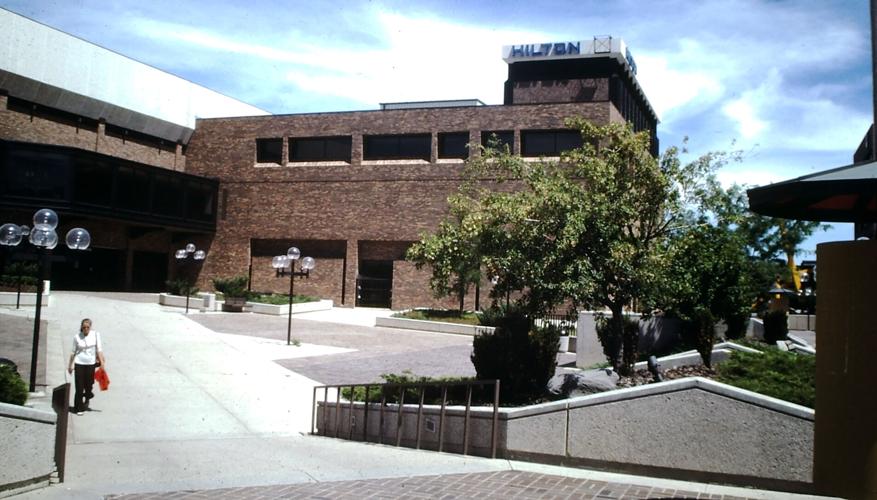
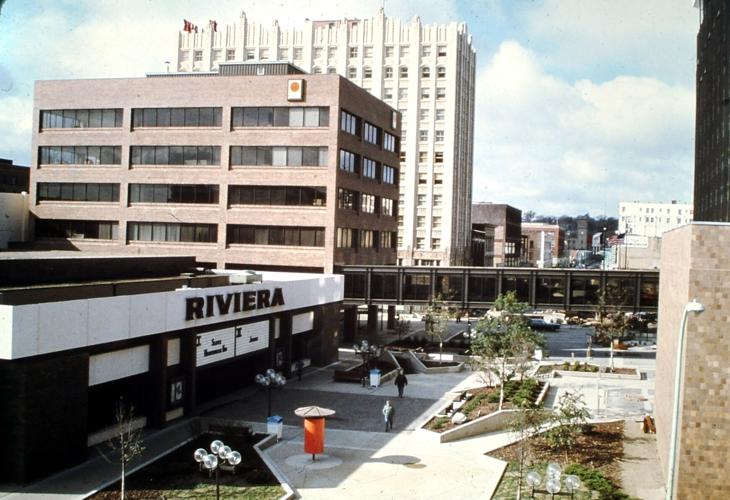
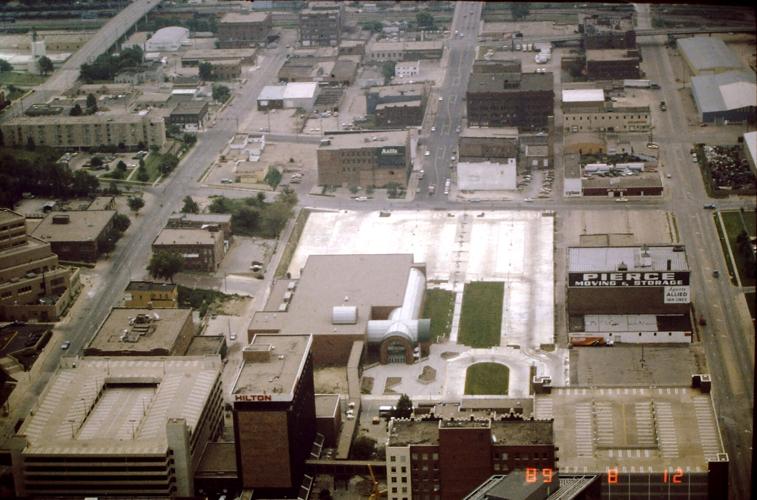
- The first was the "permanent" portion, built in 1974 between Jackson and Jones streets (700 block of Fourth Street was built first) and Nebraska and Jackson streets (the 600 block was built shortly after). Fourth Street was completely removed in the permanent area to make way for the mall. Throughout the mall's lifetime, the north-south streets always went through, with the mall stopping at each intersection and picking up at the next block, according to Aguirre. The section between Jackson and Jones was mainly to service the new Hilton Hotel, Riviera Theater and the Federal Plaza Building, all which are still in that block. The section between Nebraska and Jackson streets was to service the new JCPenney building and the aforementioned Brandeis store, which was never built.
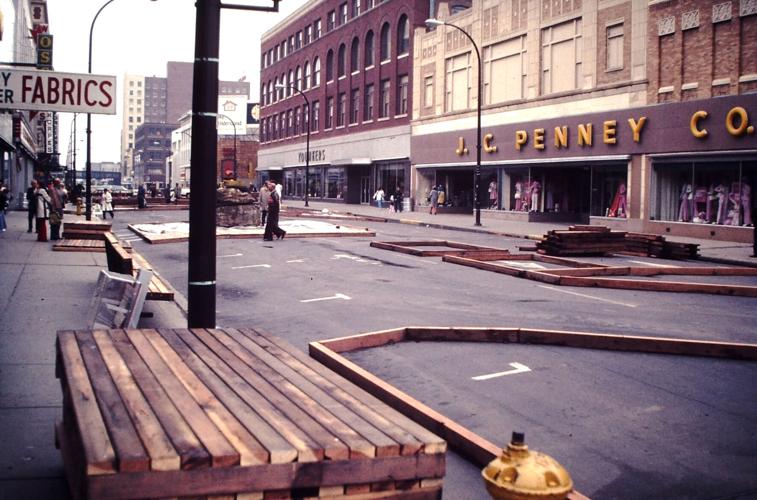
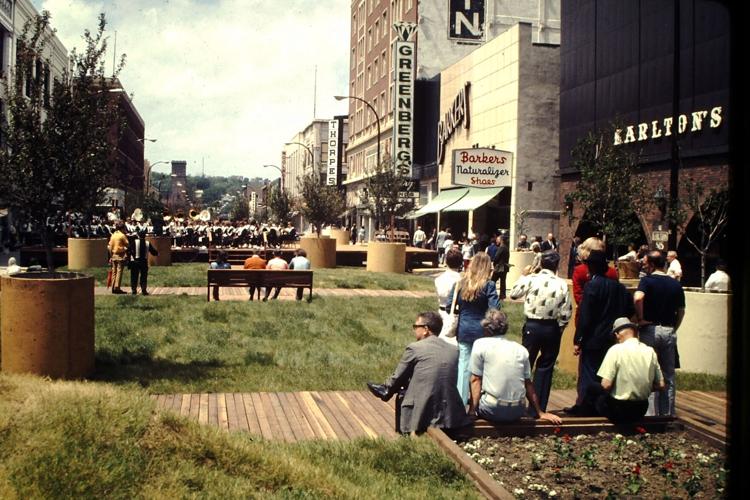
- Beginning in the spring of 1974, the Chamber of Commerce and Junior League (Junior Chamber of Commerce) launched a program called Project PEACH (Planned Environmental Action Can Help). According to Aguirre, Project PEACH was behind the "temporary" mall between Pierce and Nebraska (the 500 block) and Douglas and Pierce (the 400 block). Aguirre refers to this part of the mall as "temporary," because portions of Fourth Street were not removed. Although large, round planters blocked off the street at each intersection, wooden boardwalks and platforms made space for people to walk on and greenspace areas were filled with dirt and sodded, the street was still there underneath. In some places where the concrete showed through, she said it was painted for decoration. This part of the mall provided access to the smaller retail shops and major stores.
- The last portions of the mall were to go in at either end of what was already in place, between Pearl and Douglas (300 block) and between Jones and Virginia (800 and 900 blocks). These portions coincided with a Bomgaars (now part of the Hard Rock Hotel & Casino's parking lot) and the Sioux City Convention Center. In the Bomgaars area, Fourth Street was vacated and a greenspace with benches and a winding sidewalk was implemented. Rather than putting in a mall by the Convention Center, this portion of Fourth Street was cleared for parking, a vehicle drive-up, and a small plaza specifically designated for the center.
"There was this idea to revitalize and continue a retail space downtown, rather than having to deal with the streets, the street cars, all the parking and everything that you were having to deal with back in the day," Aguirre said. "It was all in this spirit of progress -- this is something that the Chamber of Commerce has used frequently. It was this idea of, in the very, very early days of what we now know as the indoor mall, to try to save downtown from major shopping centers and suburban centers like that."

Sioux City's Fourth Street Mall is shown in these historical photos from the Sioux City Public Museum.
Sioux City's Fourth Street Mall is shown in these historical photos from the Sioux City Public Museum.

Sioux City's Fourth Street Mall is shown in these historical photos from the Sioux City Public Museum.

Sioux City's Fourth Street Mall is shown in these historical photos from the Sioux City Public Museum.
A different time period
Fourth Street was a natural choice for such a city center with retail space that people walked around. Initially, Aguirre said the city sent out bids for retailers. She said they learned rather quickly that retailers, such as Brandeis and JCPenney, weren't interested in already established buildings. They desired new spaces.
Aguirre said Brandeis wanted its own department store on the mall with an enclosed glass skylight plaza, which would extend over the street and have viewing platforms and retail spaces.
"This Brandeis Plaza was going to be amazing. It was going to have skylights and be something much more like I would associate with a much larger city," she said. "As urban renewal continued, just in general, people started running out of money. Cities started running out of money. Retailers started running out of money. Plans were made and fell through, eventually."
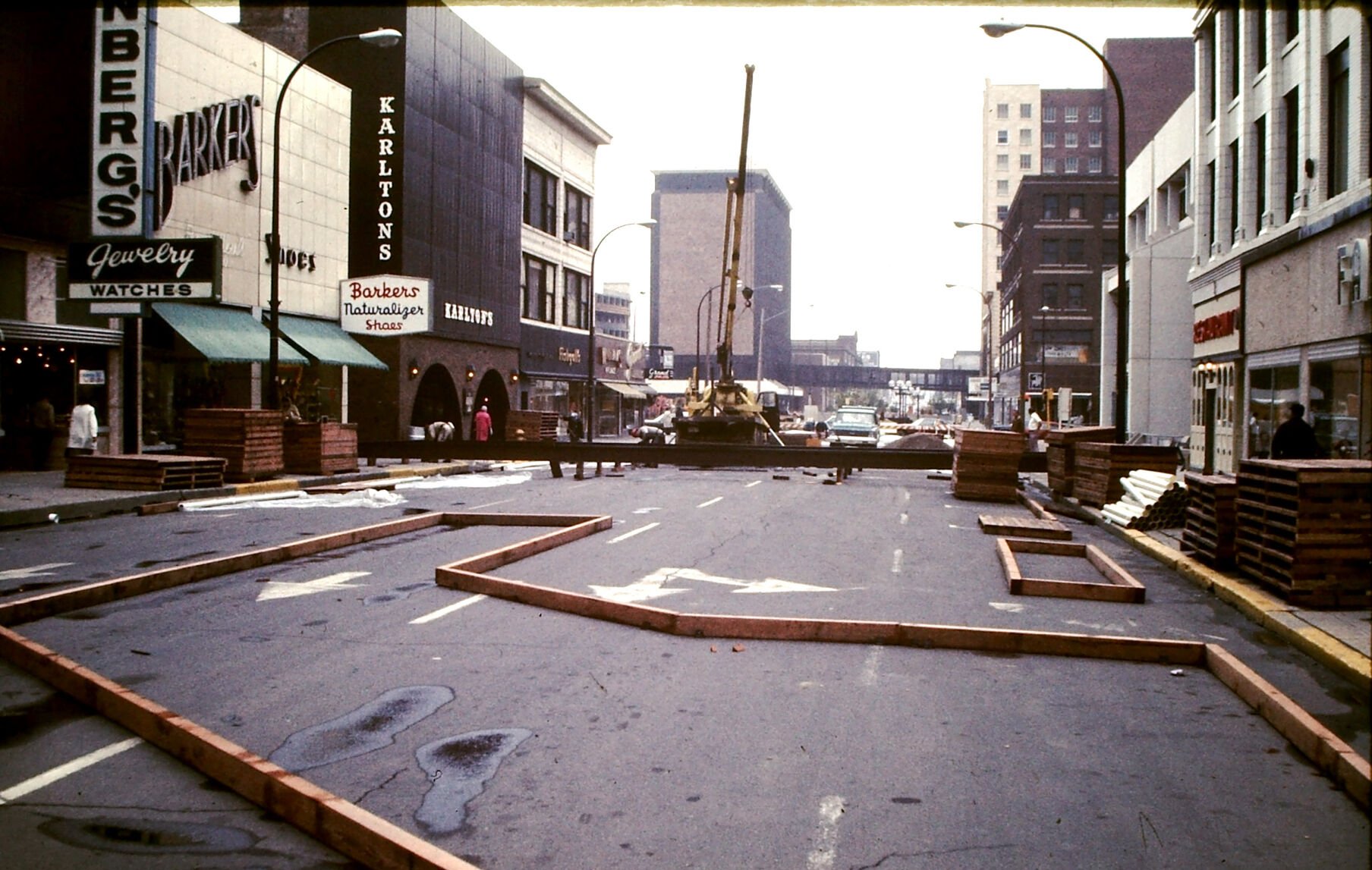
Sioux City's Fourth Street Mall is shown in these archival photos from the Sioux City Public Museum.

Sioux City's Fourth Street Mall.

Sioux City's Fourth Street Mall.
Back in the 1970s, Aguirre said the mindset was "just replace, replace, replace." She said people didn't really have the connection to historic buildings they do today, although she said the historic preservation commission existed at that time.
"You don't see people really fighting to save something like Historic Fourth Street -- a completely revitalized and amazing retail and shopping center and mostly restaurants, today." she said. "The initial idea was to tear all of that out, because all of those buildings were torn apart, and totally make that the parking lot for the Convention Center, which was supposed to be much bigger than it ended up being."
Aguirre said it wasn't until the 1980s, after Aalfs Manufacturing Company restored its original facade that people began to recognize the "really neat stuff" already existed in Sioux City. While Aguirre said tearing down historic buildings is a "tragedy," she also recognizes that the late 1960s and early 1970s was a different time period.

Sioux City's Fourth Street Mall is shown in these historical photos from the Sioux City Public Museum.

Sioux City's Fourth Street Mall.

Sioux City's Fourth Street Mall is shown in these historical photos from the Sioux City Public Museum.
"I'm a history person. I have to advocate for the historicity of our town and our buildings," she said. "But, at the same time, you read these design guides and you try to put yourself into the mindset and you see what they were trying to do. I remember shopping as a kid at JCPenney. You got to go to the big city and park in the supercool parking ramp and walk across the skywalk. It was just on a smaller scale than what they intended."
Concrete planters, metal railings, wheelchair ramps and greenspaces in front of the former JCPenney, which now just so happens to house the Sioux City Public Museum, were the last portion of the Fourth Street Mall to be removed.
"That was where all of the concrete was, where the street was truly and totally removed. Fourth Street had to be completely cut through and completely repaved," Aguirre said. "I want to say the very last vestiges of the mall were removed in 2008 or 2009."

Sioux City's Fourth Street Mall is shown in these historical photos from the Sioux City Public Museum.

Sioux City's Fourth Street Mall is shown in these historical photos from the Sioux City Public Museum.

Sioux City's Fourth Street Mall is shown in these historical photos from the Sioux City Public Museum.

A copy of an artist's rendering of the Fourth Street Mall on Fourth Street looking West at Douglas Street is shown at the Sioux City Public Mu…

A copy of an artist's rendering of Jackson Street looking South at Fifth Street looking West at Douglas Street.

A copy of an artist's rendering of the Fourth Street Mall on Fourth Street looking East at Nebraska Street.

A copy of the original design guide for the Fourth Street Mall.

A copy of a map of a portion of the Fourth Street Mall.
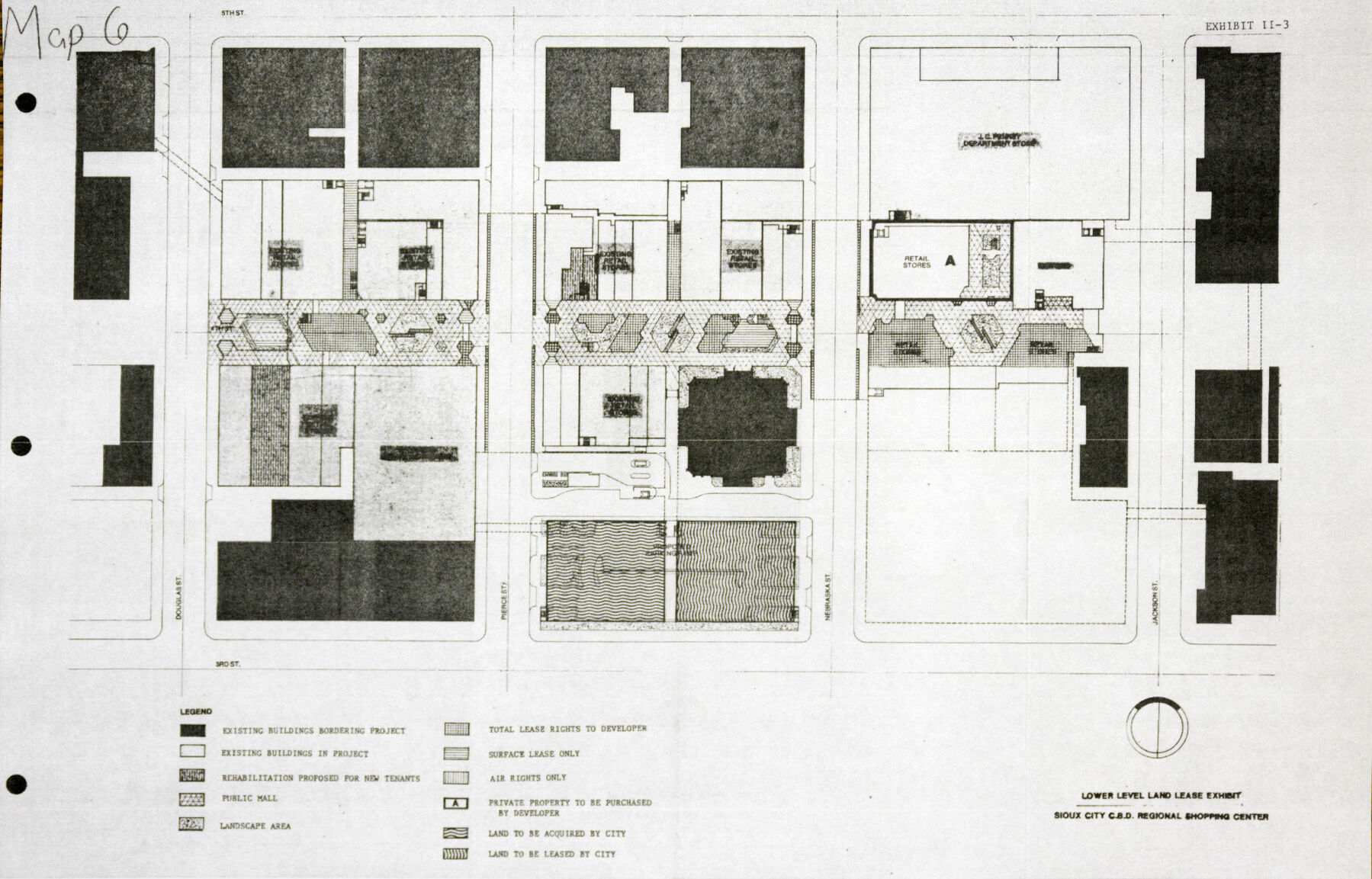
A copy of a map of a portion of the Fourth Street Mall.