

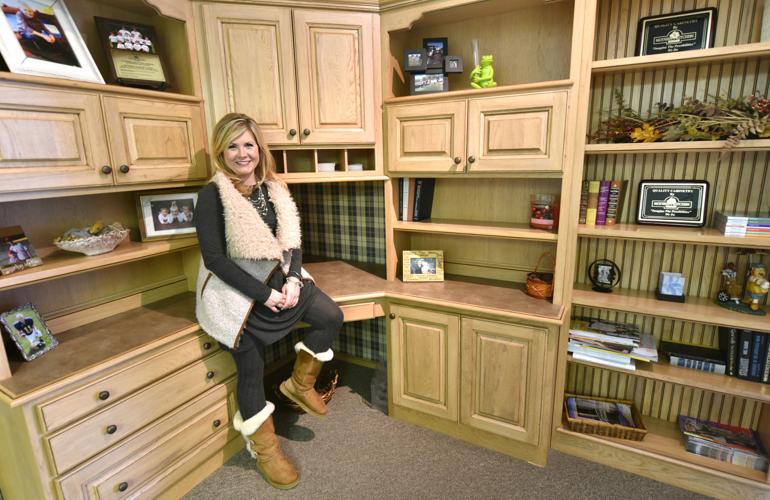

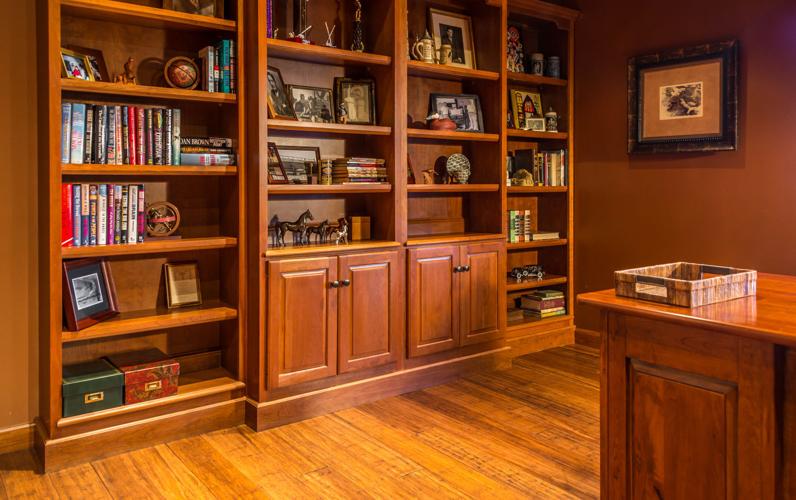
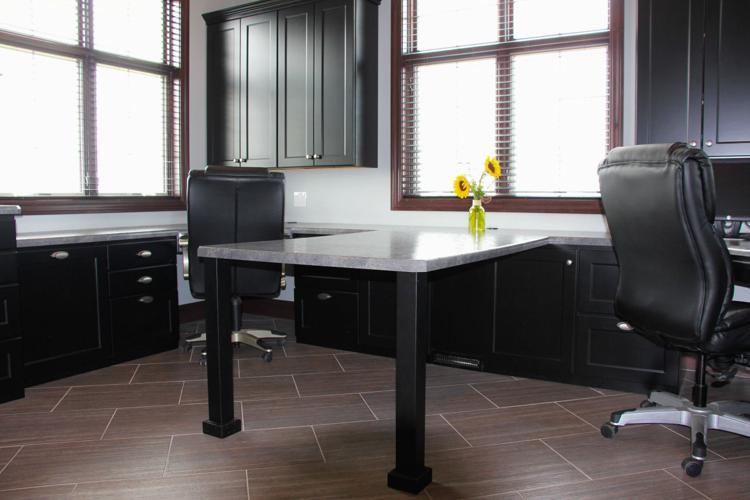
SIOUX CITY | Deep, warm brown woods are traditionally chosen for a home office, but Breezy Struthers Drake, a designer at Modern Kitchen Design, 514 Iowa St., said white wood is making a comeback.
"A lot of times with offices we stay with your deep browns -- that warmth you think of when you think of an executive office," said Struthers Drake, who finds herself designing a lot of home offices for farmers.
She said most clients have a good idea of what they want in a home office. Since computers have downsized over the years, she said some requirements have changed.
"You don't need the PC pullouts and stuff. You just need a spot for your wireless printer," she said.
Struthers Drake is currently designing a home office in Vermillion, South Dakota. This particular client just wants lots and lots of space for files.
People are also reading…
"Just give everything a spot," she said.
Struthers Drake said the design of a home office is usually influenced by the occupants' ages. If children are present, she said the office might be located close to the kitchen. She'll give each child his or her own space and maybe implement a locker system for storage.
"Sometimes if there are school-aged children at home we make sure that they have separate desk areas so they can do their homework," she said. "If the children have already left the home, then it's more executive home office -- real rich with coffered ceilings and book cases to show off artwork or family photographs."
One of the most unusual requests Struthers Drake has received for a home office involved a separate shallow-depth area on a wall where the client could place a slew of monitors to watch changes in the stock market.
Designing an office, she said, is much like designing a kitchen. The process usually takes a couple of weeks. Office sizes range from a nook in a loft over the main living space to a grandiose 30- foot by 30-foot space. Struthers Drake said she's designed every size in between.
Before consulting with a designer, she recommends homeowners sit down and figure out what they want: Vertical files or lateral files? How much storage do you need? Do you need a separate charging station or a message area? Do you want natural light?
"I like to get as much information on the front side so that the design process is a little smoother and easier," she said.
Photos of offices found in home and architectural magazines, Struthers Drake said, help bridge the gap between designer and homeowners, who aren't always familiar with style and design terms.
"That takes out a little bit of the guessing game. We can kind of pinpoint what they like as far as trends, styling, if it's more traditional," she said. "A lot of times people aren't up with the verbiage. They might think that they like contemporary, but that's not necessarily where they fall."
Struthers Drake said commercial offices are easier to design than home offices because the client isn't as emotionally attached to the space. The design will also be influenced by the style of the building.
She recalled a large commercial office in South Dakota that she designed that took up the entire back wall of the building. It featured a bar, full kitchen and fireplace. Copiers and printers were hidden behind bi-fold doors.
"It's basically whatever fits; and the bottom line is always important whenever you get into commercial," she said.
Commercial office design is also influenced by the type of business. Attorney and physician offices, Struthers Drake said, tend to be more traditional with darker woods and colors.
"Then you can get into some that are completely contemporary -- glass, grays, high gloss. It's a very broad spectrum," she said.