


Tom Munson's office has become a landing strip at the Sioux City Public Museum Research Center. The archival clerk said he wouldn't have it any other way.
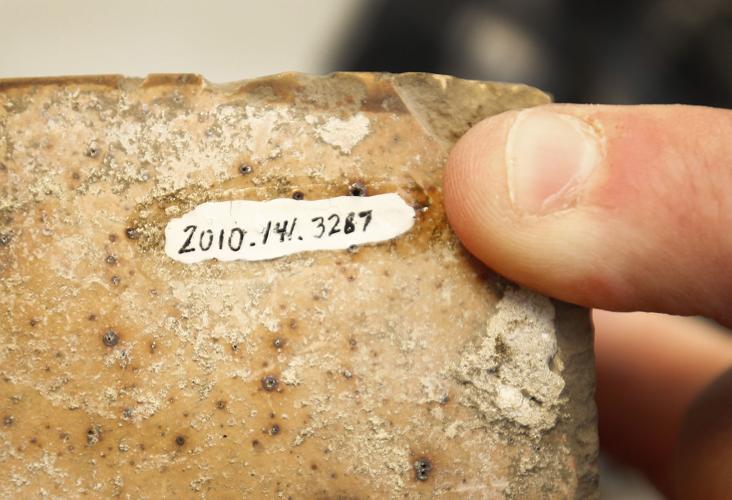
"Pretty much everything that makes its way to the (museum's) acceptance committee will be researched and numbered first by me," he explained. "This means my office will always be the start-off point."
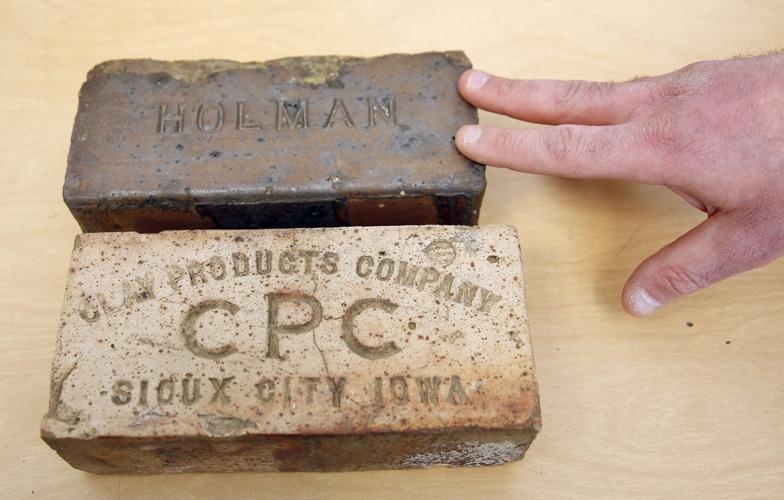
Today, Munson's office has Sioux City-manufactured bricks dating back to the early 20th century as well as University of Nebraska Cornhuskers programs printed less than 10 years ago.
"The football memorabilia was printed in Sioux City, so they're significant to us," he said, combing through some bins. "We're interested in anything that has a tie-in with the community."
While most of the items won't become a part of the museum's public displays, they will still be housed simply as a part of the community's local history.
People are also reading…
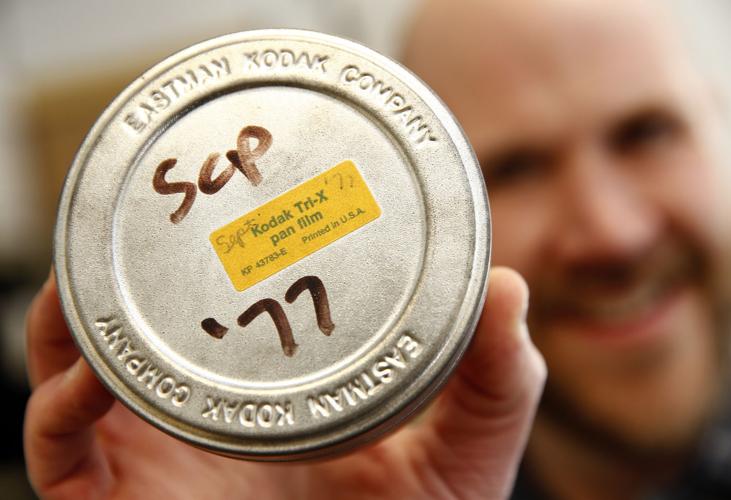
Waiting to be shelved are old boxes which once contained Jolly Time Popcorn as well as canisters containing negatives from the Sioux City Journal.
"We have containers full of artifacts that need to be accounted for," Munson said. "It's a big task but, luckily, I also have an excellent crew of volunteers to help."
While the majority of the vintage items in Munson's office will eventually go into storage, he keeps a few photocopies of things that will assist him in his job.
"I leave a copy of a plat map of Sioux City from the early 1900s because it's easier to refer back to something on my wall than something in a book," he explained with a shrug.
Other office pieces may be harder to explain.
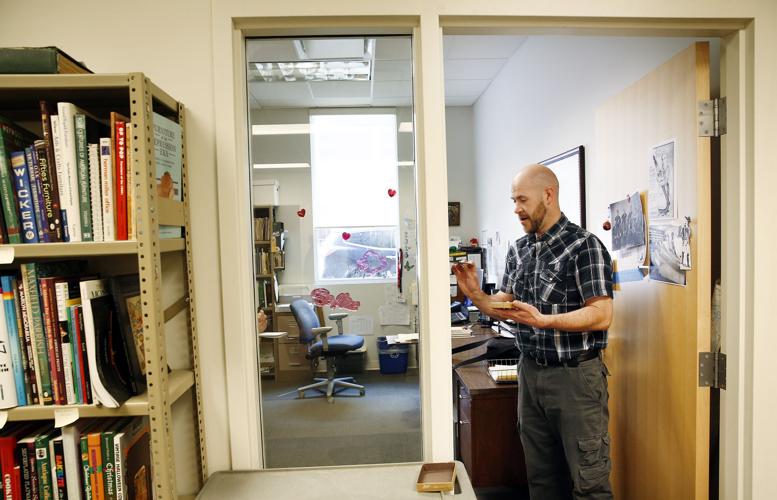
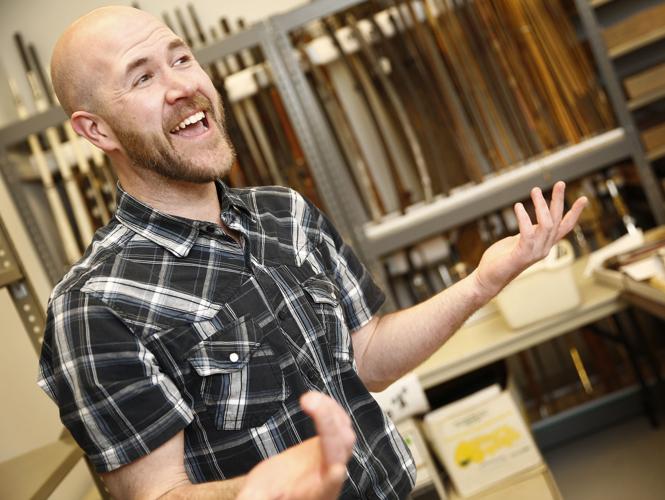
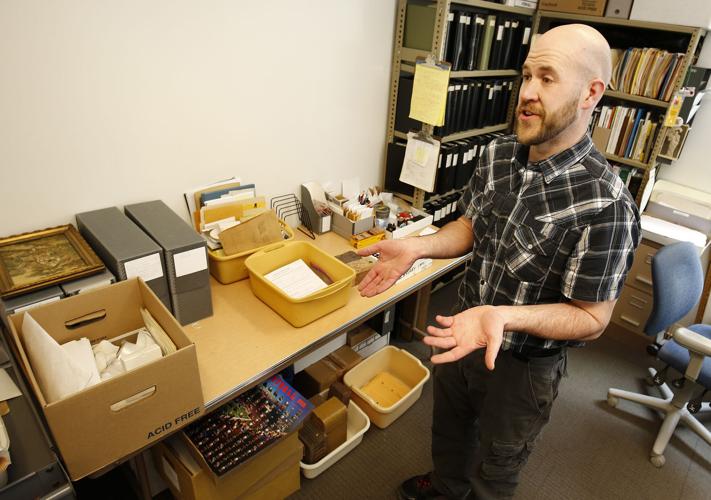
Photos: Tom Munson's museum office
Tom Munson, Sioux City Public Museum
Tom Munson, archival clerk for the Sioux City Public Museum’s research center, displays a can filled with negatives from the Sioux City Journal in his office at the Sioux City Museum.
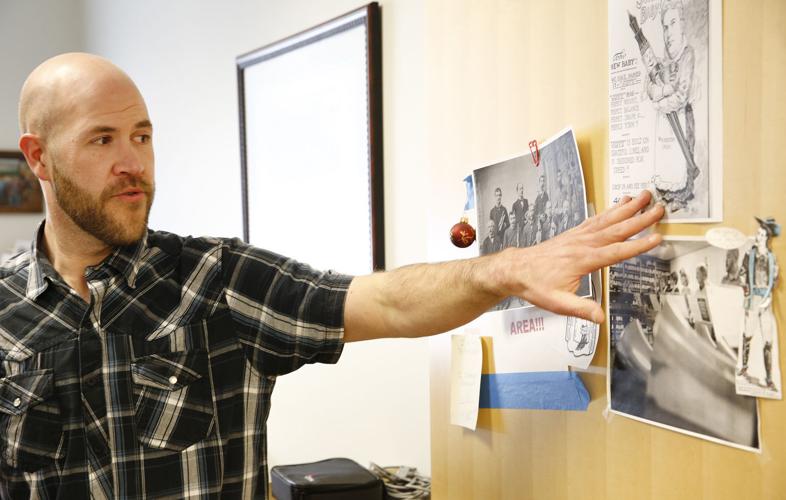
For instance, Munson's door contains artwork that features advertising for a downtown pen manufacturer, the art of women's clothing through the and a sign that warns people to "Stay Out of This Area."
"That sign is sort of a joke since everything ends up in my office," he said with a laugh.
Sometimes, Munson's interest in local history continues when he's at home.
"My job is studying Sioux City history, but my hobby also happens to be studying Sioux City history," he noted. "Whether at work or at home, I'm always interested in the history behind everyday objects."
As he sorted through empty pop bottles, old high school yearbooks and vintage business directories, Munson acknowledged that his office is probably unlike any other in town.
While today may bring more bricks, tomorrow may see an increase in glassware, vintage phone books or memorabilia from Sioux City's former T.S. Martin Department Store.
"I never know what will land on my desk next," he said. "That makes this job so much fun."