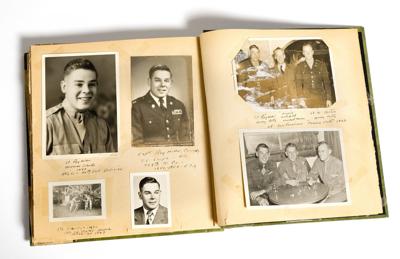

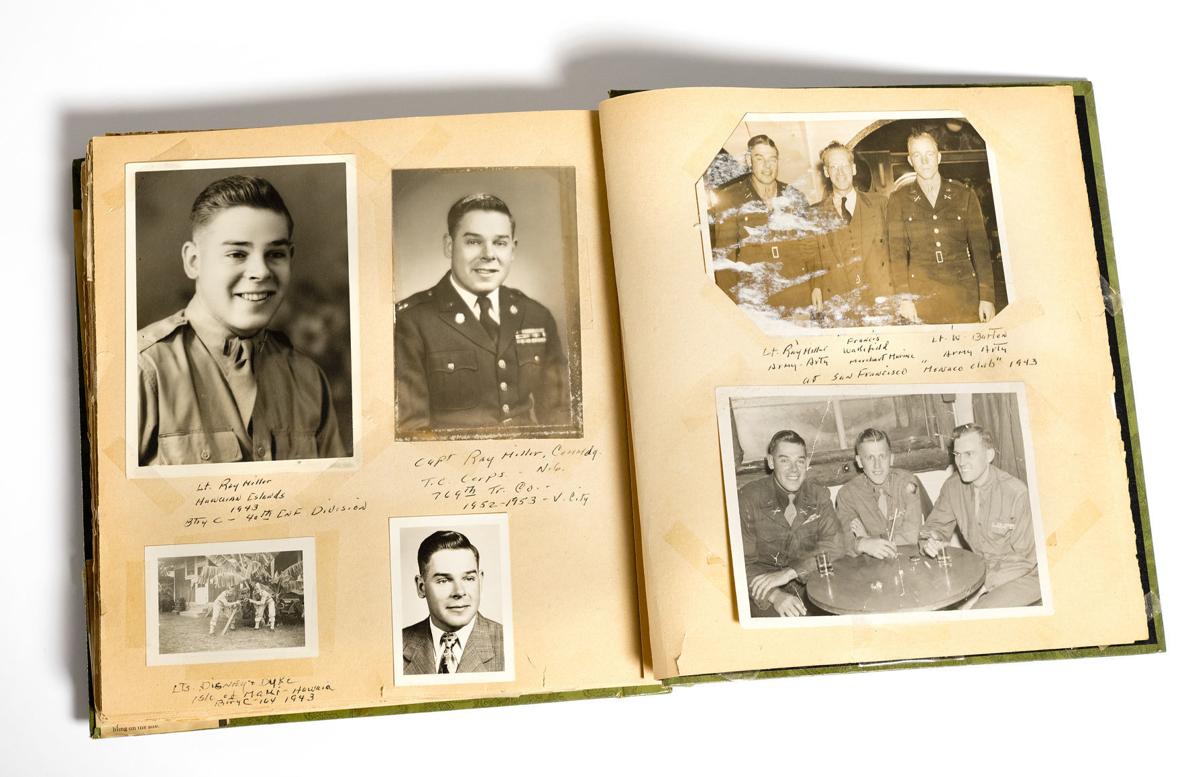
Last week, while searching for a warranty I knew I had (but didn’t put anywhere convenient), I ran across my dad’s scrapbook.
When he retired – after oh so many years of working – he didn’t have a plan. He didn’t know what he was going to do in retirement. He just wasn’t going to work.
Tired of having him underfoot (or, as she said, “acting like my shadow”), my mom gave him an assignment: “Take all those things you’ve been saving and make a scrapbook.”
Obviously not versed in the fine art of preservation, he used Scotch tape on everything – never mind it left marks and didn’t really hold well.
The first pages were dedicated to his post-retirement activity – bowling scores that appeared in the local paper, a photo of him receiving a service award and clippings from the 50 years ago column that happened to mention him, his friends or “Mrs. Jake Miller.” That was grandma.
People are also reading…
In his neat dad-like printing, he annotated plenty of the stories – even ones I wouldn’t have saved. A story of a classmate included a quick remembrance: “We sat thru many boring chemistry and ag classes together.”
Photographs didn’t start until clippings had chewed up seven pages. Then, he got into tickets to athletic banquets and membership cards for groups he had joined.
A string of certificates – for everything from fire-fighting excellence to his request for retirement – were neatly taped in the book, equidistant from the page edges. The official retirement letter included his final salary -- $26,500 -- and his last day – Jan. 8, 1981. A Polaroid of him with his cake was tucked in the book. It wasn’t secured, just loose. Every retirement card he received was there, including one with at least 50 names – people I knew through him. “Best wishes on this wonderful occasion,” it said. “May all the coming years be happy for you.”
Among the batch – one from me: “I’m proud of you,” I wrote, “hopefully, I can do as well as you.”
The most interesting part of the scrapbook followed. It was the history of his military career. In the beginning, we see him as a bright-faced 18-year-old going overseas to fight in World War II. He’s about 75 pounds thinner than I ever remember him and incredibly serious. He looks sharp in his uniform and, oddly, sporting a lot of hair. (Did they not shave it off in those days?) A rare photo of him on the beach of Waikiki looks like something you’d see in a Turner Classics Movie. The chronicle then skips to tents, somewhere in Asia, where equally young men nervously sit, waiting to be sent into battle.
Dad didn’t write a lot of detail on these pages, only one where he pasted a bunch of World War II-era money from Australia, the Philippines, Japan and Korea.
“We were paid in Korean yen,” he put on one page. “Evidence of Communism was noted.”
A photo of him and his field artillery group looks so proper. He’s in the third row, staring straight out. He wrote his name by his face, but it’s obvious: That was dad.
While he was in the Army, dad’s father died. I know, because he includes photos. It doesn’t say if he was able to come home for the funeral, just a list of his relatives: his mom, his two sisters and his brother.
Turn the page and there’s a 1942 Army Christmas menu. It looks like he had a great meal. It doesn’t mention that actor Van Heflin was also there to greet the troops. (I know this because dad often told about the time he threw a football with him. “You should interview him,” he said. “Great guy.”)
Subsequent pages showcase letters that indicate the promotions he got in the Army and, then, the National Guard. It ends with his honorable discharge and his final rank: Major.
Photos of mom, my sister and me are noticeably absent. That’s not an oversight on dad’s part. We’re all in separate volumes mom kept.
Instead, there are two pieces of paper that reference my sister and me. One is a newspaper story about my sister’s work as a teacher. The other is my birth certificate.
There is no note to suggest why they’re there, but I have a suspicion.
Life, like the scrapbook, is something to pass along.
Now, his story is ours to tell.
Copyright 2018 The Sioux City Journal. All rights reserved. This material may not be published, broadcast, rewritten or redistributed.

Bruce Miller
Editor