

SIOUX CITY | Foot and ankle injuries are among the most common suffered by basketball players.
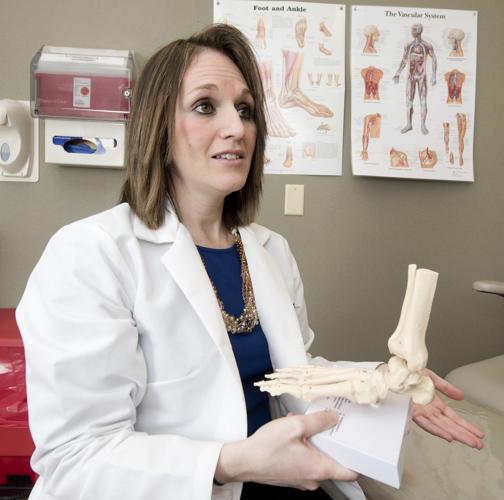
Valerie Tallerico, a podiatrist at UnityPoint Clinic Podiatry, said landing hard, cutting action and colliding with another player can result in a sprained ankle. She said overuse injuries, such as stress fractures, also plague basketball players. The running and jumping associated with the game takes its toll.
"Basketball is a very demanding sport, so sometimes it's from colliding with another player," she said. "That one-to-one contact can lead to injuries, but when it comes to basketball there's many things that can lead to injuries besides accidents.”
Tallerico sees her share of basketball players with turf toe -- a sprain of the main joint of the big toe -- Achilles tendon injuries and generalized foot pain. Apophysitis, a painful inflammation of the heel's growth plate, can strike middle school athletes just beginning their competitive careers.
People are also reading…
"It's a different type of heel pain that we see in the youth versus that plantar facial pain you see in adults," she said. "It's basically that overuse or that pulling on the growth plate."
The key to preventing many injuries, Tallerico said, is stretching, an activity often forgotten or minimized by athletes of all ages. She said tight Achilles tendons could lead to a lot of foot problems.
"Many times we see kids coming in who are tremendously tight, and they shouldn't be at this age," she said. "A lot of times they quickly go through things and get into practice and they're not warmed up."
Performing exercises that strengthen the muscles, tendons and ligaments of the foot and ankle and increase flexibility can prevent injuries.
Tallerico recommends pulling the toes back to stretch the arch and using elastic bands to push down, pull up, push in and push out with your toes. She said even standing on one foot to improve balance while brushing your teeth can be beneficial.
"Individuals who chronically roll their ankle, they lose confidence in their ankle, so they lose that sense of balance," she said. "We do a lot of exercises with them where we have them stand on one foot or those half wobble balls to get that sense of balance back."
When injuries do occur, Tallerico said it's important to be seen by a medical professional as soon as possible. If the ankle isn't braced or rehabilitated appropriately, she said long-term problems, such as tendon injuries and chronic instability can develop.
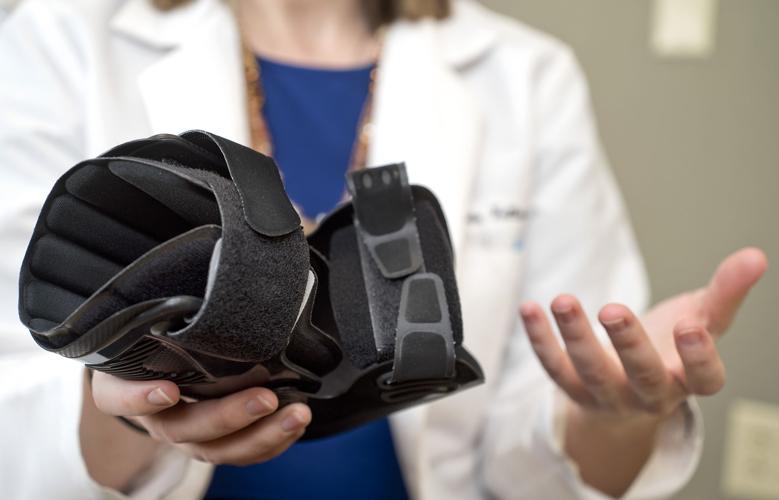
"They may need orthotics for that adequate support while playing. Sometimes it's a brace," she said. "If they definitely have a history of ankle issues, we want to make sure that we're supporting them through taping or bracing. Sometimes we put different lifts in their shoes to accommodate them."
Besides physical therapy, braces and stretching exercises, rest may be ordered. Tallerico said taking time off is a remedy athletes and their parents usually don't like to hear. She said training programs can be overhauled, replacing high impact cardio with more strength training exercises.
The worst possible outcome of a foot or ankle injury is the development of a fracture, repeated ankle sprains that can lead to tendon injuries or chronic instability and pain. At this point, Tallerico said surgery might be the only solution to correct the problem.
"It could actually make them stop playing basketball unfortunately short-term or long-term," she said.