



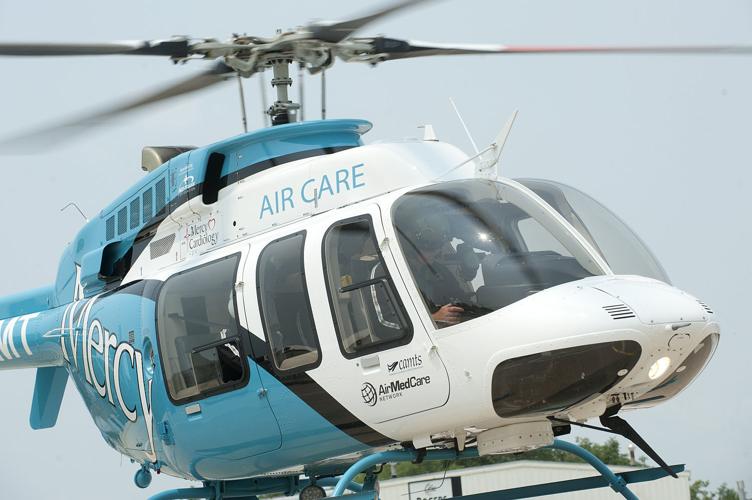
SIOUX CITY | Mercy Air Care, which is operated by Med-Trans Corporation, averages 350 to 400 transports per year.
Some 700 requests for flights are made annually, but Mickey Sauser, Mercy Air Care program manager, said many are turned down due to weather, flight paramedics being tied up with another patient when a request comes in or because of aircraft maintenance.
Med-Trans Corporation air ambulances made more than 10,000 flights in 2013 for patients who had no ability to pay for them, according to Sauser.
"We collected less than 5 percent of that and that's the end of the story," he said. "We're providing care for patients on a care-as-needed basis. Nobody's getting a financial assessment before they're transported."
Medical transport costs can exceed $25,000, according to AirMedCare Network membership sales manager Marie Schmitt. She said health insurance companies on average cover 50 to 60 percent of the cost of a flight, but that can vary.
People are also reading…
Med-Trans Corporation is a member of AirMedCare Network, the United States' largest air ambulance membership program. This alliance also includes Air Evac Lifeteam, EagleMed and REACH Air Medical Services.
"I've met people whose insurance company has gone through that billing and said, 'It wasn't medically necessary for you to be flown so we're denying your claim, even though everyone on scene did all the right things for the patient,'" Schmitt said. "You end up with people who have a large bill to pay at no fault of anyone's."
For $65 a year, she said individuals can join the AirMedCare Network membership program. Members pay no out-of-pocket flight expenses when they or a member of their household is flown by a participating provider in more than 230 locations across 32 states.
Schmitt said rural residents probably are more likely to think about the need for medical air transport coverage, but she said people living in cities sign up for it as well. Seventy-five percent of AirMedCare Network flights are hospital transfers, she said.
"If you're hospitalized here at Mercy and you need to go on for a higher level of care, most typically that will be a flight," she said.
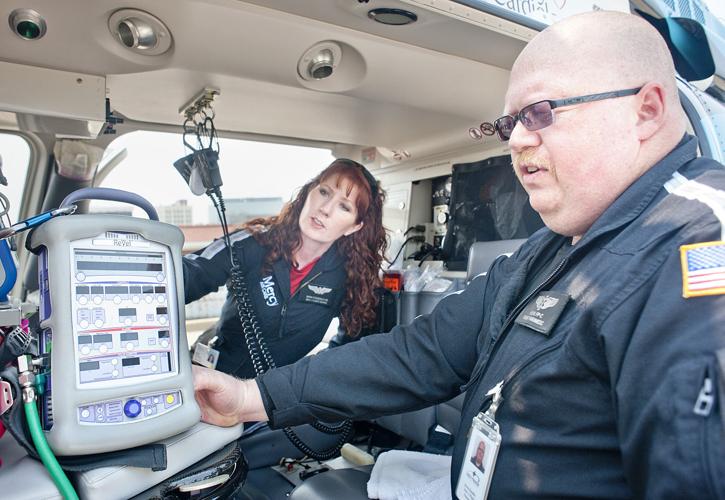
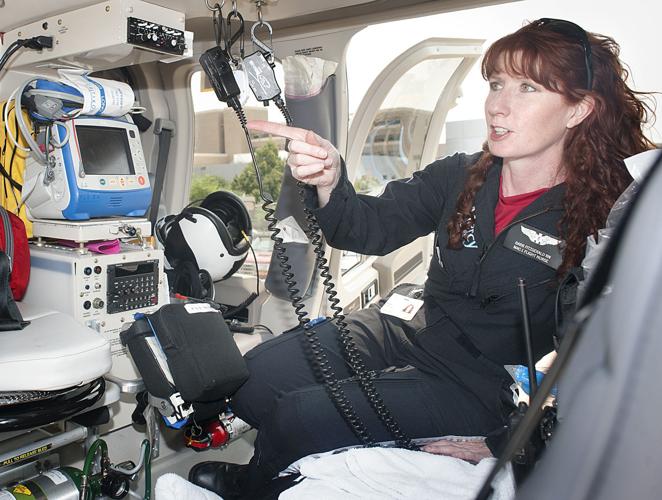
Emergency medical services personnel and law enforcement officers at the scene of a car crash, work-related accident or another medical emergency decide whether to request Mercy Air Care. Sauser said a critical care flight paramedic and nurse tend to and transport one patient at a time if their breathing and circulation are compromised.
In some cases, Mercy Air Care has arrived and been told its services aren't needed. In such a case, Sauser said the patient isn't charged.
"Medical triaging is part of the on-going education that we try and provide to our requesters so that we are most appropriately utilized," he said.
"We don't want to inflict a great financial demand on anybody more than they want it inflicted upon them. First and foremost is getting the patient the level of care that they need based on their condition."
Which patients should be flown has changed over the years. Sauser said American Heart Association guidelines say CPR starts to become ineffective as soon as a patient is moved to an ambulance. Involving an aircraft leads to more "breaks in the action," he said.
"In the back of an aircraft it became even more difficult to stay on the chest what we call greater than 85 percent of the time," he said. "Based on that information, if we respond to a scene where someone is in cardiac arrest we take our equipment, our nurse, our paramedic and get in the back of the ambulance and continue on by ground."
The same level of care a patient would get in the helicopter is offered in the ambulance by the flight paramedic and nurse at no additional cost to the patient.
Sauser said patients have some say in where they're flown if their hospital of choice is adequately equipped and staffed to meet their needs, but he said the vast majority are unconscious or not alert enough to make that decision.
"If we're between here and Omaha and they want to go to Omaha, we'll take them to Omaha, but we need to be sure it's an appropriate hospital for their condition," he said. "If we got out to pick someone up and they're having a cardiac condition and they want to go to a hospital with no cath lab or cardiologist, that won't happen."
Sauser said patients have signed refusal forms not to be flown after crew members explained the severity of their condition. In such a case, he said he would personally hop in the back of the ambulance and accompany the patient to the hospital.
"The easy thing would be to say, 'We'll get an IV in her and put her to sleep.' We don't do that. That's unethical," he said.
When the mission is over, Sauser said Mercy Air Care staff want to leave their patients with positive feelings.