

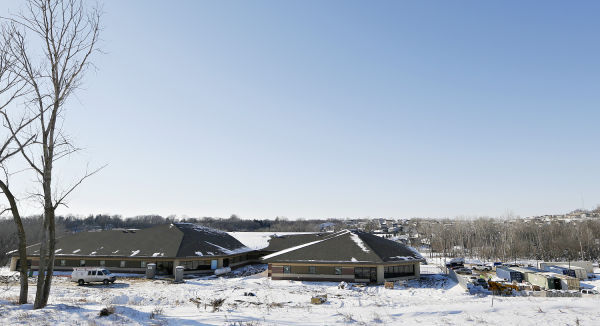
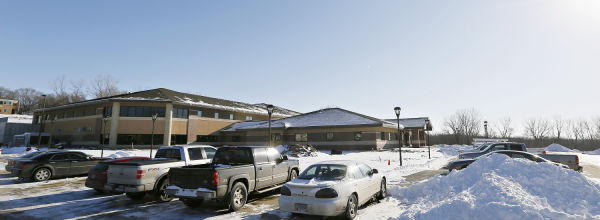
SIOUX CITY | No matter what level of psychiatric, behavioral or substance use dependence care Siouxland adolescent patients need, Traci Merchant, administrative director of prevention and adolescent operations for Jackson Recovery Centers, said they can now get that in their home community.
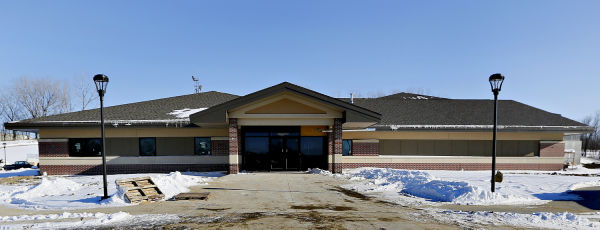
Jackson Recovery Centers' new Child & Adolescent Recovery Hospital, 3500 W. Fourth St., is considered the first of its kind in Iowa. Built at a cost of about $10.5 million, the 55,000-square-foot facility includes a 12-bed stabilization unit and 72 inpatient beds.
"The majority of our patients who have come in have presented with suicidal thoughts, self-harm, cutting -- those types of things," Merchant said.
Jackson Recovery Centers has offered in-patient and out-patient treatment for years. Since moving to the new facility on April 28, Merchant said the hospital has tallied 117 in-patient admissions and 56 out-patient admissions. The average length of stay for the in-patient program is between 75 and 85 days.
People are also reading…
"Historically we've seen probably 170 to 200 admissions in a year in our program," she said. "With the increase in our bed capacity, we'll be able to increase that number."
Glass doors at the front of the two-story hospital open to a sprawling reception area. To the left is a check-in desk. A hallway right before the desk leads to offices and a conference room painted in beige.
A fireplace is built into a tiled wall on the right side of the reception area. Behind the wall is another large room painted a hue of golden yellow. The room is available for various conferences and lectures.
At the back of the reception area the earth tones continue. A light aqua blue accent wall marks the family waiting area. A boardroom is to the left of a hallway and then the public space ends.
At the end of a hallway are double doors that conceal the residential treatment space.
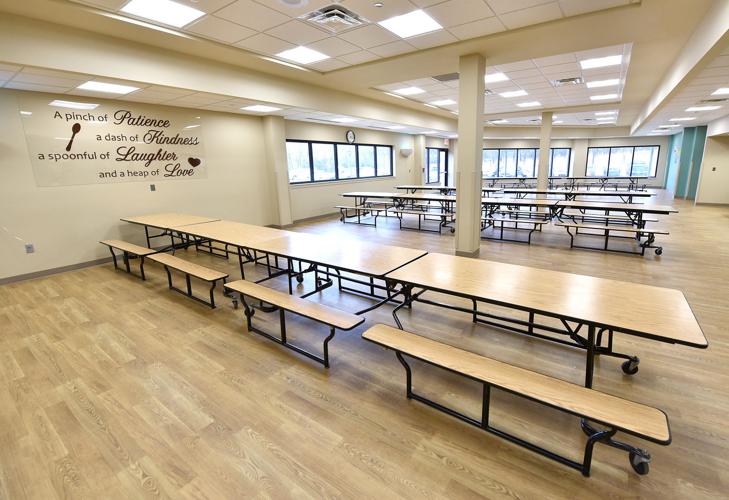
On the other side of the double doors is a dining room and kitchen. Light pores through large windows onto the neutral tile floor. The kitchen, which has its own chef, features a hooded stove, ovens and a walk-in refrigerator/freezer.
The inpatient unit, in the northeast corner of the building, is divided into four separate units, one for girls and three for boys. The space has a nurses station, living room, laundry room, two restrooms with showers and three bedrooms on both sides.
The centrally positioned nurses station allows staff to monitor both sides of the unit. The living room features a TV mounted on the wall, soft furniture and gaming tables.
Each bedroom houses a maximum of three patients. Windows flood the living spaces with natural light, which is considered therapeutic for patients. Children can watch deer and other wildlife that inhabit the wooded landscape.
The "open" unit on the southeast corner of the building has floor to ceiling windows in the common space as well. A secure glass door, that can be locked from behind the nurses station, leads to a walkout balcony.
Group rooms and therapy offices are also located on the second floor so patients don't have to leave their units to receive treatment.
The in-patient program serves patients who have a substance use disorder. Most if not all of the patients also have a co-occurring disorder such as depression, anxiety, post traumatic stress disorder, attention deficit hyperactivity disorder or conduct or behavioral problems.
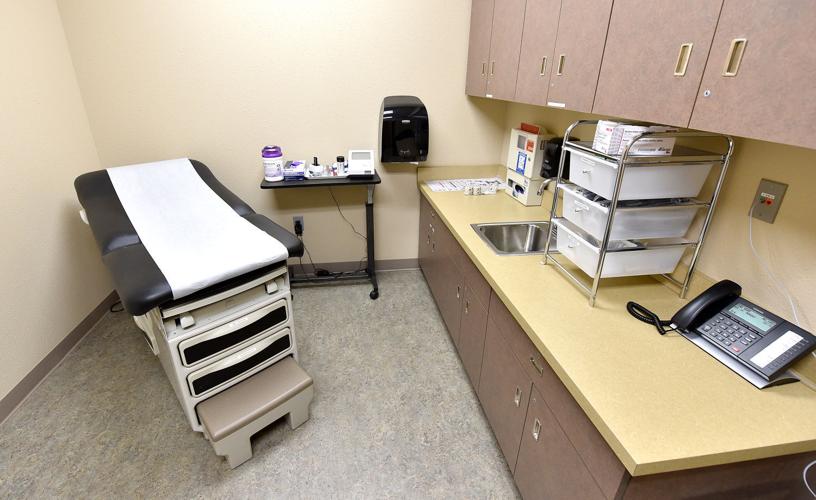
"We provide a large array of services. We provide psychiatric services, behavioral health services," Merchant said. "The other thing that we also provide in all of our programs is our medical services. We are very fortunate to have a wonderful psychiatric and medical staff that we've really grown over the last couple of years."
Children enrolled in the in-patient program attend school six hours a day in one of four classrooms. A beige classroom is accented with a burnt orange wall. Shelving and cabinets built into the wall offer storage.
The other classrooms, which will hold no more than 18 students each, are accented with shades of light purple, lime green and aqua blue.
The hospital, which is affiliated with the Sioux City school district, has four teachers and even its own principal.
They begin their day with a meditation group. Other group meetings include group therapy, a community group where patients address community living issues, a 12-step meeting in the evening and a closing group at night.
"They're really structured and busy from the time they wake up until the time they go to bed," Merchant said.
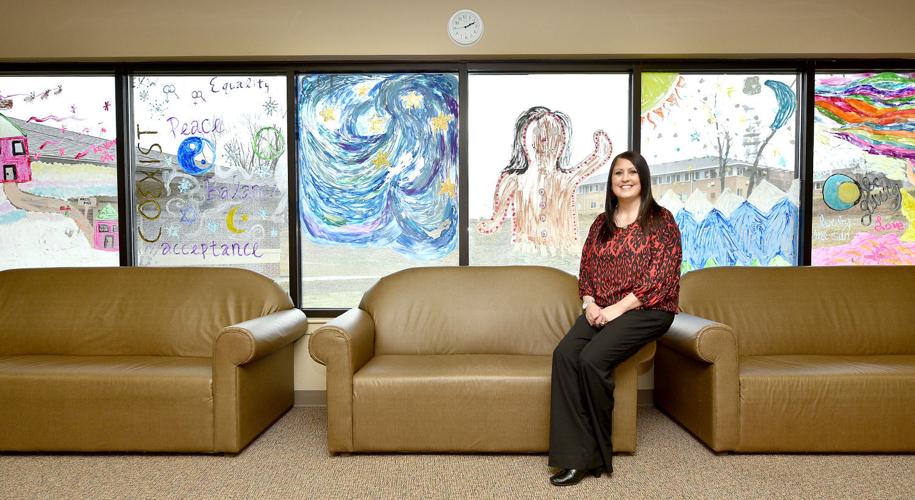
The stabilization unit has its own activities room and there's a family room furnished with large soft couches and chairs.
The rooms in the 12-bed stabilization unit are free of sharp objects and feature special door knobs that ropes can't be fastened to. The bathrooms and showers are separate so patients can easily be monitored.
Since the crisis stabilization unit opened in July, 111 patients have been admitted. They usually stay between five and seven days. The majorly of those patients, Merchant said, live in Siouxland.
"We've had a handful from central Iowa, but otherwise they've all been from around here -- Onawa, Le Mars, Sioux City," she said.
The unit, Merchant said, was specifically designed to provide subacute, medically managed 24-7 stabilization, evaluation, detoxification and treatment services to adolescents in crisis.
Merchant said she is surprised the hospital hasn't seen even higher admissions, given the fact that the closest child psychiatric crisis unit is about 60 miles away in Cherokee, Iowa. When Cherokee's beds were full, children were often sent to hospitals in Council Bluffs, Des Moines, Mason City or even farther.
"The number of kids leaving our community (for services) was just increasing year after year to the point where it was over 100 kids," Merchant said.
One of the major components of the crisis stabilization unit is family involvement, something Merchant said is a challenge for families when children have to travel far away from their homes to receive care.
"It's really important that they're involved throughout the process," she said.
Merchant said all of Jackson's programs tailor treatment and services to the needs of the patients. She said adolescents in the out-patient program may attend individual sessions once a week and group therapy as often as four days a week.
"We have psychiatric consultation assessment and medication management in our out-patient program as well," she said.
Family participation in the out-patient program, she said, is just as important as it is with the in-patient program.