
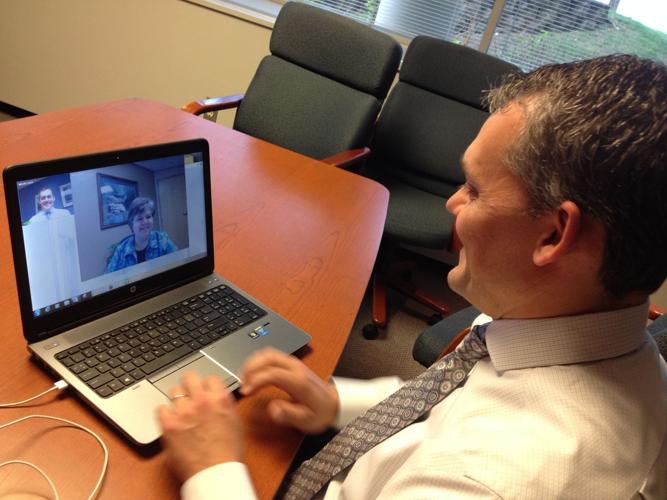
SIOUX CITY | Chad Markham's Virtual Care appointment with Cynthia Kildare, an advanced registered nurse practitioner based in Ankeny, Iowa, was about to begin. In the meantime, a message on his laptop encouraged him to "sit down and relax."
Markham, senior vice president of physician services and network development, was sitting at a conference room table in the Sioux City hospital 200 miles away.
After a few minutes, the "waiting room," an image of a light blue wall and a white couch, disappeared. The video conferencing app loaded. And Markham, who was battling seasonal allergies, was face to face with Kildare, who could treat him.
Virtual Care, which is offered in collaboration with MDLIVE, the nation's largest network of board-certified telehealth doctors, allows patients over the age of 3 to connect with a physician anytime, anywhere for a doctor's visit by phone or secure online video.
People are also reading…
"It's convenience and it's a way of offering greater access to medical attention for common issues to more people," Markham said. "I think most people by now have had a FaceTime conversation or a Skype conversation. We're all, I think, fairly comfortable with the notion of having a conversation with a person over a video platform."
The service, which launched June 2, is designed for patients with minor illnesses, such as ear infections, cold and flu, rashes, sore throats, headaches, allergies and urinary tract infections.
For $49, a patient can obtain a diagnosis and prescription from a physician via computer or smartphone. You don't have to be a UnityPoint Clinic patient to use the service. When physicians can't diagnose virtually, the fee, which is covered under some insurance plans, is waived.
Markham said the questions patients are required to answer before scheduling an appointment help weed out those with conditions that aren't appropriate for Virtual Care.
"Most people understand that if you have a laceration you shouldn't look on the computer for help," he said.
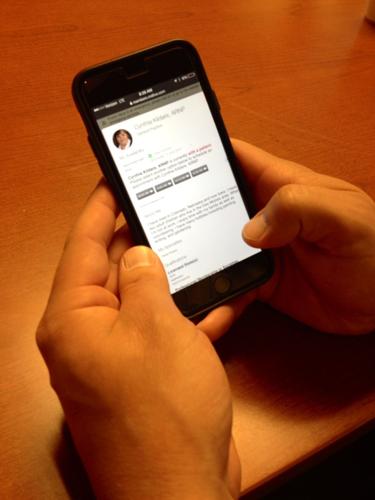
When scheduling an appointment, patients can view times when virtual physicians are available for an appointment and read a brief description about them and their qualifications. They also can select the first-available physician to gain access more quickly.
Virtual Care physicians receive specialized training to deliver care via phone and video chat. Kildare, who has been practicing medicine for 35 years, said she can spend as much time as she needs assessing a patient. The average consultation takes about 12 minutes.
During an exam at the clinic, Kildare will listen to a patient's heartbeat or palpate their abdomen, something she can't do over the Internet. The questions she asks carry even more weight since she can't touch the patient.
Kildare can access the electronic health records of UnityPoint Clinic patients during virtual appointments. The notes she takes during the consultation are also added to those patients' electronic health records.
Jeffrey Zoelle, a family physician at UnityPoint Clinic Family Medicine at Sergeant Bluff and medical director of clinics, said Virtual Care will help meet the needs of people who may forgo a trip to the doctor's office.
"It's often difficult to get in, which is an issue that UnityPoint as a whole is looking at as far as access. This just gives people more options for access," he said. "Hopefully those people who aren't attached to any primary care provider, it can give them some way to be associated with UnityPoint so they can find somebody."