
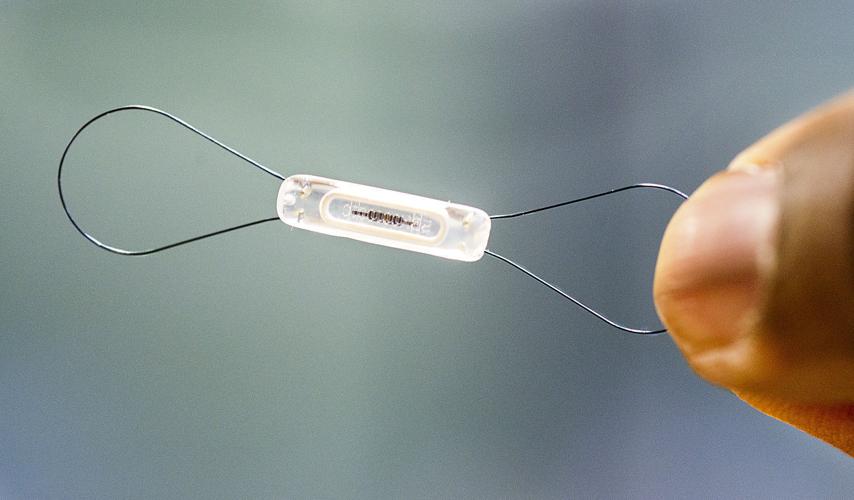
SIOUX CITY | A silicon chip with a thin curved wire wing at each end is smaller than a dime, but the device is making a big impact in treating congestive heart failure (CHF) patients at Mercy Medical Center.
CardioMEMS, a new implantable device now available at Mercy, allows the hospital's cardiologists to treat congestive heart failure patients before they develop symptoms and reduce hospital readmissions.
George Davis, 55, of Sioux City, is Mercy's first patient to receive CardioMEMS. Since he suffered a heart attack in 2011, Davis has experienced shortness of breath, fatigue and swelling in his belly, hands and feet. CardioMEMS, which was implanted in Davis in November, is helping him manage CHF.
People are also reading…
"Everything's been very smooth since then," he said. "It's helped me tremendously. I'm not in the hospital. I feel more comfortable with the device."
Some 5 million Americans are living with CHF, a chronic condition where the heart doesn't pump blood as well as it should.
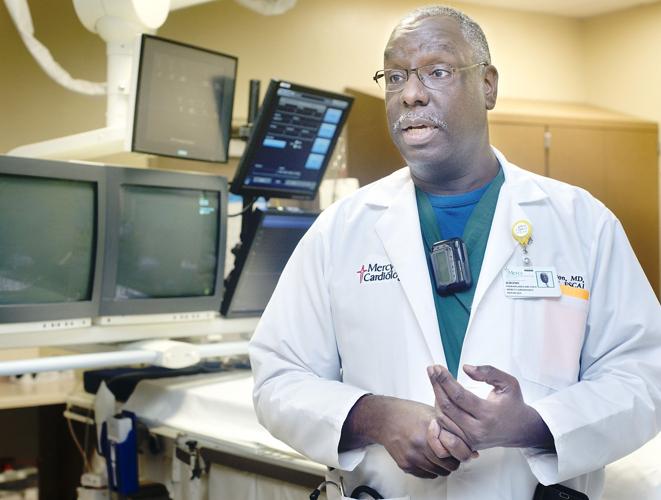
Prior heart muscle damage from heart attack, certain medications, viruses, chronic alcohol consumption and unknown factors can weaken the heart muscle, according to Jerome Pierson, an interventional cardiologist at Mercy.
"With the new device, hopefully we'll be able to capture this information before they become symptomatic so we can be proactive and treat them before they become symptomatic," he said during an interview in October.
According to the Centers for Disease Control and Prevention, CHF causes an average of 1 million hospitalizations each year and accounts for $32 billion in spending.
Patients in the early stages of CHF may have no symptoms. As the disease progresses, patients may present with fatigue, weight gain, shortness of breath and ankle swelling. Studies suggest that up to 30 days before a patient displays symptoms, the pressure in their lungs and the pulmonary arteries starts to increase.
CardioMEMS can warn that a patient's condition is worsening.
"The theory with this is this can catch fluid build-up way before any symptom starts happening," said Lynett Kayl, Mercy's congestive heart failure program manager.
In a clinical trial of 550 CHF patients, CardioMEMS showed a 28 percent reduction in heart failure hospitalizations at 6 months and a 37 percent reduction at 15 months.
The silicon chip, which is hermetically sealed in glass, doesn't require batteries. This sensor is permanently deployed into the distal pulmonary artery with a catheter -- a long, thin, flexible tube. Pierson said the procedure could take anywhere from 10 minutes to an hour, depending on the cardiologist's familiarity with CardioMEMS.
Once in place, the device, which costs roughly $20,000, allows doctors to analyze blood pressure readings from inside the patient's pulmonary artery.
"It has a chip that will actually measure by frequency and then translates this into pressure wave forms, so we can actually see the pressure inside the pulmonary artery," Pierson said.
To collect readings at home, patients lie on a special pillow equipped with an antenna. After pushing a button, their readings are transmitted in real time to a secure database for their cardiologist to review.
Before CardioMEMS, Davis called his doctor daily to report his weight and answer questions about how he was feeling. Now, he said he lays on the special pillow for about 30 seconds. He said he hears elevator music while readings are being collected. A voice alerts him when he can get up.
Based on the readings, patients' medications can be adjusted accordingly to improve heart function. They are also encouraged to make lifestyle changes such as eating less salt and limiting fluid intake to prevent the condition from progressing.
Kayl said she has told Davis to take an extra water pill six times since November.
"That helps prevent more fluid build-up, gets it back down to normal levels and, in theory, prevented a readmission to the hospital for congestive heart failure," she said.