


PLYMOUTH, Mass. – On Sept. 6, 1620, two ships, Mayflower and Speedwell, left Southampton, England, bound for the New World. Halfway through the journey, Speedwell developed leaks and turned back, but Mayflower continued on. On board Mayflower were 102 passengers and about 30 crew members. Two people died from scurvy on the 65-day trip, and one baby was born.
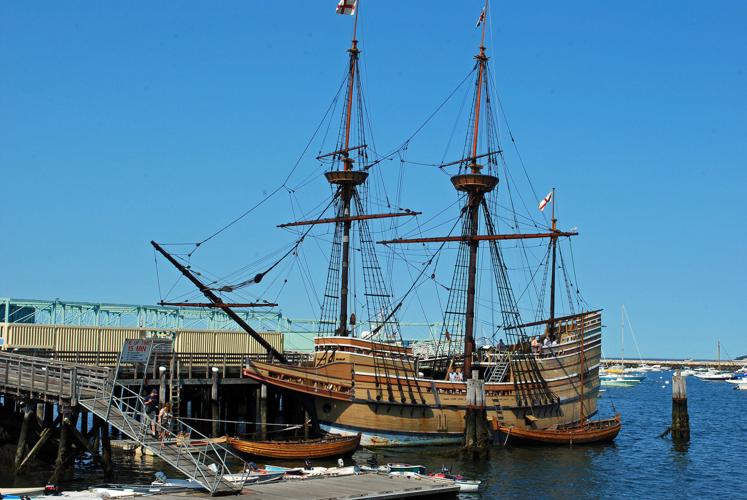
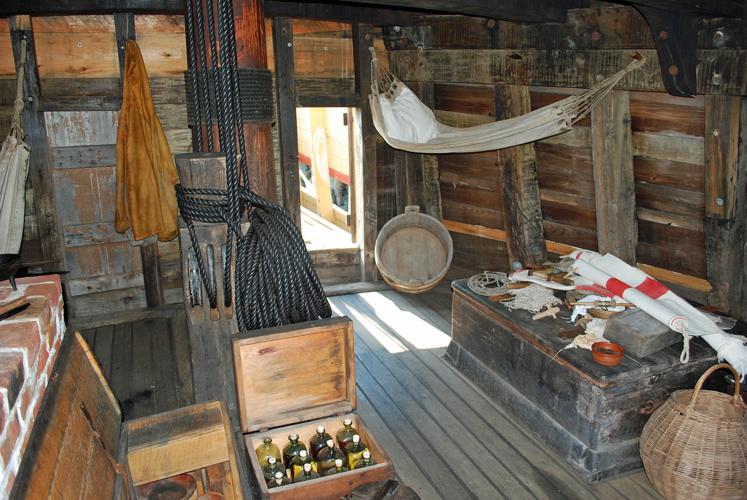
Mayflower was a typical merchant ship of the day and was about 100 feet in length.
When Mayflower reached land on Nov. 9, they encountered heavy seas and nearly shipwrecked. They had planned to sail south down the coast but decided because of the weather they would explore Cape Cod. They turned north and rounded the tip of Cape Cod and anchored in what is now Provincetown Harbor, and spent the next month exploring the area and trying to decide where to build their settlement. On Christmas Day, 1620, they decided to settle in present-day Plymouth and immediately began building their new settlement.
People are also reading…
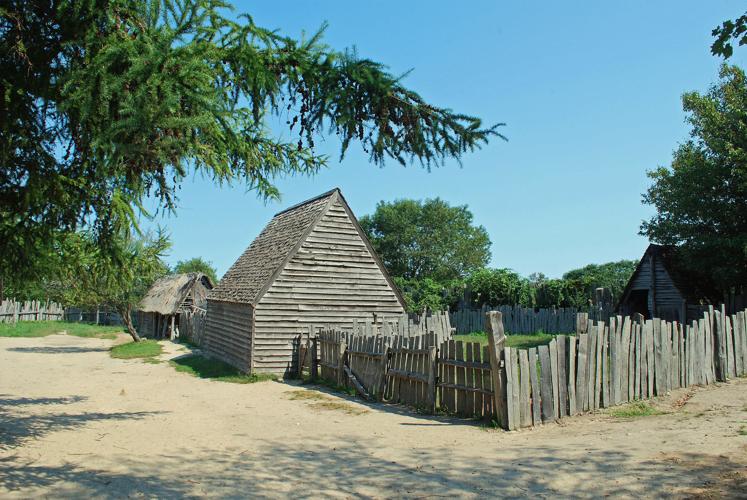
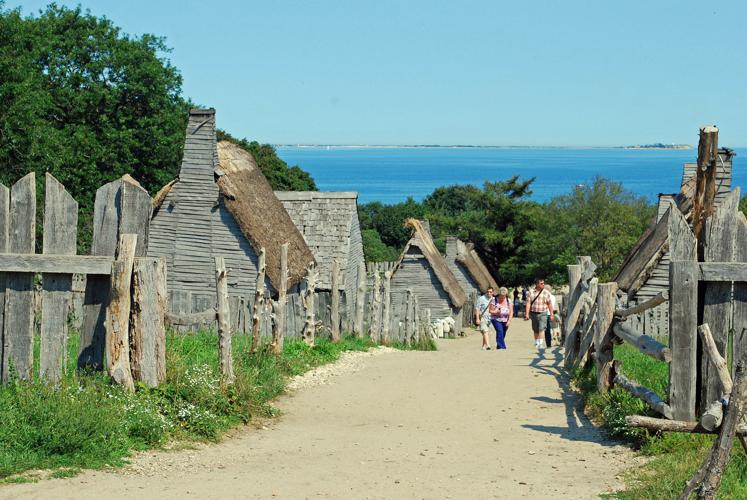
Because the original settlement sits in and under the present town of Plymouth, no one knows exactly what that original village looked like. However, the nearby Plimoth Plantation’s re-creation is based on painstaking research into what a 17th-century English village looked like.
One question often asked by those touring the village is why is it spelled Plimoth. Plimoth is the spelling used by Governor William Bradford when he wrote about the settlement. There were no hard and fast rules for spelling words in the early 17th century, so documents from that time have various spellings for the settlement. The spelling also separates it from the modern city of Plymouth.
The original settlement had many more houses than the re-created village. However, like the original, the re-creation is situated on the side of a hill but not as steep as the first one. The 17th-century settlement had about 150 acres of land where they grew corn and other crops. Today there is about an acre being worked as a producing corn field.
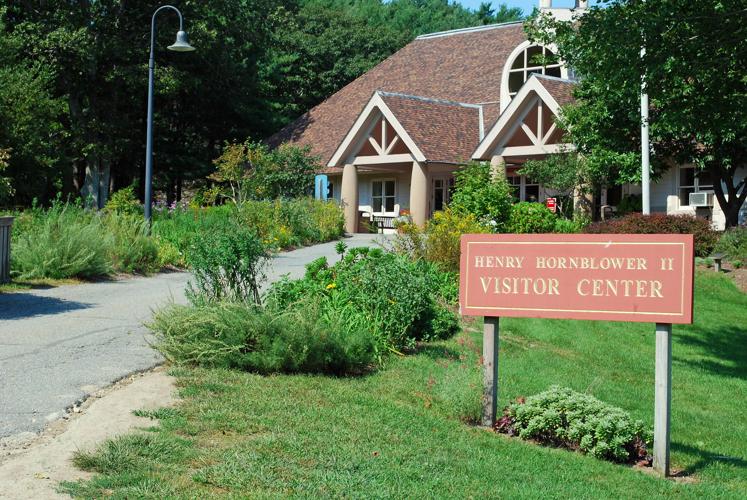
The first stop on a tour of the Plimoth Plantation is the Henry Hornblower II Visitor Center, where you can buy tickets and view an orientation film about the village. Also in the Visitors Center are gift shops offering Native American art and jewelry along with children’s toys and books. The Plentiful Café in the Center has a menu adapted from both the Colonial and Native cultures as well as more modern fare.
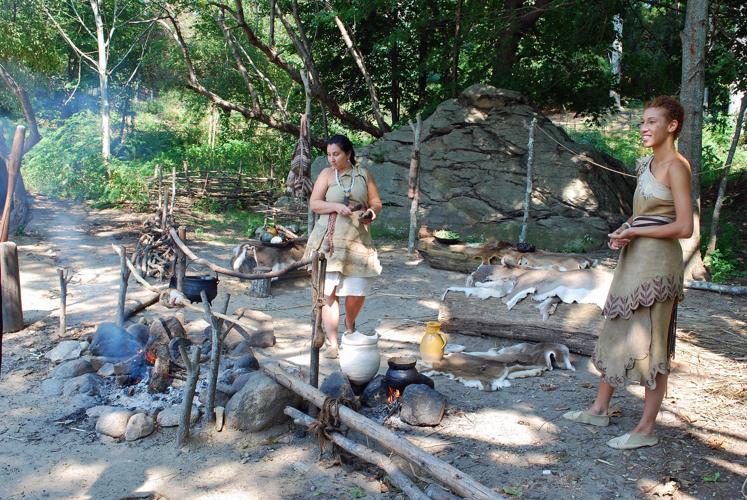
As visitors tour the village, the first outdoor living history exhibit they see is the Wampanoag Homesite located on the banks of the Eel River. Modern-day descendants of the Wampanoag tribe or other Native American nations can be seen working in the exhibit preparing food or using reeds to make mats or baskets. Food is prepared over an open fire using only the items available in the 1600s. They are dressed in historically accurate clothing made mostly of deer skin. The Native historic interpreters explain Wampanoag history and culture, including traditions, pastimes, music and dance of the people who inhabited the area for more than 10,000 years. Near the river’s edge men are sometimes seen making a mishoon, a boat made from a hollowed-out tree. It is requested that visitors refrain from wearing Indian costumes while touring the Plimoth Plantation. It may cause confusion for people who might mistake costumed visitors with Native Wampanoag interpreters.
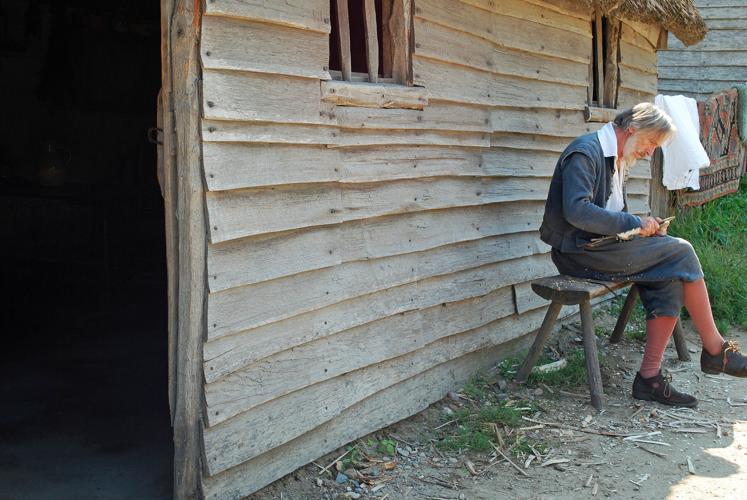
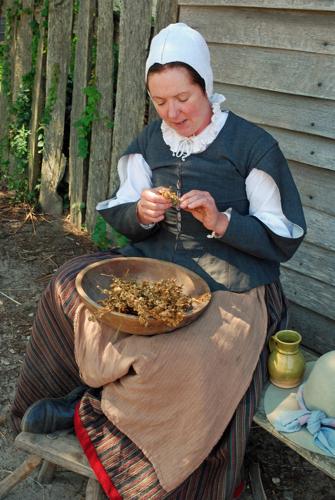
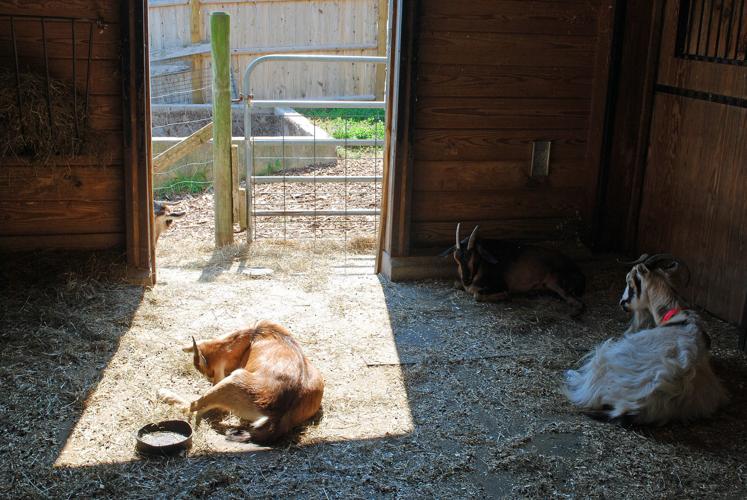
Once visitors leave the Wampanoag Homesite, they enter the re-created 17th-century English Village that is a replica of the one built by Pilgrims in 1620 along the shore of Plymouth Harbor. The village has timber-framed houses furnished with reproductions of everyday items used by those early settlers. Throughout the village are costumed interpreters who explain how the original settlers grew crops and how they managed to survive the sometimes harsh climate and living conditions. Each interpreter portrays an actual resident of the Plymouth Colony.
Not far from Plimoth Plantation is Mayflower II, a replica of the famous ship that brought the Pilgrims to Plymouth in 1620. The full-scale replica is currently undergoing a complete restoration in preparation for the 400th celebration of the Pilgrims landing on the shore of New England. The ship is being restored at Mystic Seaport, Connecticut.


