
SIOUX CITY | The first River-Cade was held on the Missouri River front in 1964 as a celebration of Sioux City's river heritage.
Sioux City Public Museum archivist Tom Munson said the city had recently been named the northern most port on the Missouri River for barge traffic. Members of the Sioux City Chamber of Commerce -- Waterways Committee, founded the summer festival to celebrate this designation and to showcase the area's potential for continued economic development and its current outstanding quality of life.
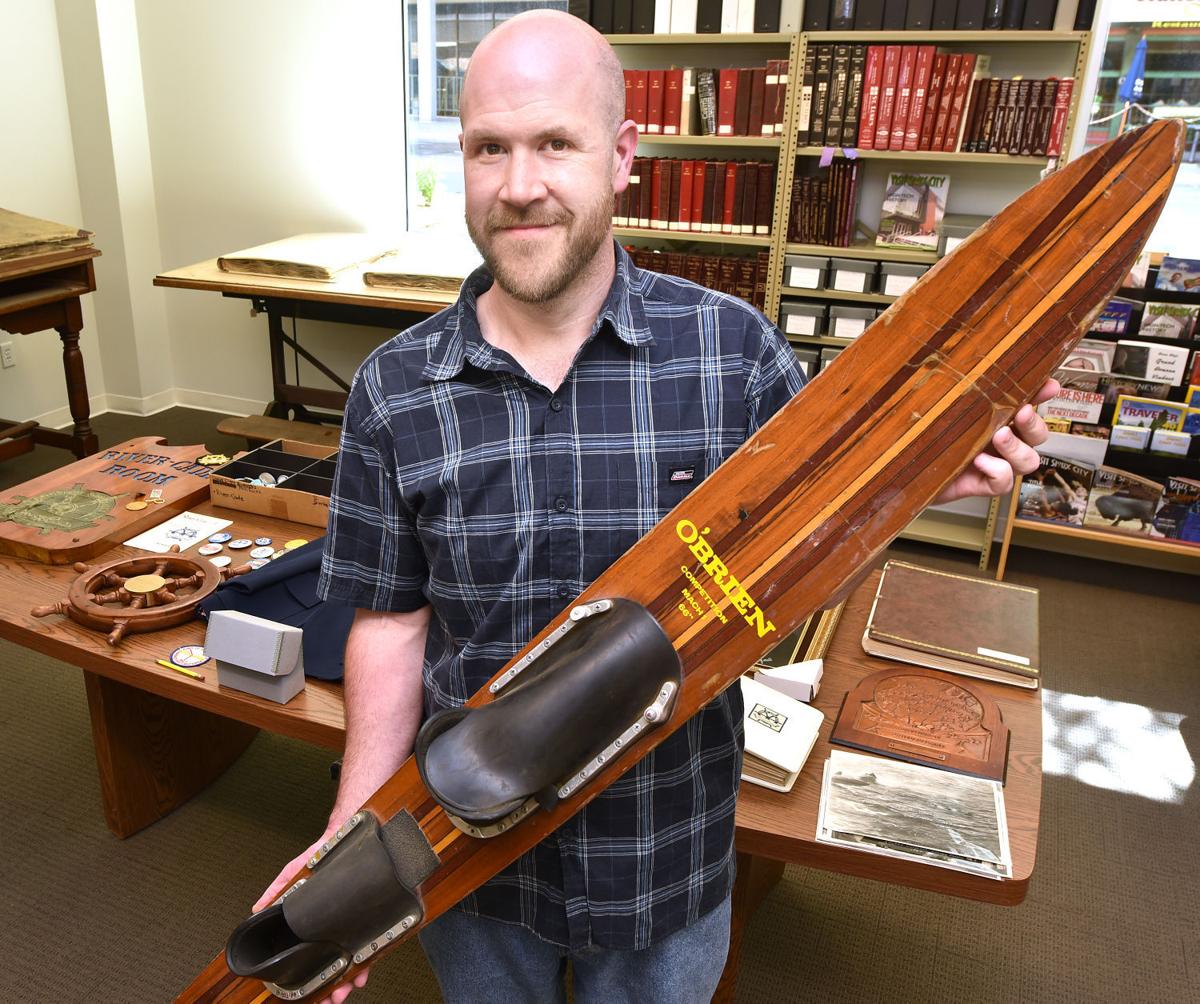
"In the 1960s River-Cade was a huge celebration," Munson said as he stood at a long wooden table in the museum's research center that was covered with memorabilia from River-Cades past, including commemorative buttons, patches and pins. "In fact, in one of the early years there was artwork commissioned by the Northern Natural Gas Company and there were ads in Time magazine for what we were doing in Sioux City."
People are also reading…
That first celebration held Oct. 16-18 took on a nautical theme to represent Sioux City becoming a "waterway of the world." It was based on Minneapolis’ Aquatennial celebration.
Attended by the likes of Barry Goldwater, Hubert Humphrey and Lawrence Welk, River-Cade lost some of its luster when barge traffic never match that experienced in other port cities.
"The river gets harder to navigate. We could only get four or five barges up here at a time," Munson said. "Where as when you see places on the Mississippi or the Ohio, sometimes you have a single tugboat pushing 16 barges."
Locally, L.G. Everist and Big Soo Terminal used the river for transporting heavy freight, but Munson said the railroad was a much more cost-effective way of moving it. He said relocating the festival from the riverfront to Chautauqua Park and the Tyson Events Center parking lot, where River-Cade will be held July 2, also contributed to a decline in participation.
"The carnival we had and all of the boat races used to be right on the river where the Anderson Dance Pavilion is," he said. "Now it's in the Tyson Events Center parking lot. It's close to the river but you still have the isolation caused by Interstate 29."
COMMODORE'S UNIFORM & WHEEL
The late Tom Gerkin, former president of Gerkin Windows & Doors, served as River-Cade commodore in 1975. His wife, Laura Gerkin, donated the nautical uniform he wore in the festival's early years. The navy blue blazer is decorated with shiny gold buttons, white and gold shoulder patches and gold cords. The jacket's left breast is embroidered with a gold boat wheel and the River-Cade name. A white, black and gold captain's hat completes the uniform. Munson said the commodore was in charge of the festival's volunteers. The museum also has a wooden boat wheel presented to Gerkin to commemorate the 1975 River-Cade celebration
BUTTONS
The River-Cade boat wheel is featured on the inaugural 1964 and 1965 buttons. The background in the 64' button is white and the wheel is blue. The two colors were flipped for the 1965 button which is a bit smaller in circumference. The 1992 button is yellow and features the slogan, "Get hooked on River-Cade." Sponsors including IAMS, Gateway, Pepsi-Cola and Centel Cellular are prominent on some of the buttons.
"The buttons you use today to get into things like the concerts," Munson explained. "I think we have one from just about every celebration."
BELT BUCKLES, PINS, KEY CHAINS
Brass belt buckles bearing the River-Cade logo were produced in 1983 and 1984. Munson doesn't know if belt buckles were available at prior or latter festivals. Both buckles are individually numbered on the back. The museum's collection also features a square purple and blue lapel pin painted with the words, "DISCOVER RIVERCADE" from 2003 and a gold key chain from 2010.
WOODEN SKI
River-Cade used to feature power boat races, water skiing, a turtle derby and a raft regatta. Hundreds of people gathered along the Missouri River banks to watch these events.
The museum has acquired a single wooden O'Brien Mach 1 water ski used during River-Cade competitions. Munson said it would be dangerous to ski with it while being tugged behind a boat on the river today. A used yellow lead pencil stored in a box with buttons and balloons, pays homage to The Big Sioux Rubber Duck Race that Munson said was done away with more than a decade ago.