


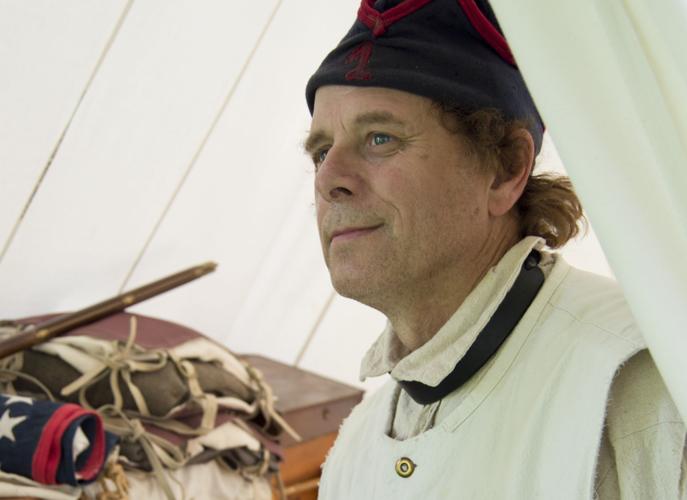
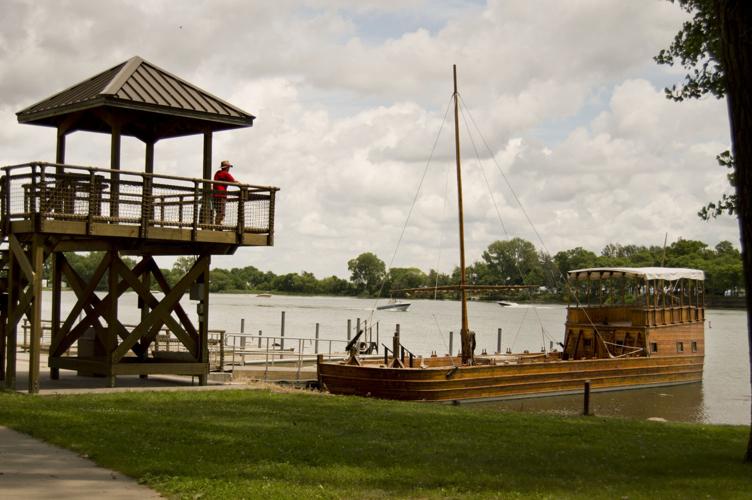

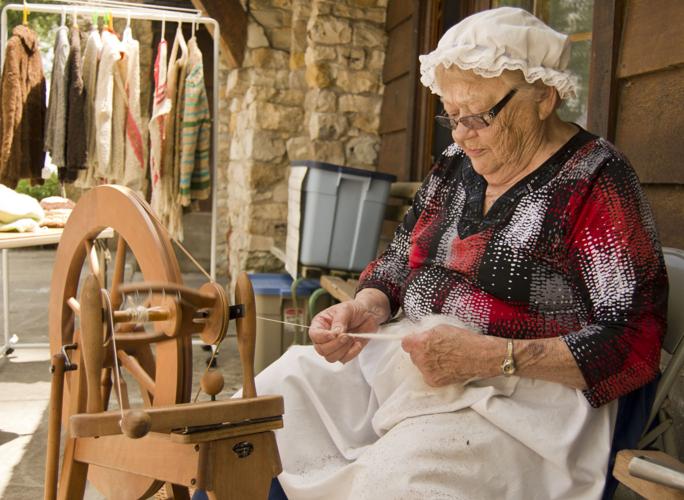
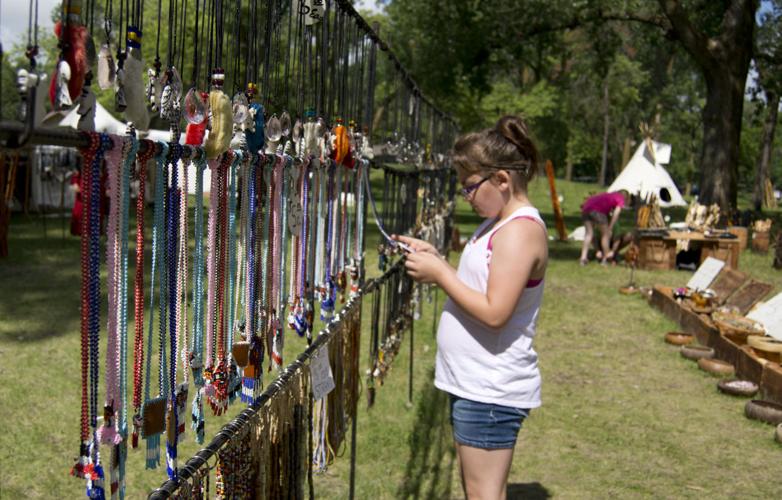
Historical reenactors pitch tents along the shores of Blue Lake, an oxbow of the Missouri River. They feast on Canada goose and wild turkey, cooked over the fire with onions, green peppers and celery sautéed in bacon drippings.
A model keelboat gently bobs by the dock, paying tribute to the explorers of the new frontier.
Meriwether Lewis and William Clark sailed, towed and poled their 55-foot barge upstream to arrive on these grounds near Onawa, Iowa, on Aug. 10, 1804. One weekend each year, the state park named in their honor teems with activities of the early 1800s.
Since 1985, the Lewis and Clark Festival has been a buckskinner’s rendezvous with muzzle loaders, archery competitions, tomahawk throws, trap-setting and fire-starting seminars, bow making and hide tanning. Also there are buffalo burgers, pancakes and pies.
People are also reading…
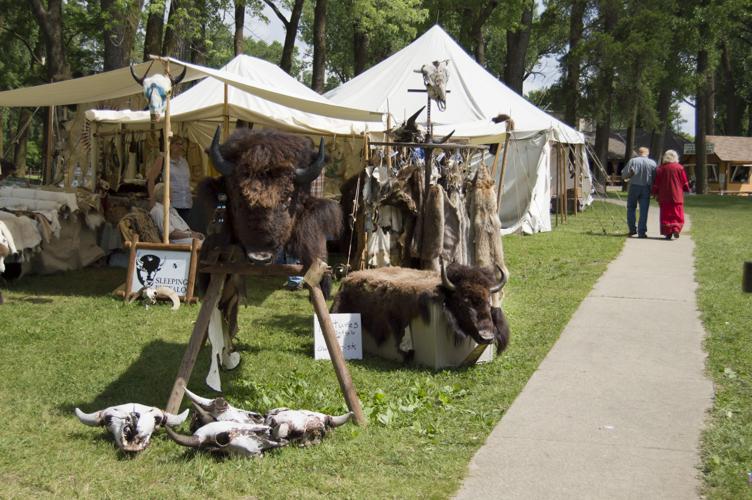
Old-time merchants come selling their wares.
Ronald Hansen, a true-to-life mountain man, brings pelts of deer, buffalo, bear and rabbits. Over the course of the three-day festival, he sleeps with his furs in the back of the tent. Hansen marvels at how the explorers and early settlers survived severe weather, food shortages and other common dangers.
“I got in this about five years ago. I learned more about history since I got to 70,” he said. “All we try to do is learn a bit more. You can never know everything.”
Hansen, a retired construction worker, started a hobby business Sleeping Buffalo with his companion Lee Bowland. She joins him in the park, dressed in period garb.
The first time at the festival, they brought a few furs. Hansen began setting up his display with plastic – a big no-no for buckskinning. The pre-1840 historical reenactment calls for a canvas tent. It turned out to be an easy fix. He traded a buffalo hide for a tent.
After leaving the workforce, Hansen thought he’d spend the rest of his days hunting and riding horses up in the Rocky Mountains. Then, he discovered how to tan a hide.
“I’ve been lucky that the man upstairs gave me something,” he said with a toothless grin. “It comes naturally.”
Now, who’s that approaching? Why, it’s none other than Captain Clark.
Randy Rumelhart portrays the co-leader of the expedition corps with the Sergeant Floyd Honor Guard. He has been a reenactor for 26 years.
He appears at several encampments throughout the summer. The biggest one he goes to is the Sergeant Floyd Memorial Encampment in Sioux City. It’s always held before Aug. 20, which was the day Sgt. Charles Floyd died in 1804. He was the only man to die during the expedition that covered 7,689 miles and spanned 863 days, exploring uncharted territory.
This year, the encampment will be held Aug. 15 and 16 at the Sergeant Floyd River Museum and Welcome Center, 1000 Larsen Park Road. Visitors can reach out and touch replicas of guns, backpacks and clothes.
The living history camp at Onawa’s Lewis and Clark Festival is the honor guard’s first big outing of the year and lends a way to get new recruits.
If they can reach boys and girls at the right age, they might stand half a chance to spark an interest in history over sports. Members teach the youngsters about making musket balls and demonstrate what the explorers carried in their backpacks.
“We’re always looking for people interested in the history here,” Rumelhart said. “We furnish everything – the clothing and the guns. It’s too expensive for young people to get into and try unless you give them a bit of encouragement.”
The grownups who are newcomers to the group learn how to put on a uniform and march. They’re strategically placed in the center of the troop – so they’re not noticed – until they catch on to the military movements.
“Most of them, if they’re interested enough, get to portray a person on the expedition and actually start researching on their own besides the information that we can provide them to where they can play first character to that particular person.”
He has been playing Clark with the local honor guard for about 15 years. He’s also involved with other Lewis and Clark organizations along the river from Kansas City to Yankton, S.D., and beyond.
While the buckskinners and reenactors only appear once a year at Lewis and Clark State Park, the visitors’ center provides an extended look into history. Local historian Butch Bouvier built replicas of pirogues and the keelboat for an indoor display. Other exhibitions feature prairie animals, knots, tools, uniforms, the captain’s cabin and the making of a bullboat.
Make like Lewis and Clark and explore.


