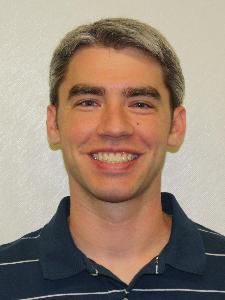

Tim Sesterhenn remembered a photo his parents took when he was 3 years old.
It showed the future Morningside College assistant biology instructor smiling in one of his favorite settings: outdoors, nestled in the grass.
"I've always loved parks and I've always been curious about the nature you'd find out-of-doors," said Sesterhenn, who teaches invertebrate ecology and the principles of biology. "Guess that's always been the case."
Growing up in Ohio, he became fascinated by summertime insects and their ecological role.
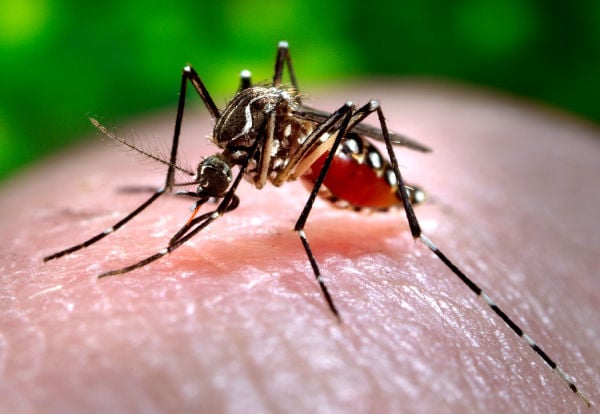
Specifically, Sesterhenn became intrigued by mosquitoes, a blood-sucking insect that has bedeviled travelers since the days of Meriwether Lewis, William Clark and the Corps of Discovery Expedition.
In journal entries from August 1804, Clark called the mosquitoes along the Missouri River "the Expedition's greatest pest," Sesterhenn noted.
People are also reading…
"The Corps of Discovery members were attacked so ferociously that it was impossible for them to shoot their rifles with any accuracy because of all of the bugs in their faces," he added.
And what could the Lewis & Clark Expedition do to protect themselves from such summertime critters? Use mosquito netting and a stinky repellant made of tallow and lard.
"(Clark's) battle with mosquitoes could be viewed as comical if malaria and other mosquito-borne illnesses weren't a real life-or-death problem," Sesterhenn said.
Indeed, mosquitoes can act as vectors for such disease-causing viruses as yellow fever, dengue fever and the West Nile virus, among other things.
Still, the little bugs are helpful in the pollination of plant life and serves as food for other animals.
That makes the mosquito important, right? Well, not according to Sesterhenn.
"If the world's mosquito population was eradicated tomorrow, we'd still have other insects who would take their place," he said. "We'd be OK with the absence of mosquitoes."
Despite that, Sesterhenn said medicinal mosquitoes may someday be used to increase blood flow for cardiac patients.
"Believe it or not, some doctors still use leeches in rare cases," he said, adding that leeches can inject an anti-coagulant known as hirudin into wounds. "Why not mosquitoes?"
Though they can be annoying, Sesterhenn doesn't mind the buzz surrounding mosquitoes.
"(Mosquitoes) play a role in our ecosystem," he reasoned, "so I'm not against them."
Which is good news for Sesterhenn, who grew up reading Ranger Rick magazine and watching Marty Stouffer's long-running "Wild America" series on PBS.
"There's something about being outdoors in the summertime that really appeals to me," Sesterhenn said, adding that he plans on studying damsel flies and dragonflies over the next few months. "And a large part of being outdoors is being exposed to insects, like mosquitoes."