


SIOUX CITY -- Ask Dr. Eli Wayman, a U.S. Army veteran with multiple deployments to Iraq under his belt, a question, and he'll give you a very direct answer.
What was tougher: going through basic training or making your way through four years of medical school?
"Don't get me wrong, basic training was physically tough," Wayman, an Omaha native, said. "Med school was both mentally and physically tough."
OK, what was scarier? Being in a war zone or caring for patients as a first-year Siouxland Medical Educational Foundation (SMEF) resident doctor?

"When you're in the military, you're part of a team," Wayman explained. "The first time you see a patient for the first time, you realize so much rests on your shoulders.
People are also reading…
"Now, that can intimidating," the University of Nebraska Medical School graduate added. "But it is also the culmination of all of the time and effort you've put into your occupation."
Established in cooperation with Sioux City's two hospitals as well as community physicians in 1975, the Sioux City Family Medicine Residency Program is the only residency in Northwest Iowa. With a faculty of physicians and medical professionals, the Residency Program has six first-year resident physicians, six second-year residents and six third-year residents who cycle through all aspects of family medicine throughout a 12-month period.

Dr. Eli Wayman, a first-year family medicine resident at Siouxland Medical Education Foundation, described becoming a doctor as an exercise in "delayed gratification." "You go to school longer, you spend the first three years of your career as a resident and, in many cases, you can't get married or start a family until long after your friends do. In the end, it's worth it."
At age 34, Wayman is one of the older first-year residents at SMEF.
"As a kid, I loved science but didn't know how to pursue it as a career," he recalled.
Coming from a military family, Wayman knew a stint in service was all but a given. Even after earning his undergraduate degree at the University of Nebraska, he still wanted to keep his options open.
"Did I want to be a nurse practitioner or a physician's assistant?" he asked himself. "They're good professions but I also like having more autonomy. It was after I applied and got accepted into med school that, OK, I'm now on my way of becoming a doctor."
Specifically, Wayman was on his way of becoming a family doctor.
"Once I graduated from med school, I wanted to be a part of SMEF," he explained. "I wanted to work directly with physicians while not having to jockey with residents from other programs."
Indeed, Wayman uses a sports analogy to describe the Sioux City Family Medicine Residency Program.
"Our residency program is like being at a Division II school while a university-associated residency program is a Division I school," he said. "Here, you're in the field right from the very start. At a university, you're stuck sitting on the bench.

"Bottom line: I'd rather be in the game than on the bench," Wayman said with conviction.
However, he wasn't always so confident.
"You know you've turned a corner when people stop calling you Eli and start calling you 'doctor,'" he said.
This is when Wayman begins to trust what he learned in basic training.

"As a soldier, you learn skills that will prepare you to the field," he said, "Medical school works the same way. You lean on and trust the skills that you've acquired."
But a person can't work all the time, right?
In his free time, Wayman likes to listen to music, spend time outdoors and, even, try his hand at a bit of architecture.

"I like sketching and designing things whenever I get a chance," he said. "I'm also a amateur photographer and a bit of a movie buff."
All right, what is Wayman's all-time favorite film?
"Hook," he said, mentioning the 1991 retelling of the story of "Peter Pan," "I'm a fan of both Steven Spielberg and Robin Williams."
Here's another question: How does it feel to be a resident physician?
"People call becoming a doctor a career of delayed gratification," Wayman said. "You go to school longer, you spend the first three years of your career as a resident and, in many cases, you can't get married or start a family until long after your friends do."
"I've made it this far and I know I still have a ways to go," he continued. "I love what I do and each day is a challenge."
So, is he getting used to being called "doctor"?
"Now, that's an interesting thing," Wayman said. "As a family physician, I'll be seeing patients over the course of their lives. When people first meet me, I'm Dr. Wayman. Once we establish a bond, then I get to be Eli again."
PHOTOS: 42 historic images of Sioux City schools
Sioux City first school
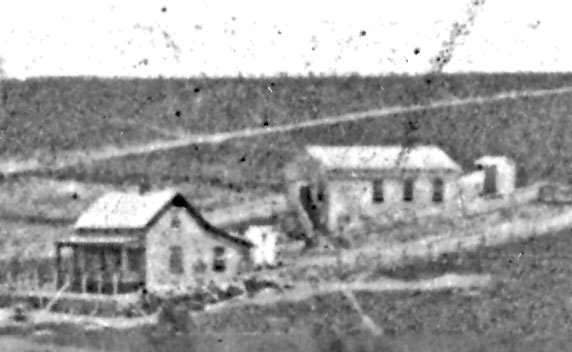
The first Sioux City schoolhouse is seen on the right in this early photograph.
Sioux City Central School

Sioux City's first brick school building, called Central School, opened its doors circa 1870. It operated for 20 years.
West Third Street School

The West Third Street School at West Third and Bluff streets, opened in 1880.
West Side Brick

The First Ward School, also called West Side Brick, opened in 1872 on the Market Street site where the LAMB Arts Regional Theatre is located. It was torn down in the late 1930s.
East Third Street School

The East Third Street School at Third and Chambers (later at Sixth and Morgan) streets opened in 1883 and operated until 1929.
Eighth Street Primary

The Eighth Street Primary School (known by several names in its time) opened at Eighth and Pierce streets in 1882.
Wall Street School

The Wall Street School, at Seventh and Wall streets, opened in 1880 and operated until 1925.
Fifth Ward School

The Fifth Ward School opened at Wall and Dace streets in 1885. It operated until 1938.
East Side Brick

East Side Brick, later to be renamed Irving, opened at 11th and Jennings streets in 1886. It was one of several Sioux City schools that underwent extensive renovations in the following century and was in use until 2006.
Everett School

The former Everett Elementary school opened in 1888, sharing the exact building plan of the Cooper school in Greenville, which was also built in the same year. Both buildings still stand, but underwent such extensive remodeling during the 20th century that they do not look at all like Everett seen in this photo.
Cooper School

The Cooper School in Greenville opened in 1888. It shares an identical building plan as the former Everett School on the west side. Both buildings still stand, but do not have their original appearance.
West Eighth Street School

Opened in 1887, the West Eighth Street School operated until 1934. Today, the McDonalds on Hamilton Boulevard sits near the site of the school.
Pearl Street School

The Pearl Street School, later named Bancroft after the statesman George Bancroft, opened in 1888.
Cole's Addition School

The Cole's Addition School, later called Franklin, opened in 1889 at Ninth and Plymouth streets. It was one of the schools that underwent extensive remodeling in the 20th century before it closed in 1982.
Bryant School

The Bryant School, named for poet William Cullen Bryant, opened in 1890.
Longfellow School

Named for Henry Wadsworth Longfellow, the original Longfellow school opened in 1890. It lasted only three years.
Hawthorne School

Hawthorne School opened in 1891 and operated until 2008. It was one of the schools that underwent 20th century remodeling.
Longfellow School (second)

A second Longfellow School was built in 1893 to replace the previous one, which was built only three years earlier. It was one of the schools that was remodeled in the 20th century and remained in use until 2012.
Riverside School

Riverside School opened sometime in the 1890s at Hornick Street and Nash Avenue. It closed in 1914.
Hornick's Addition School

The Hornick's Addition School opened at West First and Leonard streets in the mid-1890s.
Floyd School

The Floyd School, named for Sgt. Charles Floyd, opened in 1902. It later underwent extensive remodeling before it closed in 1980.
Smith Villa School

The Smith Villa School, in the former home of early Sioux City resident William R. Smith, opened in 1899.
Whittier School

The Whittier School opened in 1902. It was remodeled in the 20th century and closed in 2015.
Crescent Park School

The Crescent Park School opened in 1906, as did Hunt School. Unlike Hunt, however, the wood-framed Crescent Park School closed after only 14 years.
Hunt School

The Hunt School was one of Sioux City's oldest school buildings when it closed at the end of the last school year. It opened in 1906.
Joy School

The Joy School, which opened in 1912 and closed a century later, is today an apartment complex.
Lowell School

Lowell School opened in 1910 and closed in 2008.
Follett House

The Follett House, 1309 Nebraska St., became the first building in Sioux City to house a high school (without other grade levels) in 1890. Classes were held there for two years.
Riverview School

Riverview School opened in 1914 and closed in 2002.
East Junior High School
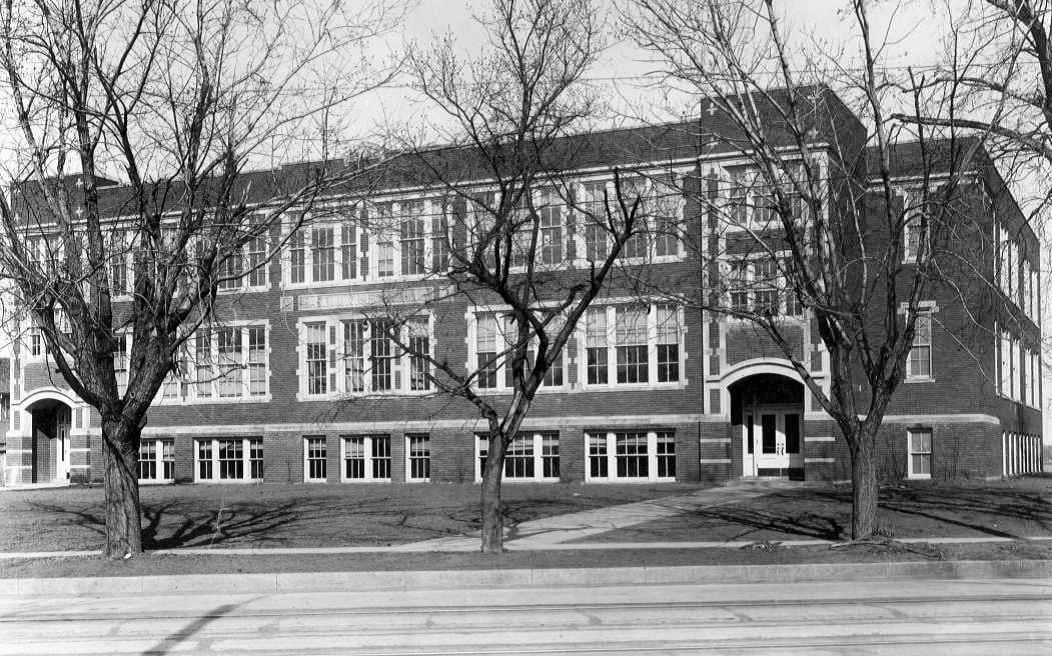
Sioux City's East Junior High School opened in 1917, just eight years after the first-ever junior high school opened in the U.S. It closed in 1972.
West Junior High School

Sioux City's West Junior High School opened in 1919. It closed in 2003.
Roosevelt School

Roosevelt School, named for Theodore Roosevelt, opened in 1920. It remained open until 2014.
Crescent Park School

Another Crescent Park School, later called Bryant, opened at 27th and Myrtle streets in 1920.
Emerson School

Emerson School opened in 1921. It closed in 2014.
McKinley School

McKinley School, named for president William McKinley, opened in 1921.
Washington School

Named for George Washington, Sioux City's Washington School opened in 1921. It closed in 2013.
East High School

East High School opened in 1925 and remained open until 1972.
Grant School

Grant School, named for Ulysses S. Grant, opened in 1925. It closed in 2008.
Woodrow Wilson Junior High School

Sioux City's Woodrow Wilson Junior High School opened in 1925. It closed in 2005.
Leeds High School

Leeds High School opened in 1939, one of only a few high schools to be opened in Sioux City during the 1930s and 1940s. It closed in 1972.
Webster Elementary
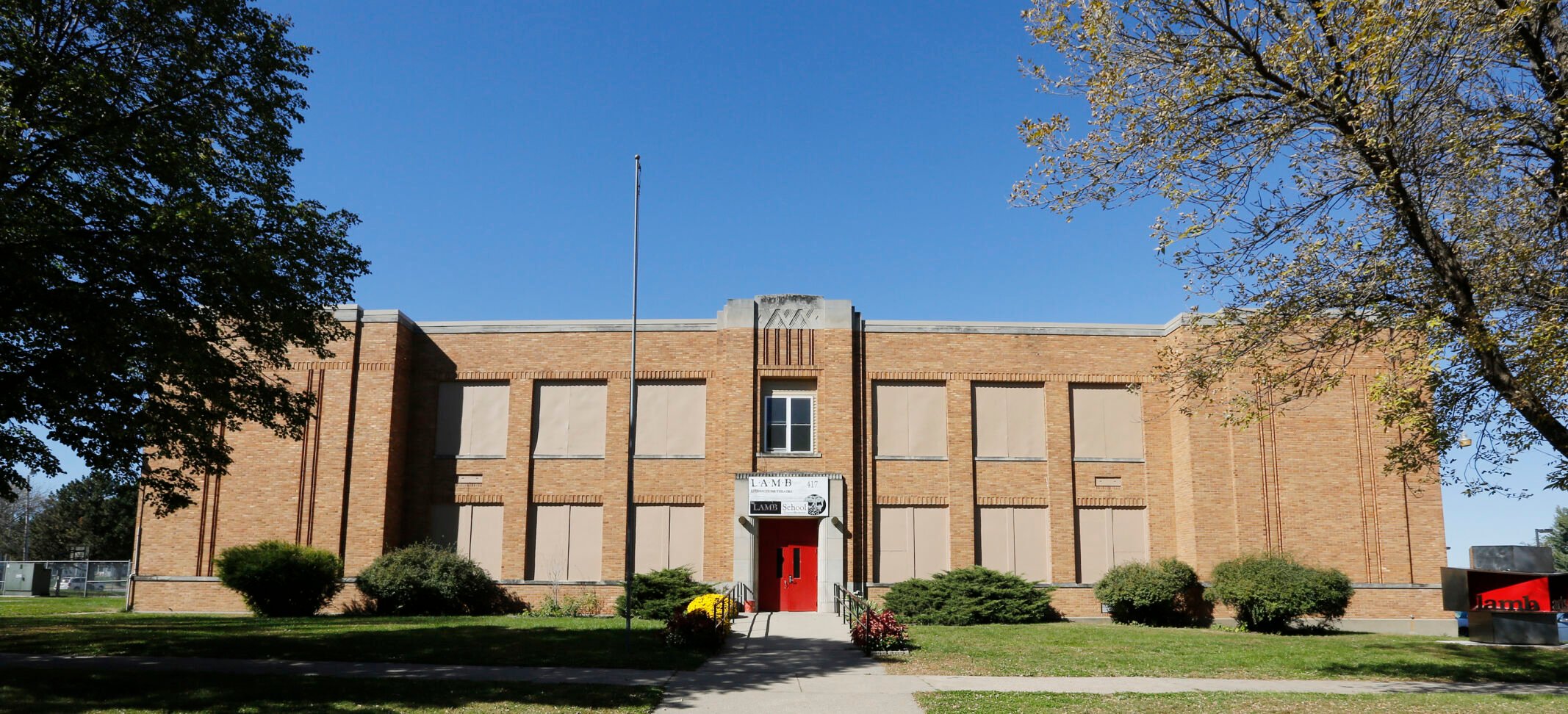
The Webster Elementary school, built in 1939, has served as the home of the LAMB Arts Regional Theatre for decades.
Hunt Elementary School goodbye hug

Students hold hand while circling Hunt Elementary School to give it a "hug" Wednesday, May 29, 2019, on the last day of classes at the school.

LEARN all about the history of schools in Sioux City: The first school, Central, West Third Street, Riverside, and more.