
LE MARS, Iowa | Got a spare tire in your midsection that you'd like to say goodbye to in 2017?
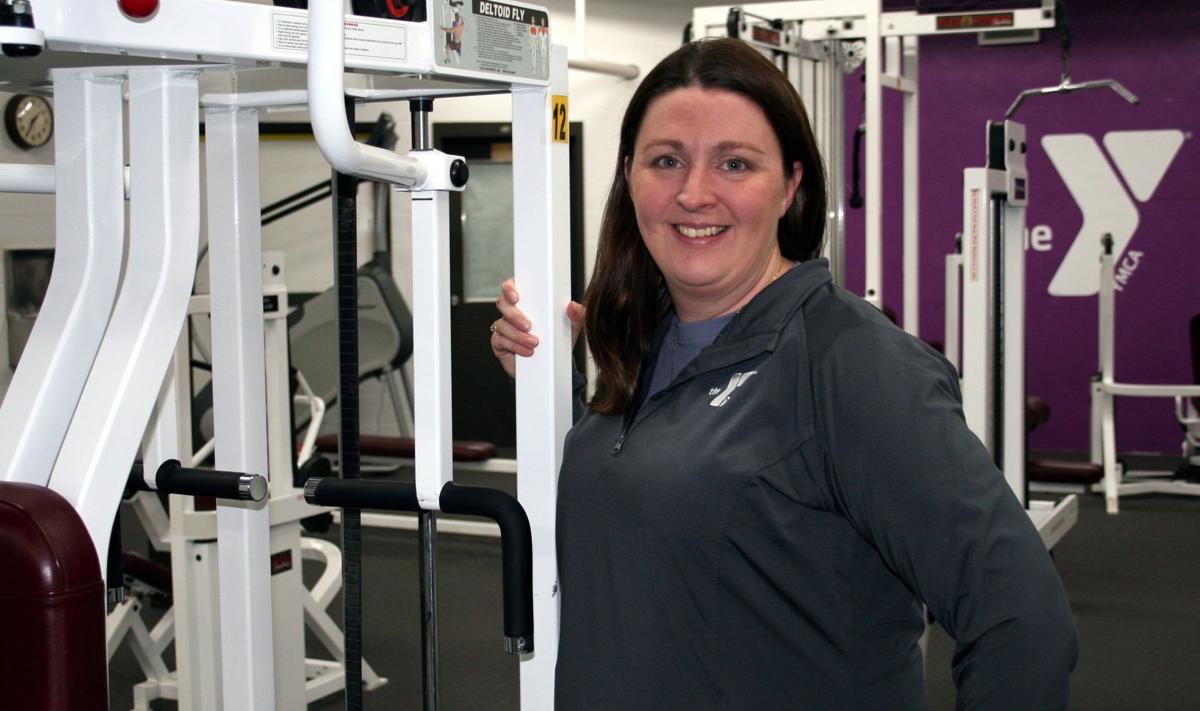
Angela Loutsch, a personal trainer and aquatics director at the Le Mars YMCA, said performing 1,000 crunches a day won't solve the problem.
"It's about the total overall body. If we train one area and forget another one we're really not having it work at its optimum," said Loutsch, who works with both individuals and corporate clients.
To achieve your New Year's weight loss resolution, start by setting a specific, realistic, measurable goal that you can write on a sheet of paper and post in an area where you see it every day.
"You can't just say I want to feel better in a month. Define 'better,'" said Loutsch, who recommends thinking in numbers of pounds, waist measurements or cholesterol levels. "Is it realistic to say, 'I'm going to start today to train for a marathon that happens in a month when I'm on a couch right now?'"
People are also reading…
For a person who is overweight, Loutsch said a 10 percent reduction in body weight is a realistic goal. Once that goal is reached, another 5 percent reduction in body weight is a good goal. Give yourself a set amount of time to accomplish your goal. When the deadline approaches, reassess your goal.
"In certain situations the number on the scale may not go down, but all of a sudden your clothes are a little bit bigger. You're going up a flight of stairs and not being winded at the top," Loutsch said. "Your weight is just one number and your life is not defined by just that one number."
Loutsch gives her clients a sheet of paper where they can list five short-term goals and three long-term goals. Short-term goals are goals that can be achieved in four to eight weeks, while long-term goals are reached in six to 12 months. Most of the time, Loutsch said people are focused on the end result, not the process, and they become discouraged. She said they should celebrate the small victories along the way.
"Our short-term goals should be our stepping stones to get to our long-terms," she said. "You can't just set out on this long journey without having your road map of how you're going to get there."
Loutsch recommends trying a number of exercises to discover what type of activity will keep you interested and motivated on your way to reaching your fitness goal. Consider your physical and time limitations first. She said joining a fitness class is great for many clients because they meet people with similar goals, who can support them while holding them accountable.
"If you're somebody who enjoys upbeat fun music, Zumba might be that class for you," she said. "If you're somebody who has a lot of stress in your life and need some 'me' time to just be calm and relax, you might be more of a yoga person."
Both activities offer great health benefits and can contribute to weight loss and muscle gain.
If you feel awkward and uncomfortable trying to keep up with the steps during that first Zumba class, like Loutsch did, she said you should give it a few more tries before calling it quits.
"Once I started getting used to it, it became like a little dance party and was really fun," she said. "Sometimes you have to get out of your comfort zone. If the atmosphere's enjoyable, you're more likely to stick with it."
Cardio exercises allow a person to not only burn fat, but also increase muscle mass. Loutsch said cardio, however, won't necessarily increase your strength. She doesn't recommending focusing on strength exercises alone and cutting out cardio.
"Those people that do strength without cardio tend to bulk a little bit. Their metabolism's going to be raised, but they're going to see that body shape shrink and obviously the scale is not going to budge at all either."
Healthy weight loss is defined as 1 to 2 pounds a week. Anything more than that, Loutsch said, includes loss of muscle mass and/or water.
And the weight isn't going to come off overnight. Loutsch said you'll need to log 150 to 210 minutes of exercise a week to lose weight. The American College of Sports Medicine recommends 30-plus minutes of exercise a day in at least 10-minute increments. Three to five days a week should consist of aerobic exercise and two to four days can be spent strength training. Avoid working the same muscle groups two days in a row while strength training.
"With strength we need recovery days," Loutsch said. "Some people find a benefit of doing upper body one day and lower body the next if they're in a time crunch rather than doing it all at once."
Perform cardio at 65 to 85 percent of your maximum heart rate to burn fat. One pound of fat is equal to 3,600 calories. To calculate your maximum heart rate, subtract your age from 220. A 40-year-old, for example, would be looking at 65 to 85 percent of 180 beats per minute.
Loutsch said you can't depend on exercise alone to lose weight. She said you also need to take a hard look at your diet, as exercise and nutrition go hand in hand.
"If you're an elaborate exerciser and you're a really poor eater, you're never going to fully get those results of that exercise that you're doing based off your nutrition habits," she said. "You can be as health conscious nutritionally as you want to, but if you're not having your activity, your body's not at its optimal level."
Start with small changes to your diet, which can be as simple as replacing a bottle of Dr. Pepper, which contains 250 calories, with water. Practice mindful eating by reading nutrition labels. Loutsch said cutting down on liquid calories in alcoholic beverages, flavored coffees and some smoothies can be key.
"What nutritional value do you get from those 250 calories? There's really not vitamins or nutrients in there," she said. "Replacing just one bottle of Dr. Pepper a day with a glass of water you're saving 250 calories. Mixing that with a 30-minute elliptical all of a sudden in one day you have a calorie reduction of 500 to 550."