

SIOUX CITY | Jeffrey Zoelle plans to head into the South Dakota wilderness this month to hunt pheasant with family and friends.
"They depend on me to take care of them and the dogs," said Zoelle, a family physician at UnityPoint Clinic Family Medicine at Sergeant Bluff and medical director of clinics.
Zoelle, who grew up in Fond du Lac, Wisconsin, where the outdoor sport in a favorite pastime, has been hunting since age 12.
If someone in his group gets sick or injured, Zoelle rifles through his first aid kit for sterile dressing, sterile gauze and aspirin. On past hunting trips, he said the medical problems he's encountered have been minor -- among his human companions that is.
"Nothing real severe," he said. "Pheasant hunting, I've had to sew up a couple dogs, but they work a lot harder than the hunters do."
People are also reading…
Hunters are at risk for a variety of injuries from gunshot wounds to life-threatening cardiac problems to rashes caused by contact with poison ivy, poison oak and poison sumac.
Working in the emergency room, Zoelle said he has treated hunters who've cut themselves after falling or running into something, gotten dust and debris in their eyes and experienced chest pain.
"Guys don't get any exercise. They go and shoot a deer and try to drag it out of the woods by themselves. They do exertional things that they're not used to doing and put themselves at greater risk," he said. "For those people who go pheasant hunting they're used to the walking. They know that's going to be part of it. But when you're dragging out a 200-pound deer, that's a little different."
Hunters age 50 and above who are not usually active, Zoelle said, should consider visiting their doctors for checkups, especially if they're planning a hunting trip in an area that is remote or elevated.
All hunters, he said, should have a first aid kit handy to treat minor injuries and stabilize major injuries.
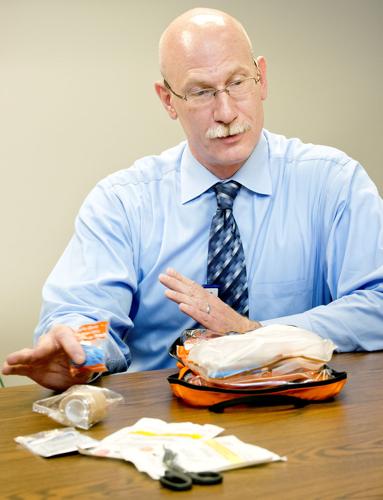
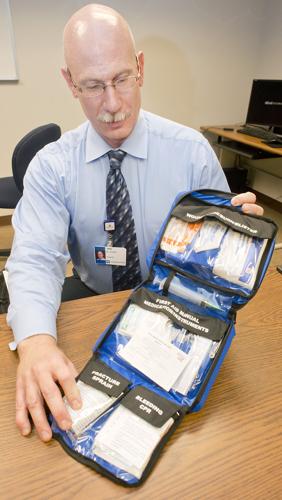
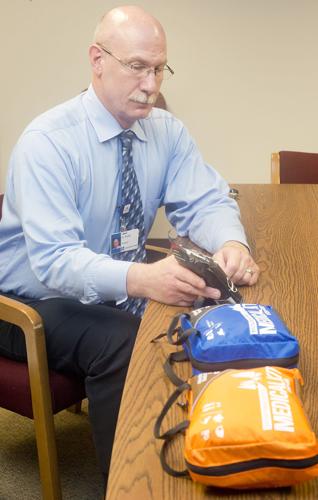
Extensive adventure medical kits, available in a variety of sizes, feature a syringe and sterile saline to flush out wounds, a variety of dressings, a CPR mask and a first aid book.
"Me personally, I take a few things that the average person would not because I have access to them, so I can sterilely suture people," Zoelle said.
Zoelle recommends packing a QuikClot, which accelerates natural clotting and stops bleeding fast. He said these small packages which contain a hemostatic agent, pads, gloves, duct tape and a triangular bandage, can be purchased online.
"It has a compound in there when it comes into contact with blood it forms a big clot," he said, adding that QuikClot can treat a broad range of bleeding situations.
If you don't have a hemostatic agent or sterile dressing available, Zoelle said, clothing can be used as a tourniquet to stop bleeding.
"You can use whatever clothing you have to keep the person warm. Elevate the extremity and apply direct pressure to stop the bleeding," he said. "Hopefully they have a cellphone they can use to call for help. They may not have service where they're at."
The most important thing you can do to prevent hunting-related injuries, Zoelle said, is using hunter safety basics.
"Properly use firearms and treat them with respect the way you should and then accidents in that manner will not happen," he said. "If you do have some underlying medical issues you should understand what your risks are and prepare yourself for that."