
DAKOTA DUNES, S.D. -- Rare be the risk-free, profitable place to park your money.
But there are strategies to keep your money as safe as possible and still get something of a return on it. To do any of that, you'll need to know some financial terms and concepts.
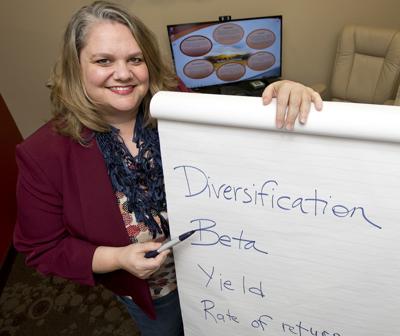
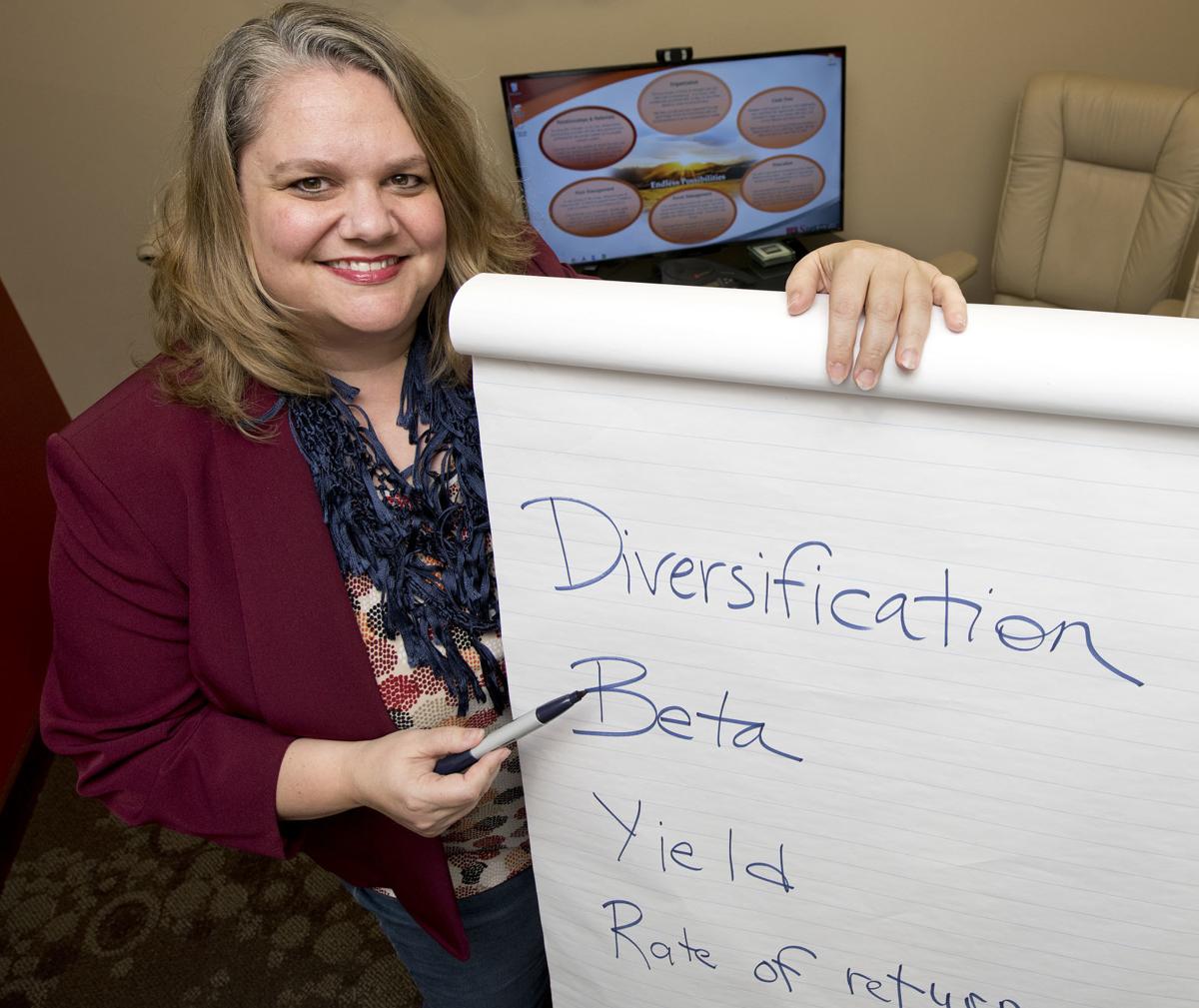
Mary Sterk, a certified financial planner and the proprietor of Sterk Financial Services in Dakota Dunes, recently sat down with the Journal and defined a few oft-used financial words.
401(k)
"A 401(k) allows you to take some of your wages and, instead of getting them now, deferring them into the plan, so you utilize it later. So the money you put in is called a deferral, and if you're lucky, your employer will also do some type of match. And that match is my favorite kind of money because it's free money."
People are also reading…
Are 401(k)s subject to taxes?: "It's possible that there could be taxes on it in either direction, because there are two types of ways you can put money in it. You can put money in the traditional side, where you get the tax break now, no taxes now, and when it comes out later it will have taxes due. And then you can put money in the Roth side of it, where you pay the taxes now on the amount you put in, but when it comes out later, there's no tax."
Which of those is preferable?: "It totally depends on your age, and your own situation. So if you're in a really high tax bracket now, and you think you might be in a lower tax bracket later in retirement, it might make more sense to get the tax break now. But the younger you are, the more likely that money has a chance to grow over time, and come out as something significantly larger in the future, so it'd be nicer to have no taxes on the larger amount. We like to say, think of it like a farmer. Do you want to pay tax on the seed or on the harvest?"
How do 401(k) funds grow?: "Most 401(k) plans have a group of investments, some are going to be stock-related and some are likely to be bond-related, and sometimes they have a fixed account, or a stable value fund, depends on the plan, and that's something that you can't lose money in. And people get to decide how they want to invest their money."
Is it possible to lose value in a stock-heavy 401(k)?: "Absolutely. And it is in the bond side, too. Stocks and bonds can lose money, but stocks tend to carry more risk than bonds do."











But in general, 401(k)s are managed in such a way that it's really unlikely you'll ever lose money, right?: "That would be completely false. You can never think of anything in terms of a stock investment as a safe investment. Those two words don't go together. There's always going to be risk with any stock that you could lose everything if it's a single stock. Now most investments in a 401(k) are mutual funds, and that means they're a grouping of a lot of different stocks, so one company going bankrupt might not make that big of a difference, because the other stocks in your fund might still be fine."
IRA
"Basically an IRA is an individual retirement account, so the 401(k) we were just talking about is a group retirement plan, so 401(k)s are only connected to businesses or employers. IRAs are connected to individuals. It sort of works the same way: A traditional IRA, you get the tax break now but you pay tax in the future, the Roth IRA, you pay taxes now, and if you follow all the right rules, it'll be tax-free in the future."
Why would someone choose an IRA versus a 401(k)? Are IRAs for rich people?: "Most of the time people do an IRA if they don't have access to a 401(k), because not all employers offer one, or maybe somebody is self-employed. And IRAs actually have limits, so if your income is above a certain amount and you have access to a 401(k), then you might not even be able to put money in an IRA."

And in an IRA, nobody matches your contributions, right?: "Right. No free money there."
Certificate of Deposit
"A CD is an instrument generally done through a bank. And a Certificate of Deposit basically means you deposit money into this investment, and those generally give you what's called a fixed rate of return. And a fixed rate of return is, you know when you start, what the return is going to be. And the longer that your time period is in a CD, the higher the rate of return is likely to be."
Are CDs mostly risk-free?: "CDs are generally covered by the FDIC guarantee, and the FDIC guarantee has a certain amount of protection per person or per entity. So, while people frequently think that they are risk-free, the risk would be more if you have too much money in one bank and you're over the FDIC limit. If that bank would have financial issues and go under, anything over the FDIC limit might be at risk."
Annuity
"An annuity, in its most basic form, is a pool of money that is set up to provide you a lifetime income stream, or a lifetime period of payments, that will either go for a lifetime or go for a certain amount of time."
Who issues annuities?: "They're primarily issued by an insurance company."
































Where do people get annuities? Are they basically life insurance payouts?: "That's one type of them. But more often, they're used in retirement planning, where somebody would take a chunk of money, it could be an IRA or an old 401(k) or maybe just cash that they had, and they might buy an annuity. And the annuity then can either be used flexibly, like they can just take money from it when they want to, or they can annuitize it, which means they've said, 'I want this payment for a certain amount of time, or for a lifetime.' Now, there's pros and cons to the annuitization part of it, because once you make that choice you cannot ever undo it. So annuitizing something may or may not be the right thing for somebody. But not all annuities make you annuitize to get your money."
Alpha and beta
"Alpha is more like the capture of potential return, and beta is the level of risk. So let's just talk about beta. A beta of 1.0 means it's as risky as the market. If your beta is 1.3, it means that that particular investment is actually inherently more risky than the market. And if the beta is 0.4, it's inherently less risky than the market."
Bond
"A bond is considered a debt instrument, so if you buy a bond from a company, that company now owes you money. So a bond typically is something that has what's called a duration, meaning a length of time, that they're going to pay you some type of interest... Now, the value of the bond itself can fluctuate during that time, but as long as the company's stable, they're supposed to be paying that percentage of interest to you."
Dividend
"A dividend can come directly from a stock, so if the stock pays a dividend it's money that's paid out to the shareholders. It can also come from a mutual fund, which means that the stocks inside the mutual fund have paid dividends to the fund, and the fund is distributing that to the shareholders of the fund."
Do most stocks issue dividends? "It's not that most do. It's only some do. And not all stocks have any level of desire to pay a dividend."
Is a dividend a sign a stock's doing well? "It's a net neutral in my opinion. There are really, really great companies that just don't pay dividends and there are really, really poor companies that pay dividends. And there's bad ones that don't and good ones that do."

P/E ratio
"A P/E ratio is a price-to-equity ratio. So, the price of the stock in relation to the total equity of the company, or the total value of the company."
Is a low P/E ratio bad?: "No, a low P/E ratio is actually better. We look for a low P/E ratio. When you start to get high P/E ratios, it tends to mean the stock is overvalued."
Mutual fund
"A mutual fund is basically a basket of different stocks or bonds, and you can have stocks and bonds in some mutual funds. The mutual fund basically will have some type of management strategy, could be active, could be passive. And, what they're trying to do is bundle together different investments with the hope of growth. But by having more than one egg in your basket, they're diversifying the risk. So they're lowering the risk."
Prospectus
"A prospectus is a booklet of the legal information surrounding the investment, that is required disclosure."
Trust and trustee
"A trustee is someone who has a fiduciary obligation to a trust. To have a trustee, you've got to have a trust. And a trust is a entity that's created for a variety of different purposes. There's lots of different types of trusts. But trusts are usually used to keep things private and to avoid probate. Generally people are doing it to protect what they're trying to protect -- assets or people -- and they're trying to have it be something that handles their wishes once they're no longer there."
PHOTOS: Angie and Stacy Taylor home
Elk Point home feature

Angie Taylor sits in the living room at the Stacy and Angie Taylor home in Elk Point, South Dakota.
Elk Point home feature

A basement seating area and gaming room at the Stacy and Angie Taylor home in Elk Point features an international flair.
Elk Point home feature

University of Nebraska memorabilia finds a home in a basement room of the Elk Point, South Dakota, home.
Elk Point home feature

A basement theater room includes comfy seating and posters of favorite films.
Elk Point home feature

The master bedroom is shown March 15, 2019, at the Stacy and Angie Taylor home in Elk Point, South Dakota.
Elk Point home feature

A son's bedroom reflects his interests.
Elk Point home feature

A downstairs guest bedroom.
Elk Point home feature

A decorative shelf offers plenty of room for collections.
Elk Point home feature

The dining room and kitchen is shown at the Stacy and Angie Taylor home in Elk Point, South Dakota, on March 15, 2019.
Elk Point home feature

A library with hand made oak shelves is shown at the Stacy and Angie Taylor home.
Elk Point home feature

Angie Taylor stands in a basement hallway of her Elk Point home.
Elk Point home feature

A library with hand made oak shelves is ideal for books, DVDs and collectibles.
Elk Point home feature

The Stacy and Angie Taylor home, 123 Green Court Drive, Elk Point, South Dakota.
Elk Point home feature

The Stacy and Angie Taylor home, 123 Green Court Drive, in Elk Point, South Dakota.
Elk Point home feature

An art display.
Elk Point home feature

A decorative shelf reflects the family's taste.