


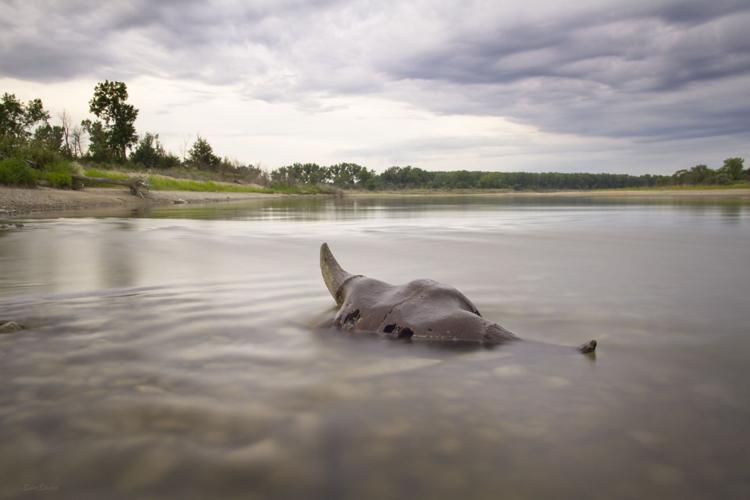
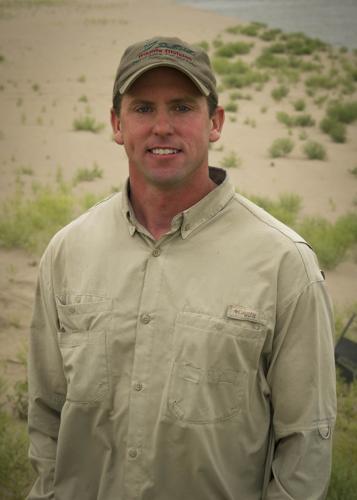
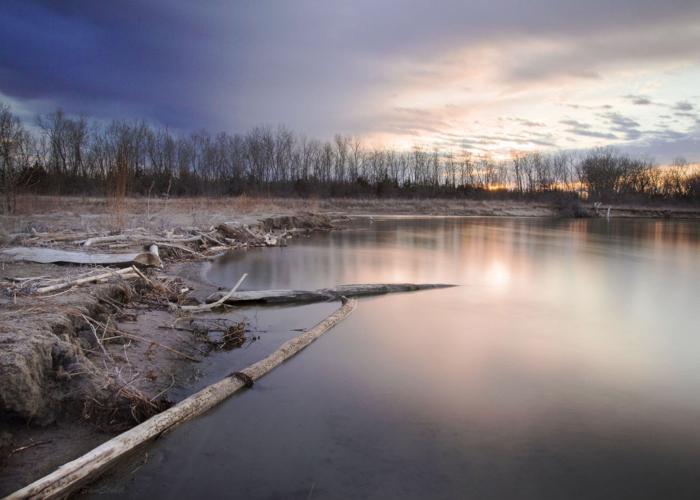
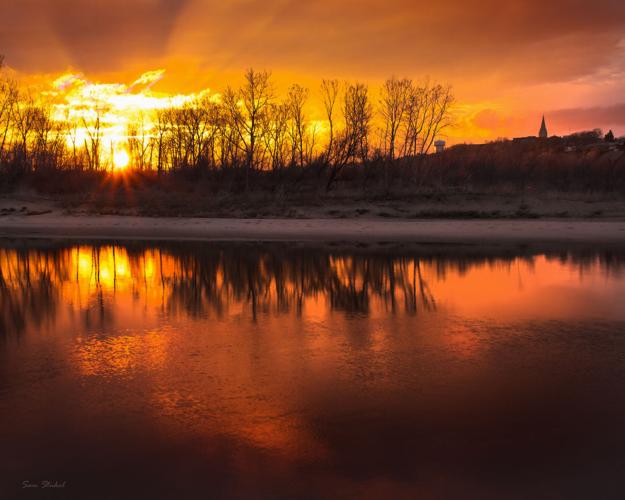
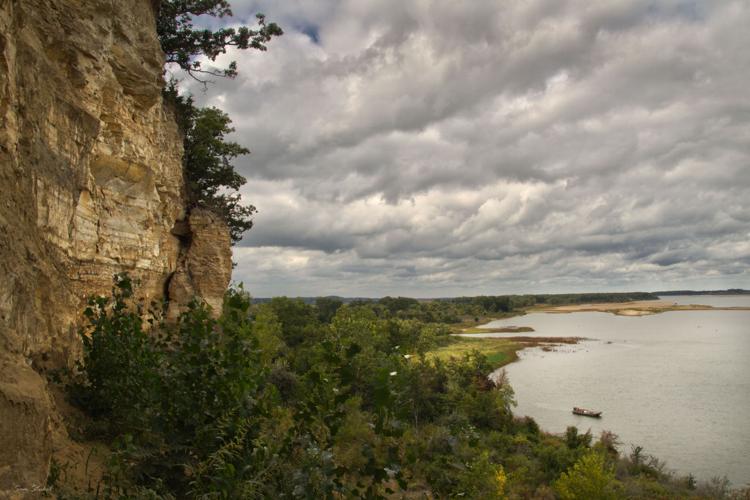
YANKTON, S.D. | As a boy, Sam Stukel would travel with his family 15 miles from their home in Gregory, S.D., to the Lake Francis Case Reservoir behind Fort Randall Dam on the Missouri River.
"I remember sitting at the campfire on the shore in the evening, the sound of frogs and nighthawks swooping overhead," he says. "I even remember occasionally catching a fish."
Stukel passed daytime hours at that time skipping rocks, exploring shorelines and searching for fossils, a bit of a Huck Finn existence.
Talking about it still stirs Stukel, who has spent the past 10 years largely on the river, documenting life from his position as a fisheries biologist with the South Dakota Dept. of Game, Fish and Parks.
"Lewis and Clark (the explorers who traveled and mapped this river in the early 1800s) today would not recognize 90 percent of the Missouri River in Iowa and South Dakota," Stukel says. "The Missouri used to be a long, spiral staircase to the Rockies with so many bends, twists and turns, a notorious river in the steamboat community."
People are also reading…
The river, for the most part, was channelized in the 20th century, making it navigable for barge traffic and modern boats, better to manage for flood control, and allowing for the expansion of farm acres.
Channelization didn't reach a 59-mile stretch from Ponca, Neb., to Yankton, however, thanks to the 1978 Wild & Scenic Rivers Act passed by Congress. The Missouri River in that stretch holds on to its integrity.
"That stretch is hard to navigate with a boat," Stukel says. "The area changes from week to week as the old Missouri would have. It's like a living museum and definitely my favorite part of the river."
On a recent day between Ponca and Yankton, Stukel spots 14 bald eagles in a cottonwood forest.
"You find sandbar habitat and shallow water there," Stukel says. "The endangered piping plover and the threatened lease tern, both of those nest on those sandbars. You can see them on a daily basis (between Ponca and Yankton)."
The old Missouri River enjoyed a flood plain several miles wide. The river would slowly migrate left and right within that plain, leaving behind oxbow lakes, wetlands, swift areas and low-water areas, backwaters of different stages and forests, like the cottonwoods. All those regions gave rise to diverse plant populations and wildlife.
Stukel remembers catching a rare pallid sturgeon one decade ago near Vermillion, not long into his career at Yankton. He'd never seen a pallid sturgeon in person.
"It was 40 inches long, natural born and raised in the Missouri," he says. "It was a very exciting thing for me and our crew."
The fisheries biologist delivered the fish to the Fish Hatchery at Yankton, where it was spawned and created future generations.
"I've seen 500 pallid sturgeons now," Stukel adds. "The numbers have gone up since that stocking program."
Sadly, the numbers have also gone up on Asian carp, an invasive species brought to the U.S. in the 1970s to help manage the aquaculture in water-treatment ponds.
"Like many other species, the risks were small and the rewards high," he says.
The trouble? The plan didn't take into account flooding and this species ability to move. Asian carp escaped in times of high water and eventually made their way up the Mississippi River and the Missouri River.
The fish is known for its ability to jump, often harming anglers or fun-seekers on the river. The fish don't mean to hurt people; rather, it is simply relying on a defense mechanism.
"The Asian carp's jumping is a response to it being frightened by a boat," Stukel says. "That's how they've evolved to escape predators in their home environment."
Stukel has been hit a dozen or so times in his time on the river. Thankfully, he's not been hit by a jumping Asian carp when traveling at a high speed.
"I've heard of people suffering concussions or broken noses," he says.
The status of the Asian carp on the Missouri River is the question Stukel gets most when he's out presenting his findings about life on what once was a lazy waterway, dubbed "The Big Muddy."


