





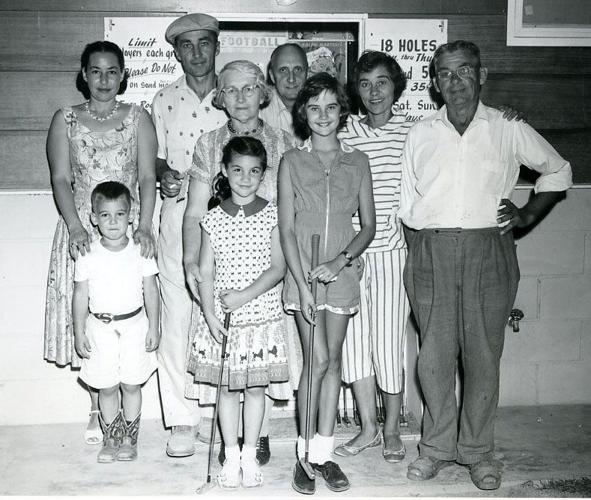
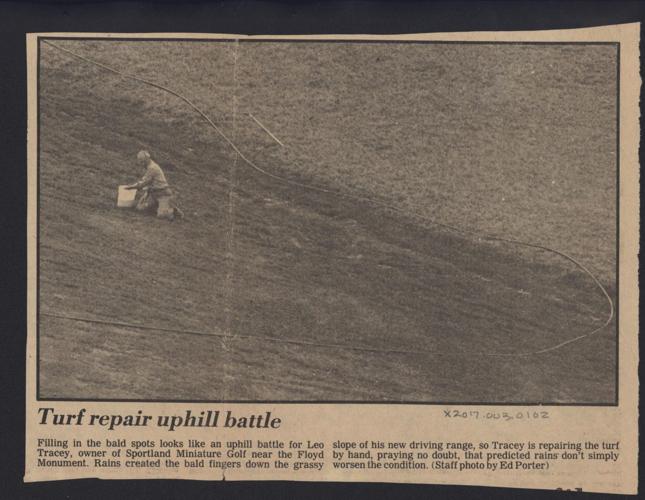
SIOUX CITY -- Six decades ago, a Sioux City native in his early 40s returned from California and turned part of his parents' Floyd Monument-adjacent farm into his dream: a grand mini-golf course.
The Floyd Monument Miniature Golf Course (also referred to as the Floyd Park Miniature Golf Course, the Siouxland Miniature Golf Course and probably other variations), 2701 Highway 75 S., opened in 1954. The area was then on the far southern outskirts of town.

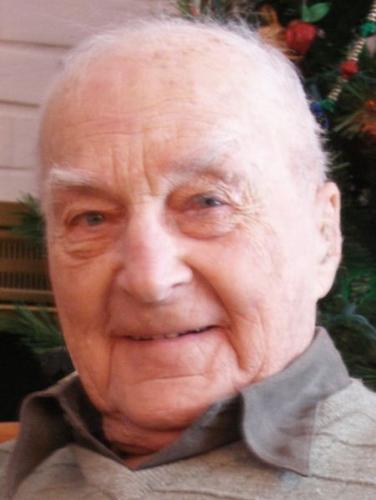
Leo Tracey
Its proprietor, Leo Tracey, had witnessed the tremendous popularity of mini-golf, then a relatively new phenomenon, when he lived in California.
Born Leo Trasowech (he later changed the last name) in Sioux City in 1913, Tracey spent most of his formative years in California. Having decided at some point that he wanted his own mini-golf destination, Tracey built one on his parents' pasture land in the early 1950s.
People are also reading…
- Sioux City man arrested for Monday stabbing
- Updated: Sioux City police investigate woman's death as homicide, release ID
- Man pleads guilty of sexual contact with 14-year old Sioux City girl
- Two arrested in Sioux County high-speed pursuit
- Man pleads not guilty of murder in Sac County
- From the Journal archives | 1976: Bigfoot sighted near Ocheyedan
- Lenders, farmers accuse Lt. Gov candidate Derek Wulf of theft, fraud
- Suspect arrested in Wyoming in connection to Riverside Park murder
- From the Journal archives | 2001: Seven slain in Sioux City; suspect in custody
- Sioux City woman gets probation for running over woman with SUV
- Saturday in the Park's founders inducted into Iowa's Rock 'N Roll Hall of Fame
- Sioux City man pleads not guilty of firing shots at vehicle
- DEAR ABBY: The readers have spoken: The bride should have her way
- Rock Valley alum Landyn Van Kekerix in line for bigger role at Iowa
- Man accused of sexual abuse, assault in Woodbury County
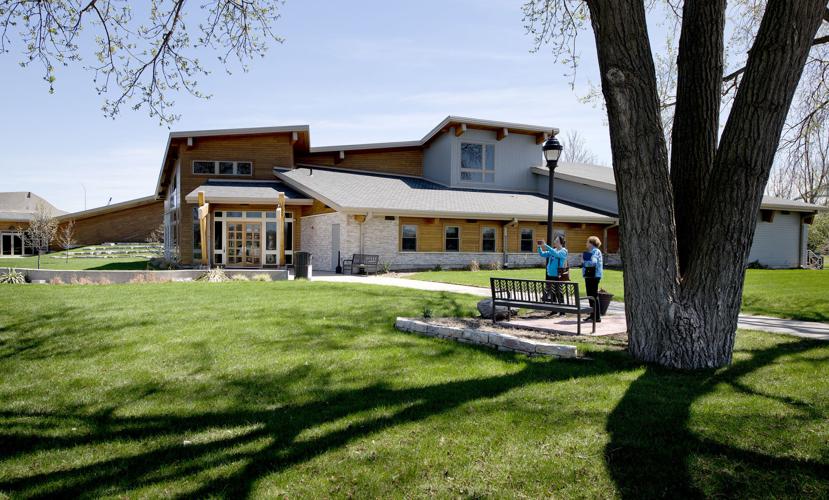
Lewis and Clark Interpretive Center and Betty Strong Encounter Center
- Tim Hynds, Sioux City Journal
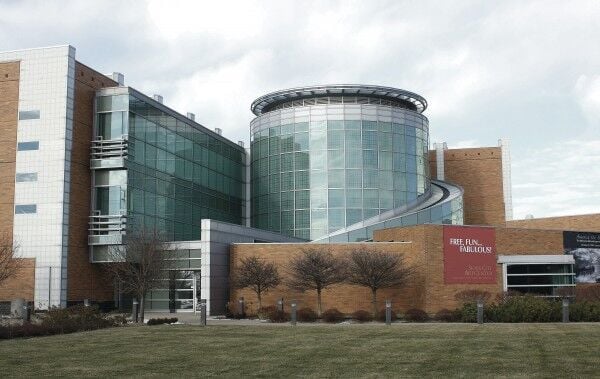
The Lewis and Clark Interpretive Center and the attached Betty Strong Encounter Center were built and are maintained by Missouri River Historical Development, the nonprofit group that holds the Hard Rock Hotel and Casino's gambling license.
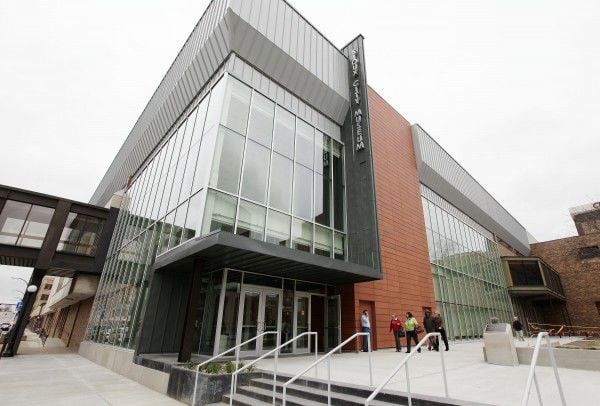
Sioux City Public Museum
- Jim Lee, Sioux City Journal file
The downtown museum boasts large, colorful permanent exhibits and temporary exhibits and interactive displays, plus the "Corn Palace theatre," which plays a short orientation film for visitors.
The Museum's Research Center and Archives offer an opportunity to dig deep into a particular topic of Sioux City history, and classrooms are available to rent for community events and private parties. The museum also hosts a regular "History at High Noon" program on various subjects.
Admission to the museum is free.
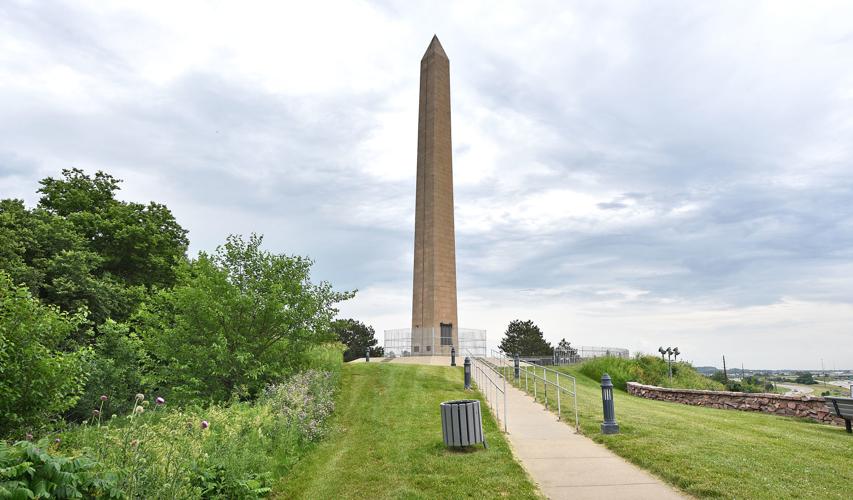
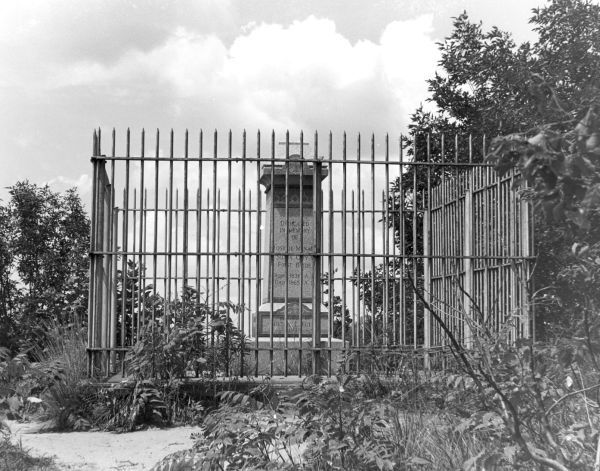
Sergeant Floyd Monument
- Tim Hynds, Sioux City Journal
Possibly the best-known monument in all of Sioux City, the Sergeant Floyd Monument, 2601 S Lewis Blvd., was completed in 1901 in honor of Charles Floyd, an explorer with the Lewis and Clark Expedition who died here in August 1804.
The monument, which in 1960 became the first National Historic Landmark, prominently overlooks S. Lewis Boulevard and Interstate 29.
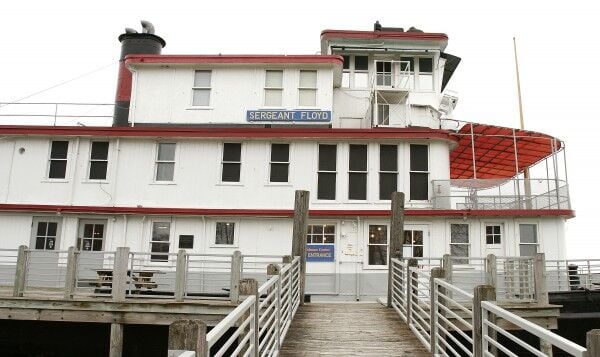
Sergeant Floyd River Museum and Welcome Center
- Jim Lee, Sioux City Journal file
Launched at the Howard Shipyards in Jeffersonville, Indiana, on May 31, 1932, the M.V. Sergeant Floyd served the U.S. Army Corps of Engineers for more than 40 years. The decommissioned riverboat, dry-docked along the Missouri River on the edge of Chris Larsen Park, is now called the Sgt. Floyd River Museum and Welcome Center, 1000 Larsen Park Rd.

Stone State Park
- Justin Wan, Sioux City Journal
Situated in the scenic Loess Hills in the northwest corner of Sioux City, the 1,600-acre Stone State Park features picnic areas, campgrounds and cabin rentals. There's also miles of equestrian, mountain bike/snowmobile and hiking/cross-country skiing trails.
The park offers opportunities for bird (and wildlife) watching, wildflower-viewing, fishing, scenic driving, horseshoe games and interpretive programs, among other activities.
The park's oak, ash, hackberry and walnut trees make it a great place to see fall foliage.
Sioux City Railroad Museum
- Ari E. Lebowitz, Sioux City Journal
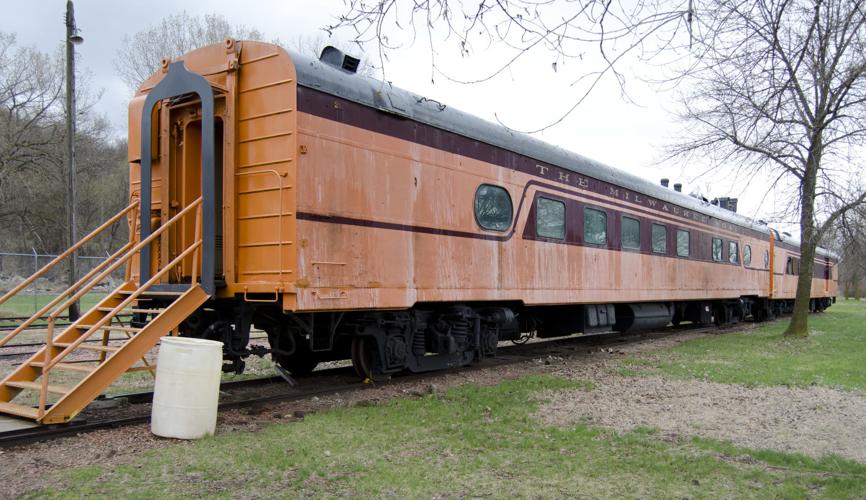
Late last year, the Iowa State Historic Preservation Office announced that Sioux City's Milwaukee Railroad Shops, now the home of the Sioux City Railroad Museum, would be added to the National Register of Historic Places.
The 30-acre Milwaukee Railroad Shops site was built between 1916 and 1918 by the Chicago, Milwaukee & St. Paul Railroad Company to house their roundhouse, locomotive and car repair shops, and steam engine terminal for their rail networks in Iowa and the Dakotas.
The museum at 3400 Sioux River Road is one of the few surviving railroad roundhouses of its era in the country. It offers visitors a chance to tour old train cars and railroad-related buildings, see highly detailed model train sets and take part in special events and programming.

LaunchPAD Children’s Museum
- Jim Lee, Sioux City Journal file
Opened in February 2016, LaunchPAD Children's Museum, 623 Pearl St., had more than 93,700 visitors in its first year alone.
The $6.9 million facility offers learning opportunities for babies, toddlers, kindergartners and school-age children. Some activities have a STEM (science, technology, engineering and math) focus, while other programming focuses on cooking, soil, robotics, art, farming, storybooks and other themes. Special programming is held regularly.
Summer day camps with various themes are held throughout the summer at LaunchPAD.
Also mentioned
- Tim Hynds, Sioux City Journal
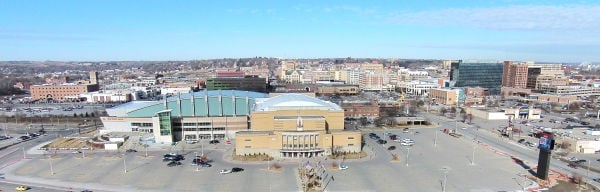
the Chief War Eagle Monument; the Sioux City Art Center; the Mid America Museum of Aviation & Transportation; Bacon Creek Park; the First Bride's Grave; Historic Fourth Street; the Woodbury County Courthouse; the Orpheum Theatre; Grandview Park; the Spirit of Siouxland Statue; the Southern Hills Mall; and Mercy Field.


Something of an artist, he had visited a number of mini-golf courses to observe how they were designed.
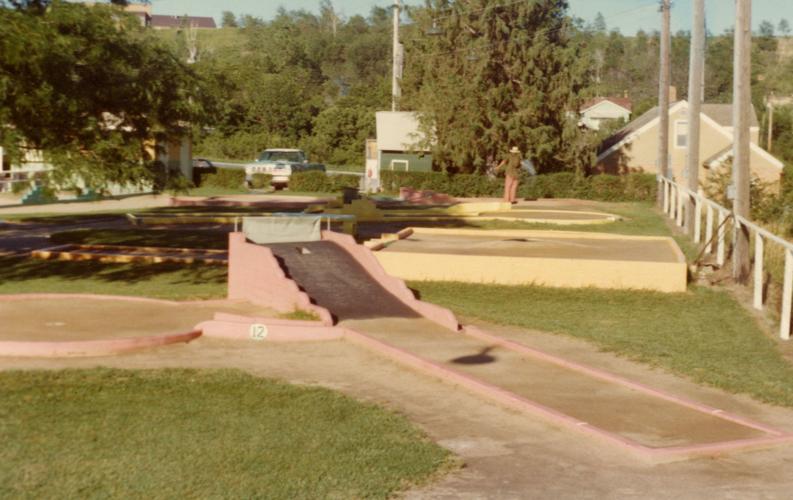
Tracey designed the course, leveled off a hill on the property and built (with the help of contractors) an 18-hole mini-golf course with a spectacular view off the bluff. There was also a 19th hole, which, if completed successfully, won the player a free round.
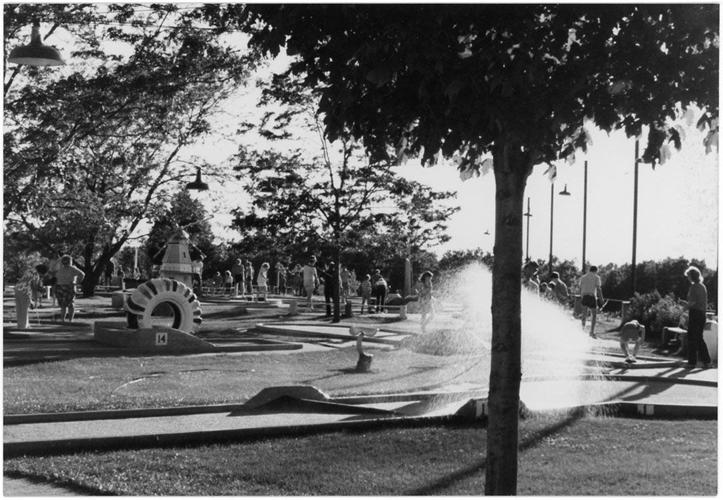
The course, according to Tracey's daughter Andree, became an overnight sensation, popular with the young and old alike.
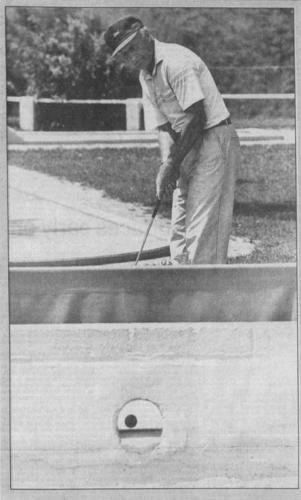
"We've found that it is most popular with young people -- college kids and high school kids out on a date," Leo Tracey told the Sioux City Journal in 1990, when he was 76 years old. "There are others who come -- older people and families out for a good time."

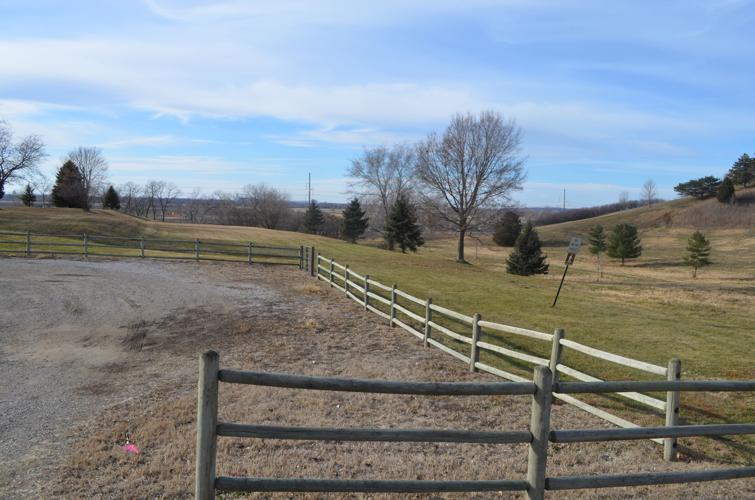
Very little remains of the Floyd Park Miniature Golf Course, which once sat at this spot just south of the Floyd Monument on Highway 75.
Mason Dockter, Sioux City JournalAl Sturgeon, a Sioux City attorney and former state representative and senator, became a fan of Tracey's mini-golf course starting when he was a child in the early 1960s. He later took his own children to play there.
Get him to start reminiscing about the course and -- well, he's got no shortage of things to say about it.
"I didn't appreciate how fantastic that place was until I started going around to other cities and playing miniature golf courses, otherwise known as putt-putts, and I thought, 'You've got to be kidding me, that's all you've got?'" Sturgeon said.
"I mean, once you played the Floyd Monument golf course there wasn't a close second. Because it wasn't one of these, you know, felt-type fairways with cheap, wood frame -- I mean, this thing was rather a masterpiece."

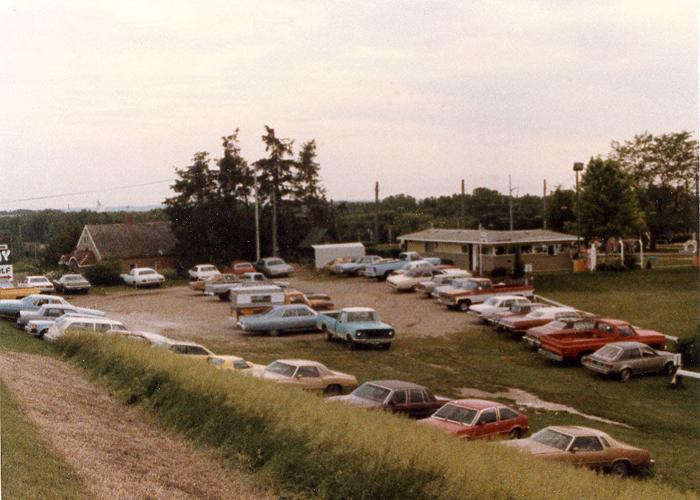
A circa-1970s photo of the Floyd Park Miniature Golf Course parking lot.
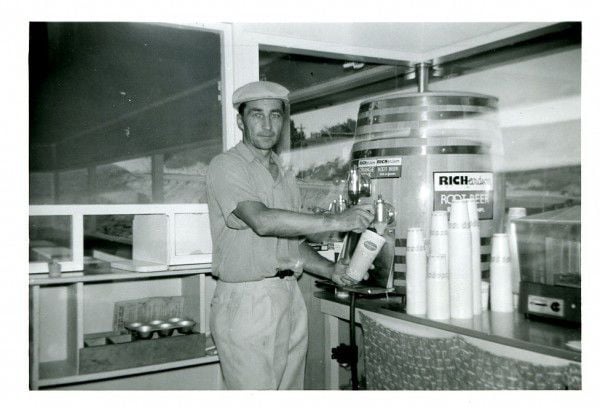
Courtesy Andree TraceyThe course's unusually high-quality, concrete, sand and limestone construction was the work of Tracey's own design. Music was piped over the course, and even people who didn't like mini-golf reportedly enjoyed the course's flower garden, snacks and soft drinks. Horses kept by the Tracey family grazed close enough to the course that patrons could sometimes pet them, to the delight of children.
"There was atmosphere to that place that was just so delightful," Sturgeon said.

Murals and interactive exhibits help explain the Lewis and Clark journey that passed through present-day Sioux City from late July to early September 1804. The illness, death, and burial of Sgt. Charles Floyd is a focus at the museum, 900 Larsen Park Road.
- Earl Horlyk


The Sioux City Public Museum in downtown Sioux City features scores of exhibits dedicated to recapturing the city's cultural and historic past, as well as Native American life, pioneer life and the early days of living along the Missouri River.
- Jim Lee, Sioux City Journal

The Milwaukee Railroad complex, constructed in 1917 at 3400 Sioux River Road, first served as a repair and maintenance terminal for steam locomotives, passenger cars and cabooses on the Milwaukee Railroad line. Now, the yard is a museum and testament to an earlier time in American history.
- Jim Lee, Sioux City Journal file


The Jolly Time Pop Corn Museum, opened in 2016 within Jolly Time's Koated Kernels Shoppe, celebrates the history of the company's popping success. The store, at 1717 Terminal Drive, is loaded with varieties of popcorn by the American Pop Corn Company, the manufacturer of Jolly Time.
- Tim Hynds
Launched at the Howard Shipyards in Jeffersonville, Indiana, on May 31, 1932, the M.V. Sergeant Floyd served the U.S. Army Corps of Engineers for more than 40 years. The decommissioned riverboat, dry-docked along the Missouri River on the edge of Chris Larsen Park, is now called the Sgt. Floyd River Museum and Welcome Center, 1000 Larsen Park Rd.
- Jim Lee, Sioux City Journal file
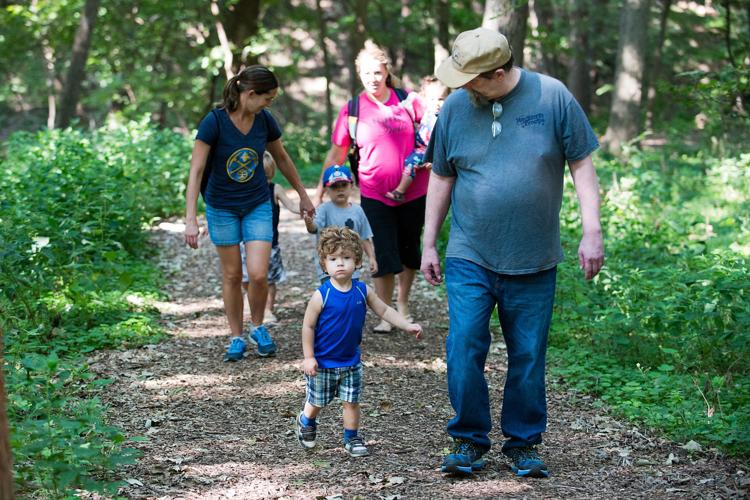
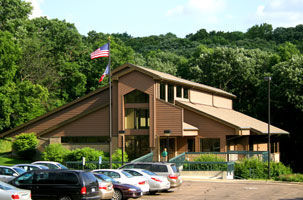
Situated in Stone State Park, the Dorothy Pecaut Nature Center includes 14,000 square feet of classroom, exhibit and office space, natural history and live native reptile exhibits, as well as a butterfly and wildflower garden, an outdoor amphitheater and a variety of programs throughout the year.
- Justin Wan, Sioux City Journal

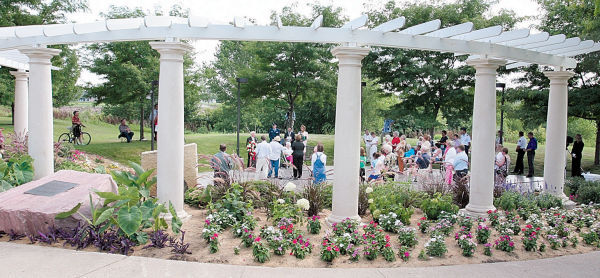
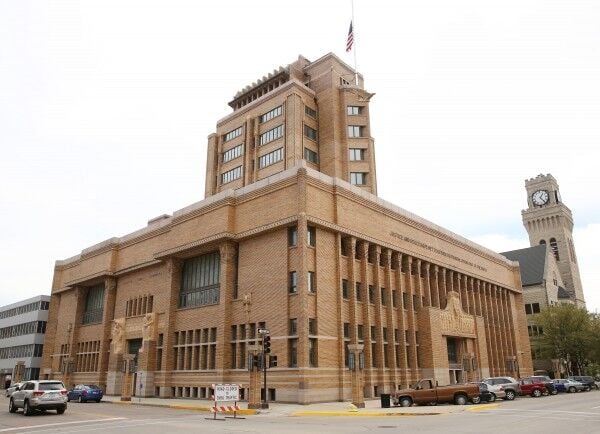
The seven-story structure, at 528 Pierce St., was built for $1.27 million in 1927 as a vaudeville and movie palace. After years of neglect, this architectural treasure was brought back to life in 2001 and is now a performing arts center and home to the Mighty Wurlitzer Organ.
- Tim Hynds

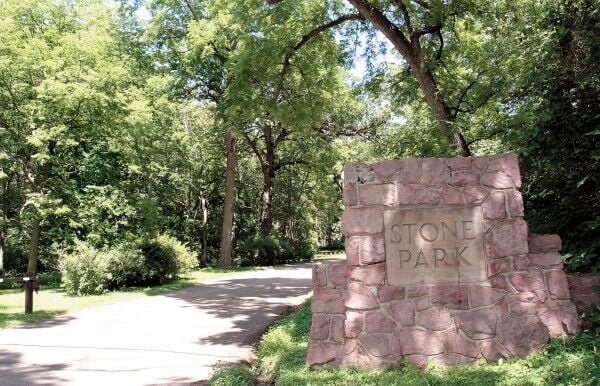
For well over 100 years, people have marveled at the beauty of Stone Park nestled in the Loess Hills. The park combines wildflowers, prairie, rugged woodlands, secluded ravines, wildlife and hilltop vistas of Iowa, Nebraska and South Dakota.
- Jim Lee, Sioux City Journal file

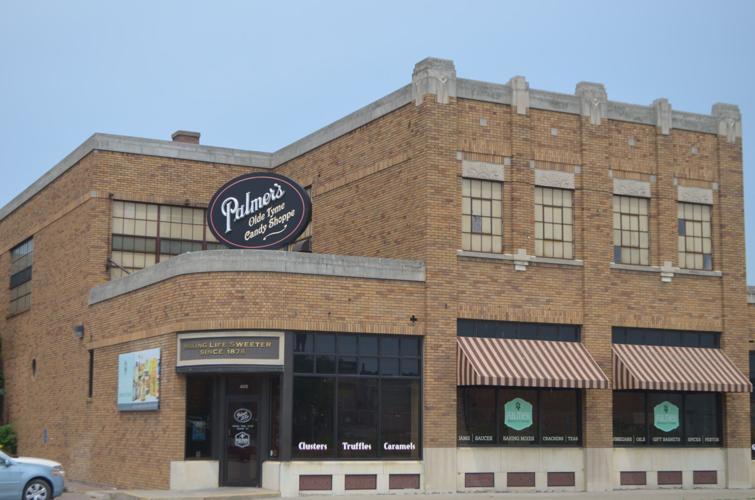
Palmer’s Candy, founded in 1878, sells dozens of chocolates -- truffles, clusters, fudge, chocolate covered nuts and more. But its most famous candy is the Twin Bing, a candy bar with a cherry nougat and roasted peanut filling.
- Dawn J. Sagert, Sioux City Journal file

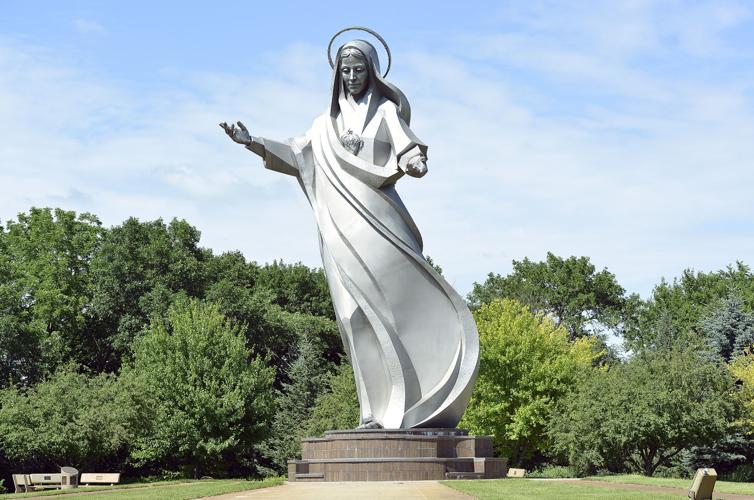
The 33-foot-tall steel Sacred Heart of Jesus statue sits in the peaceful grounds at Trinity Heights in Sioux City. The grounds were founded by the Rev. Harold V. Cooper on the site of the former Trinity Catholic College and High School.
- Tim Hynds



Weekends were very busy. Andree Tracey wrote that customers sometimes had to make reservations, and the highway was often backed up with lines of cars trying to get in. Players' mini-golf scores appeared in the Journal sports section during the yearly tournaments Tracey held.
Though it's been decades since he last played the course, Sturgeon remembers the contours of the individual holes. The fourth hole had a replica of the Floyd Monument, while hole 10 had a musical windmill.
"You had to hit the ball to the right, through a fairly narrow chute, to get over the hump to the other side," Sturgeon said of the Floyd Monument hole.
After Leo Tracey's parents died, decades after he opened the course, he and wife Marcia moved into his parents' former farmhouse, which was adjacent to the course.

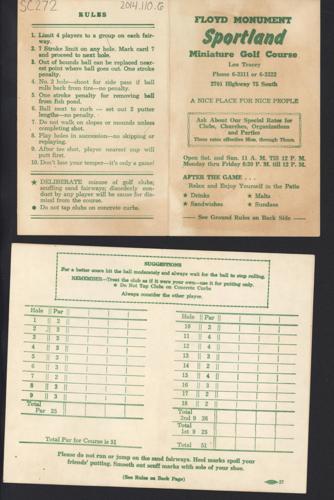
A scorecard and rules sheet from the Floyd Monument Miniature Golf course (also called the Floyd Park Miniature Golf Course and other names).
Courtesy Sioux City Public MuseumThe course shut down after Tracey sold it in 1994 (according to advertisements from the late 1980s, Tracey had apparently planned to retire and close the course six years earlier). Today the wide-open property, its mini-golf course, clubhouse and the farmhouse long gone, is part of the Floyd Monument park.
In retirement, Tracey spent his days making sketches of people he saw at the Southern Hills Mall before moving to Minneapolis, where he died at age 100 in 2014. Prior to his death, he reportedly attributed his longevity to chocolate, good friends and exercise, according to Andree Tracey.
The Floyd Monument Miniature Golf Course and the Floyd Monument itself likely enjoyed a mutually beneficial relationship -- perhaps the 118-year-old sandstone monument would see more visitors today if it still had a lighthearted attraction next door.
"I think that is probably a parcel of land, that, I wouldn't say neglected, but I'd just say it's been put on the back burner and... I mean it still has potential," Sturgeon said.
Be the first to know
Get local news delivered to your inbox!

Mason Dockter
Assistant News Editor
Get email notifications on {{subject}} daily!
{{description}}
Email notifications are only sent once a day, and only if there are new matching items.