

SIOUX CITY | A lack of space in Mercy Medical Center's former intensive care unit, which was divided into three, eight-bed pods, made it difficult for family members to remain close to the bedside.
The hospital's new 20-bed ICU provides a more comfortable atmosphere for patients and family members, while creating a more flexible space for doctors, nurses and other support staff to deliver care. The ICU opened to patients in April.
Abbie Fahrendholz, manager of ICU clinical services, said patients and family members often comment about how nice the space is.
"They like the size of the rooms," she said.
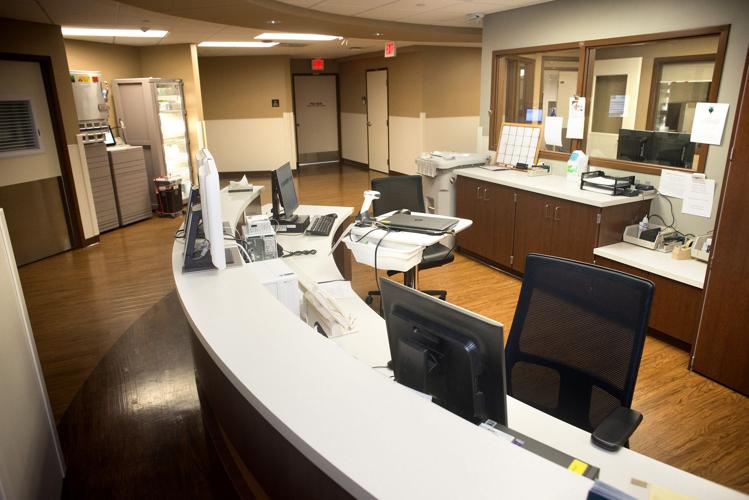
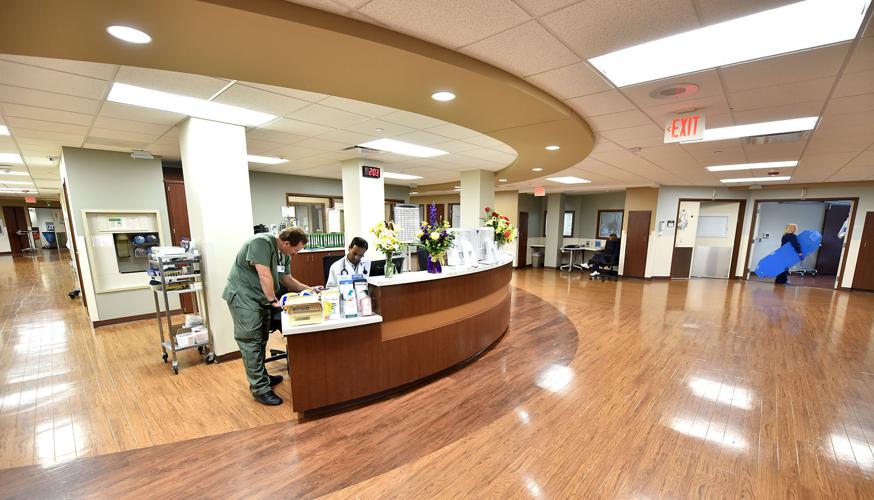
Two semicircular workstations anchor the sprawling single unit on the fifth floor. The ICU is adjacent to the hospital's cardiac catheterization laboratory, clinical laboratory and surgery suite. Staff can use an elevator to take patients directly to radiology. The emergency room is right below the ICU.
People are also reading…
Fahrendholz said senior leadership, doctors and nurses visited other hospitals to get ideas for the layout and design of the ICU. She said their focus was creating a welcoming unit that would best serve the community.
"We want to be able to provide excellent patient care while also involving the family and making the patients feel comfortable," she said. "Having the 20 beds, then you obviously have more nurses and staff members available at a given time. Being able to work on a bigger team is beneficial to the staff but the patients as well and the families."
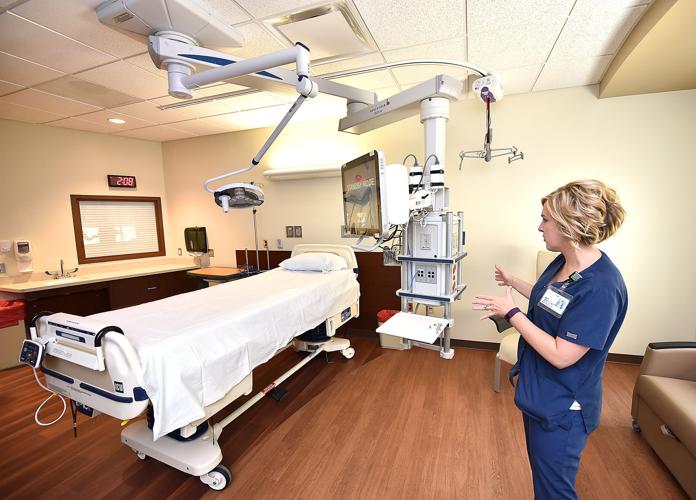
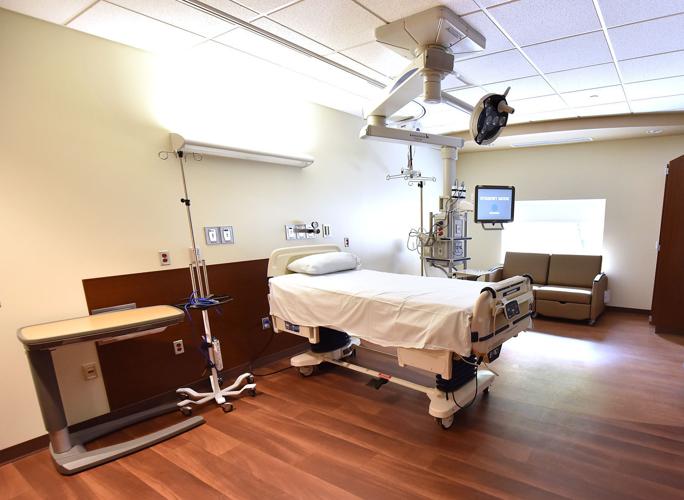
In the private rooms, which now average 180 to 220 square feet each, lighter wood flooring divides the family area from the patient area. The family area features a pullout sofa positioned in front of a large square window, where visitors can rest, and a desk where they can work.
A boom equipped with oxygen, oral cleansing and suction systems is affixed to the ceiling above the patient bed. It can be moved to accommodate a ventilator, dialysis machine and other medical equipment.
Ceiling lifts are located in every patient room to help staff move certain patients from the bed to a chair. A surgical light, something the old ICU rooms didn't have will help staff perform certain procedures in the room, Fahrendholz said.
"We're able to bring a lot of our radiology equipment into the rooms so we don't have to take the patient downstairs," she said.
"We also have a dialysis hookup in every single room. Everything's clustered together, accommodating the patients and their families. The family still has its space, too. Before it would be pretty cramped."
Mercy's sickest patients will have more privacy than they used to.
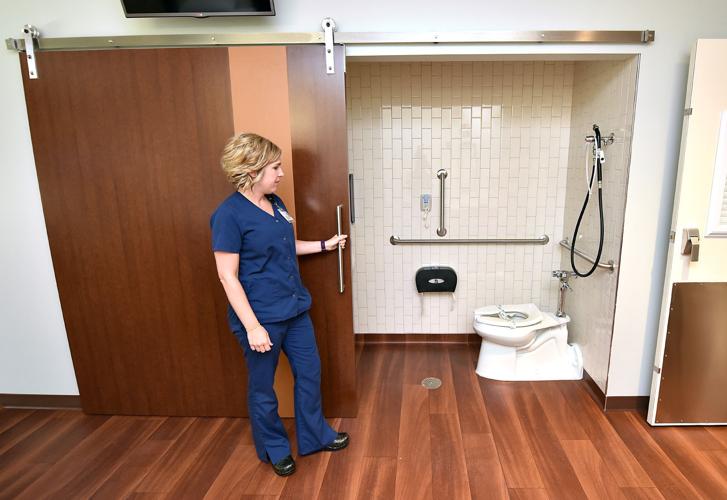
A heavy two-toned sliding wood door with industrial fixtures conceals a white tiled restroom. Fahrendholz said none of the rooms in the old ICU had private bathrooms.
Each patient room has a heavy wooden door. The beds of open heart surgery patients in Pod 1 of the old ICU were concealed by curtains, Fahrendholz said. Blinds, which can be opened and closed from inside and outside the rooms, are built into the doors and windows.
"If you were to walk on the unit, you wouldn't know that something is busy in another room because when you're in the rooms you can't hear what's going on outside," Fahrendholz said.
Other handy features include a supply closet just off the door, which can be accessed from both inside and outside the room, and a call light system that helps patients and family members locate a particular nurse.
"The nurse can access any supplies that they need here for patients. Other providers can put what they need in there. It's all right here and then they can spend more time with the patient," Fahrendholz said.
Alcoves located outside the rooms, serve as a place for nurses to chart and closely monitor patients while they rest.
Other highlights of the floor include a large shower for patients, a staff locker room, dictation room and a waiting area for families.
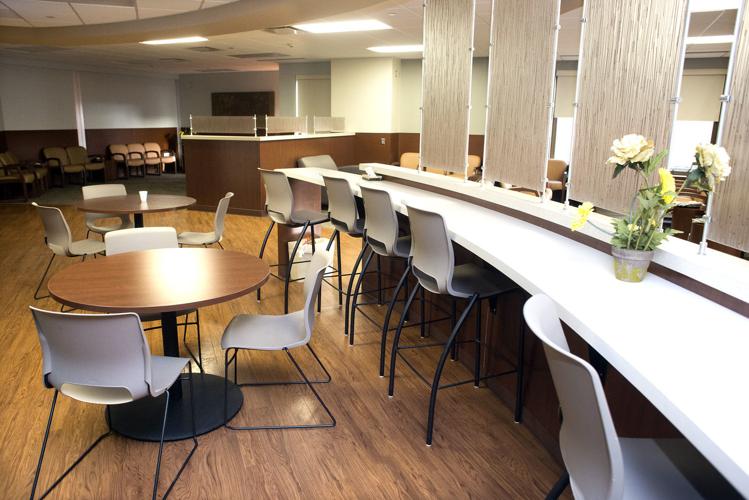
While patients are in surgery, family members and friends can rest on tan leather chairs or sit at a snack bar with built-in ports to charge computers and other electronic devices. The walls are decorated with original artwork from Sioux City abstract painter Jamie Bowers. Wood and glass partitions make the large area more private.
Flat screen monitors affixed to the beige walls tell family members when a patient is in surgery or out of surgery. Each patient is assigned an identifying number.
"You kind of always have that communication of what's going on with your loved one," Fahrendholz said.