


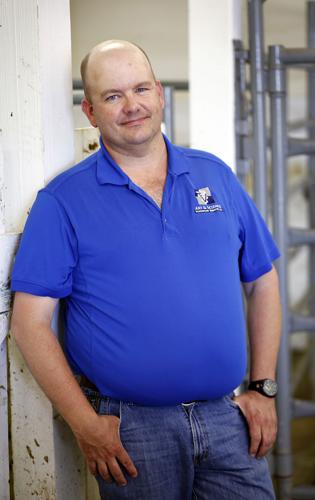
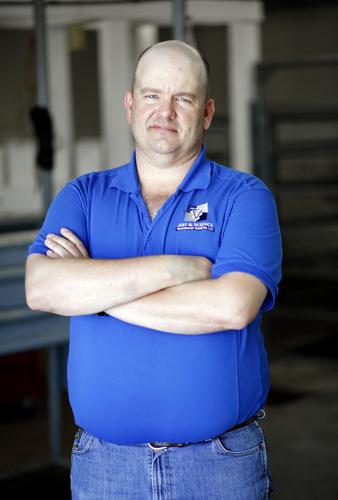
Dr. Jeff Bottger is a veterinarian at Art and Science Veterinary Services located at 1555 US-20. He is certified to care for household pets like cats and dogs in addition to farm animals like cows and horses. He answered 20 questions about what it's like working with such large animals.
1. What made you want to be a veterinarian?
“It was something I’ve always wanted to do. I grew up around livestock and animals.”
2. How is working with livestock different than working with smaller pets?
“The biggest thing is the safety issue. Fido or Fifi might bite you, but a cow can kill you.”
3. Do you visit the livestock on the farms or do the farmers bring them to you?
“Depends on what we’re doing. For individual animals, we try to get them to come here. For herd work, I’ll go there.”
People are also reading…
4. How far will you travel?
“About a 45- to 60-mile radius.”
5. How often do you go out to farms?
“A couple times a week.”
6. Is it dangerous working with livestock?
“There are dangers in any of it.”
7. What are common health problems associated with livestock?
“Pneumonia and nutritional issues. Those are the biggest ones I can think of.”
8. Why did you want to work with livestock?
“I’d rather deal with cows than cats. Not that I don’t like cats, but it’s what I’m more comfortable with.”
9. What is your background in farming?
“I grew up on an acreage. I was in 4-H showing horses, sheep and cattle.
10. How do you weigh livestock?
“For cattle, you just have to guess. For horses, you use weigh tape to estimate. It measures around them and uses a formula that gives you a weight that gets you within about 50 pounds.”
11. What is the most difficult livestock to work with?
“Llamas and alpacas. Most people around here don’t know how to handle or properly restrain them.”
12. What is your educational background?
“I’ve got a master’s degree in animal science from the University of Wyoming and my DVM (Doctorate of Veterinary Medicine) from Kansas State.”
13. What is the most unusual livestock you’ve ever worked with?
“Probably the alpacas or llamas. Or pot-bellied pigs, those are kind of a challenge.”
14. Do big animals require special veterinary instruments?
“They use the same size instruments, for the most part. The biggest thing is the stocks and chutes to restrain them.”
15. Is vet care for livestock typically more expensive?
“Most of the procedures are about the same cost, but the anesthetics and medicines cost more because it requires so much more.”
16. What kind of pets do you have?
“I’ve got a dog and a couple horses.”
17. Do you get extra busy when livestock diseases become rampant, like bird flu, swine flu, etc.?
“No, not really. Just more phone calls.”
18. Where are there sudden outbreaks?
“They’re sensational. The outbreaks occur but you only hear about them because they sensational.”
19. What is the best part of vetting livestock?
“Working with the people and clients and being outside the office.”
20. Worst part?
“The injuries. I’ve been injured a couple times due to kicks. Never too seriously, just enough to slow me down.”


