


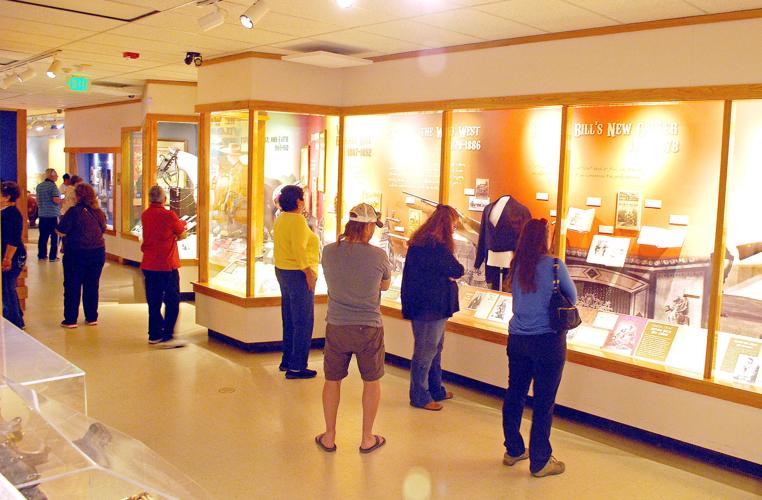
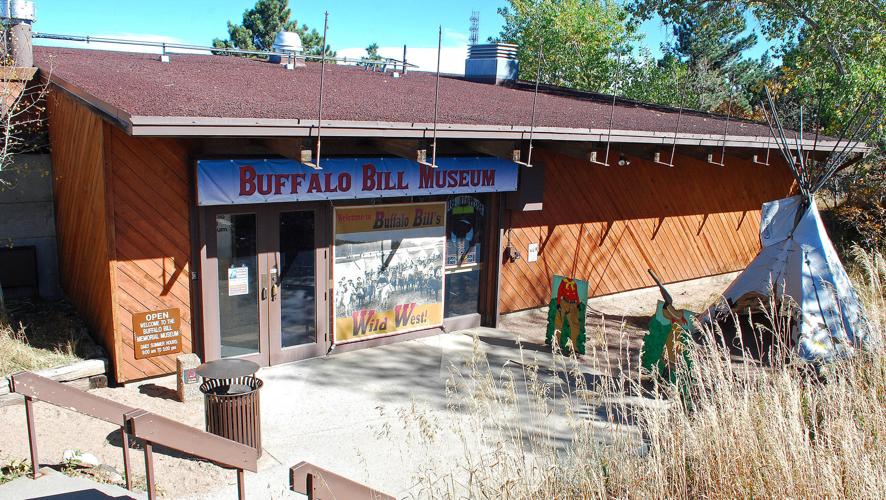
GOLDEN, Colo. – On a mountain top high above Golden is the Buffalo Bill Museum and grave site. The museum tells the life story of one of the Old West’s most recognizable icons.
William F. Cody, later known as Buffalo Bill, was born in Le Claire, Iowa, on Feb. 26, 1846. As a teenager Cody worked for a freight company as a messenger and wrangler and later tried his luck as a prospector during the Pikes Peak gold rush in 1859. The next year at the tender age of 14 he answered an ad for the Pony Express that advertised for “skinny, expert riders willing to risk death daily.”
When the Civil War broke out he served as a scout for the Army. After the war he began buffalo hunting to feed construction crews building railroads in the West. It was here he got the nickname Buffalo Bill that would define him forever. By his own count he killed 4,280 buffalo in just over a year and a half.
People are also reading…
Buffalo Bill’s show business career began on Dec. 17, 1872, in Chicago in a western melodrama created by dime novelist Ned Buntline. He was 26 when he appeared in “Scouts of the Prairie” along with “Texas Jack” Omohundro, who was another well-known scout at the time. The public loved the show, but one critic described Cody as “a good-looking fellow, tall and straight as an arrow but ridiculous as an actor.” He may not have been much of an actor, but Cody could charm the audience and bring Old West realism to the performance. Cody and the public knew at once he was a showman.
It wasn’t long before Cody organized his own group of performers he called The Buffalo Bill Combination. Their show called “Scouts of the Plains” included Cody, Texas Jack and Cody’s old friend “Wild Bill” Hickok. Wild Bill and Texas Jack eventually left the show, but Cody continued on until 1882. It was then he formed what would be commonly known as the Wild West show. It was an outdoor performance that was designed to educate as well as entertain and featured a cast of hundreds, including live buffalo, elk, cattle and other animals.
The show featured real cow-boys and cow-girls recruited from working ranches in the West. At the time the moniker “cow-boy” was considered an insult, but by the end of the 19th century the term became the more popular “cowboy” thanks in part to the Buffalo Bill Wild West shows. The shows demonstrated bronco riding, roping, and other skills that would later become part of public rodeos. Buffalo Bill brought his show to Sioux City seven times. The last one was held on July 1, 1914.
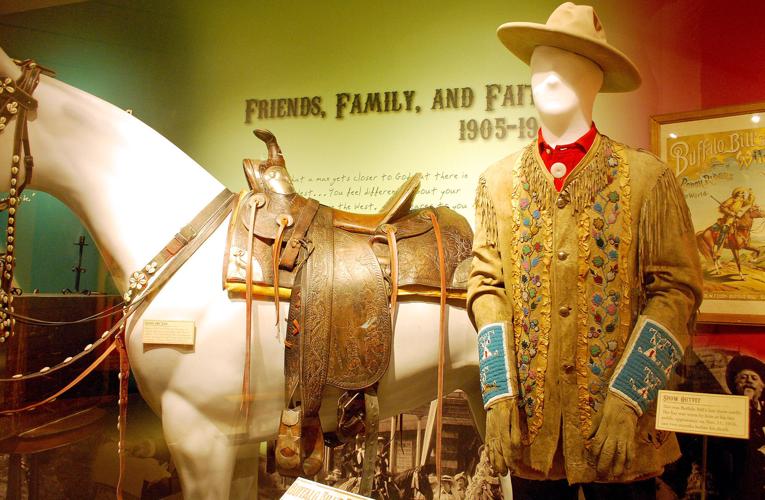
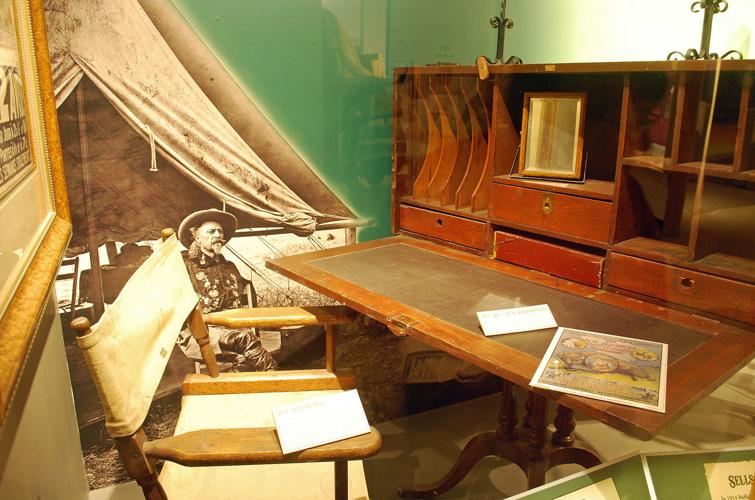
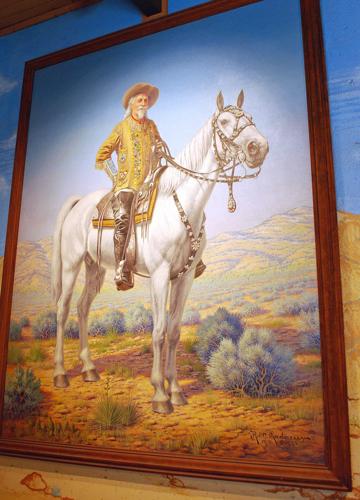
The museum tells the story of Buffalo Bill and the Old West he popularized with his shows. That unique story is told through artifacts from his life along with other objects and displays from the period. Among the displays are Native American objects such as Sitting Bull’s bow and arrows. Western art on display includes Frederic Remington’s “Portrait of a Ranch Hand.” One display features the last show outfit worn by Buffalo Bill on Nov. 11, 1916.
Next to the museum is a gift shop and café in the historic Pahaska Tepee building that was originally built as a museum in 1921. The café has a menu that naturally features buffalo along with other sandwiches. The gift shop has items relating to the Old West, including books, works of art and posters. The name Pahaska came from the Sioux Indian word meaning “long hair” which accurately described Buffalo Bill. The Sioux had made Cody a member of their tribe.
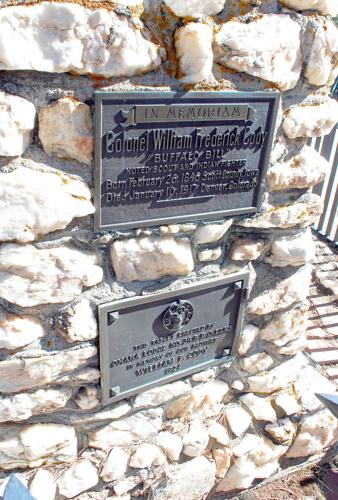
Buffalo Bill Cody died of kidney failure on Jan. 10, 1917, in Denver surrounded by friends and family. The world mourned his death and tributes came in from world leaders such as King George V of Britain, Kaiser Wilhelm II of Germany and President Woodrow Wilson.
Cody founded the town of Cody, Wyoming, where he built hotels and ranches. He also worked to promote water reclamation, irrigation and conservation. He was an early supporter of rights for women and Native Americans.
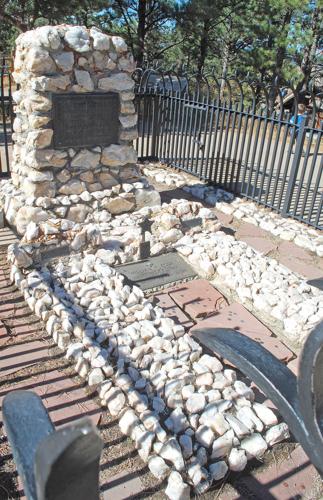
Buffalo Bill was buried on Lookout Mountain near the site of the current museum. Because of his close ties to his namesake Cody, Wyoming, the town felt he should be buried there and demanded the return of his body. But according to his wife Louisa it was his desire to be buried on Lookout Mountain. That was verified by his close friends Goldie Griffith and Johnny Baker as well as the priest who administered the last rites.
Buffalo Bill’s grave site is next to the museum where visitors can pay their respects.


