


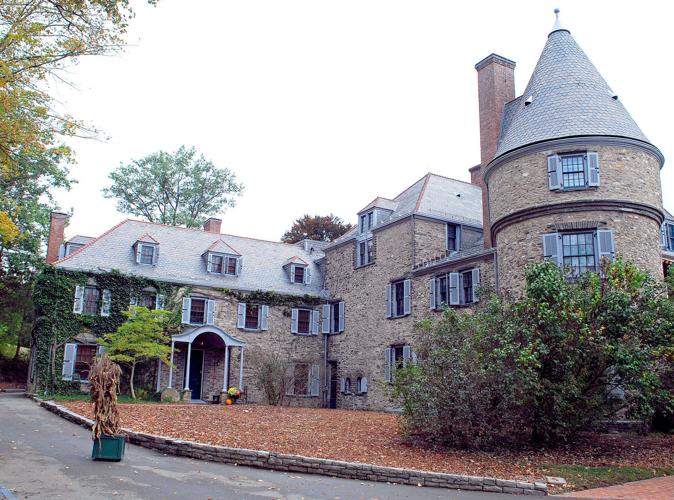
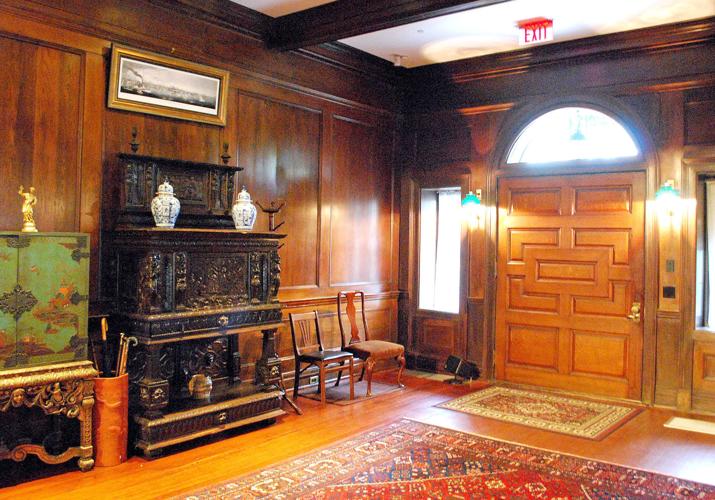

MILFORD, Pa. – A medieval-looking castle surrounded by a moat is the unlikely birthplace of the American conservation movement. The massive home was built in 1886 by James Pinchot on land that once belonged to his father. The home is now open to the public.
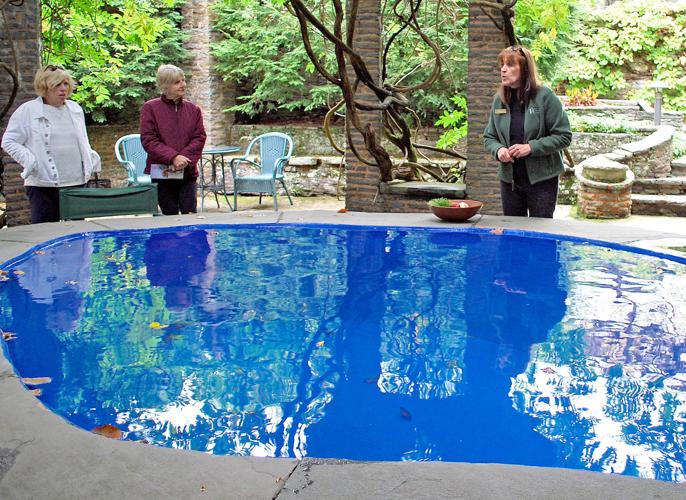
Pinchot built the house in the style of a French chateau to reflect the family’s French heritage. The original design of the home included 43 rooms situated on 303 acres. The property includes an open air theater along with several outbuildings, including several cottages and a unique outdoor dining facility called the Finger Bowl.
The elder Pinchot used a form of deforestation called clear cut that completely removed trees from the land in order to make it suitable for farming. James grew to detest that form of progress and worked to correct the damage done. Clear cutting was the most economical way of logging and it created land for farming but it was damaging to the ecosystem.
People are also reading…
In 1875 James retired after a successful career in the wallpaper business and moved his family from New York City back to Milford where he had grown up. He decided to build a home on property once belonging to his father. The home and property is situated in the hills above the small town of Milford, Pennsylvania, and overlooks the Delaware River.
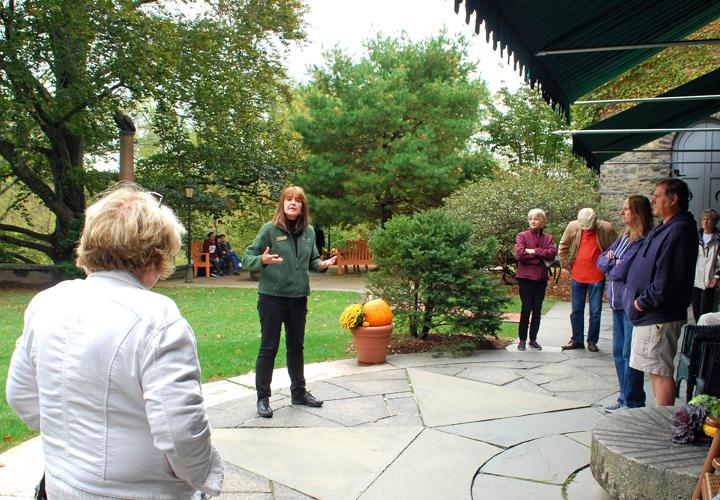
Mary Ann Riedl, a volunteer tour guide at Grey Towers, said almost all the materials for the huge home came from local sources. “Timbers were floated down the Delaware on rafts from Lackawaxen,” said Riedl. “Slate for the roof came from across the river in Lafayette, New York. All the workers and contractors were Milford residents.” She said the total cost for the house was $19,000 plus $24,000 for furnishings.
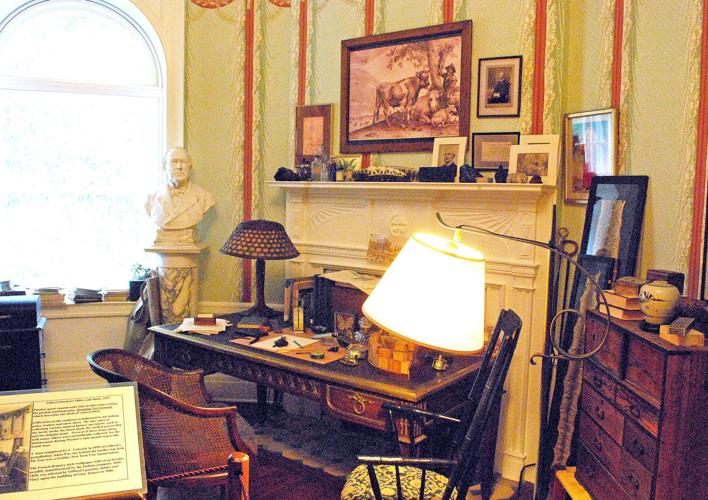
James was disturbed by the destructive logging practices in use at the time and encouraged his eldest son, Gifford, to consider a career in forestry. Following his father’s advice, Gifford went to Yale in 1885 and took what few forestry-related courses were available. He then studied in France at the Ecole Nationale Forestiere. “It was there he became excited about forestry and conservation,” said Riedl. She said he became head of the Division of Forestry in 1898.
Gifford was good friends with President Theodore Roosevelt, who was also greatly interested in conservation. In 1905 Roosevelt named Gifford Chief Forester of the newly created United States Forest Service. During Gifford’s time as Chief Forester national forests tripled in size to more than 170 million acres.
Gifford and President William Howard Taft didn’t agree on policies developed by Roosevelt and Pinchot, and in 1910 Taft fired Pinchot. Gifford returned to his beloved Grey Towers and began planning his political career. He failed in two attempts at the U.S. Senate but was elected governor of Pennsylvania in 1922, where he served two terms.
Riedl said Gifford attributed much of his success to his wife, Cornelia. “She ran for Congress three times,” said Riedl. “And she was very involved in making Grey Towers a more livable home.”
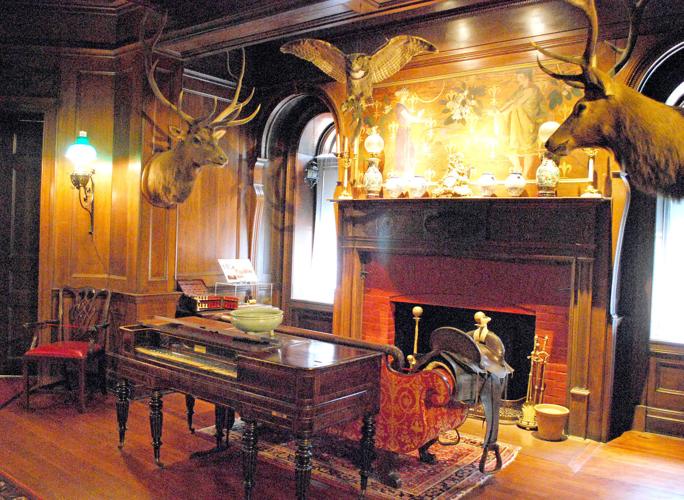
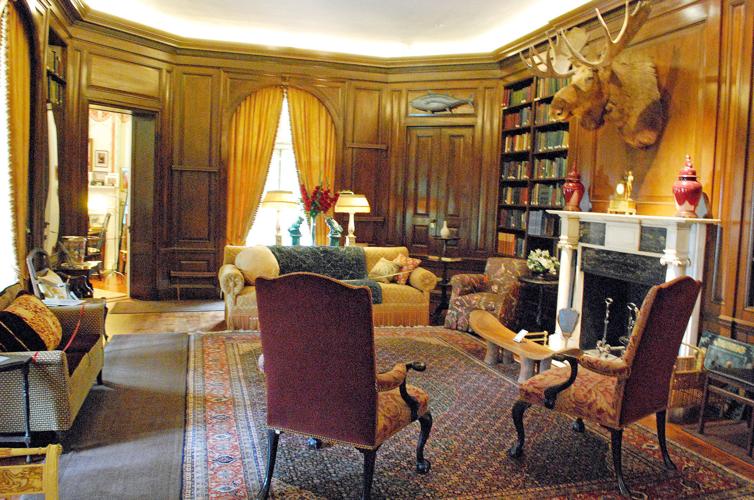
Cornelia knew their political careers required a home more suitable to entertaining guests and she set about modernizing the massive house. Under her direction the dining room and breakfast rooms were combined to create a large sitting room. She also enlarged the library and added a living room to it.
“She was an avid gardener,” said Riedl, “and planned the gardens around the house. She also designed the swimming pool that was on the property.” Cornelia had a small building constructed that she called the Bait Box, which was used as a playhouse for young Gifford. In the late 1920s while her husband was in his first term as governor, she had a small cottage built that she called the Letter Box, where his political staff worked.
In the early 1930s, she hired William Lawrence Bottomley to create a unique addition known as the Finger Bowl, an outdoor dining area consisting of a raised pool surrounded by a flat ledge. Chairs were pulled up to the ledge and food was served from bowls floating on the water.
In 1963 Gifford Bryce Pinchot, the son of Gifford and Cornelia, donated Grey Towers along with 102 acres to the USDA Forest Service, the federal agency founded by his father. On Sept. 24, 1963, President John F. Kennedy dedicated the site to the American people to be used to promote the conservation values started by Gifford Pinchot.


