


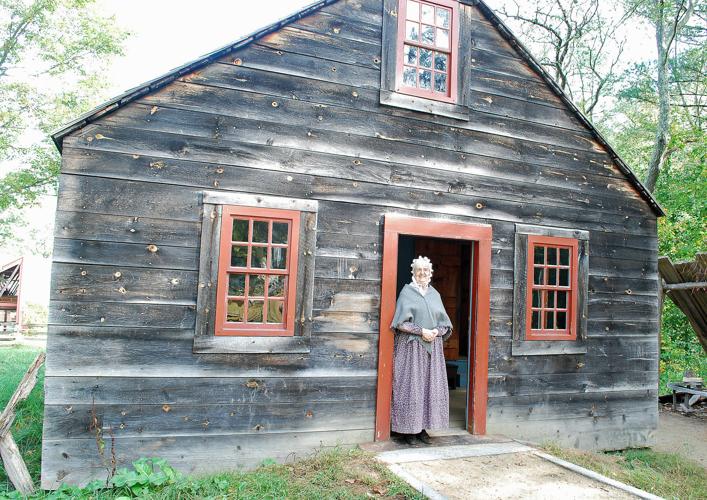
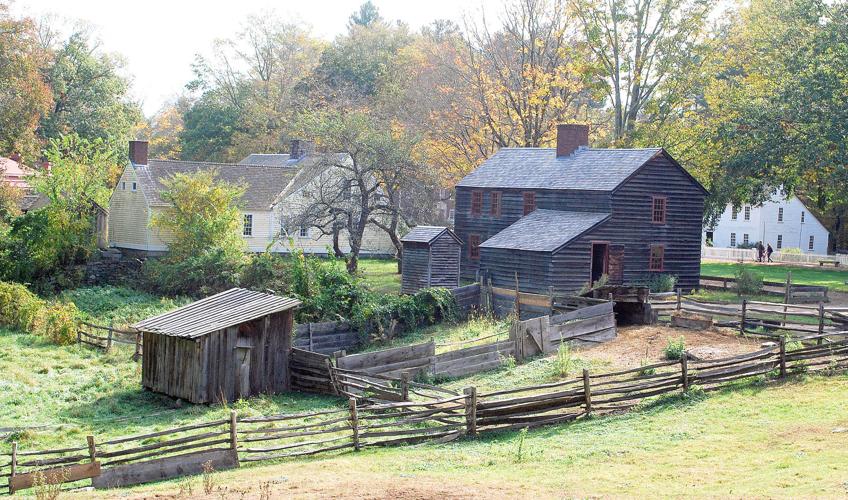
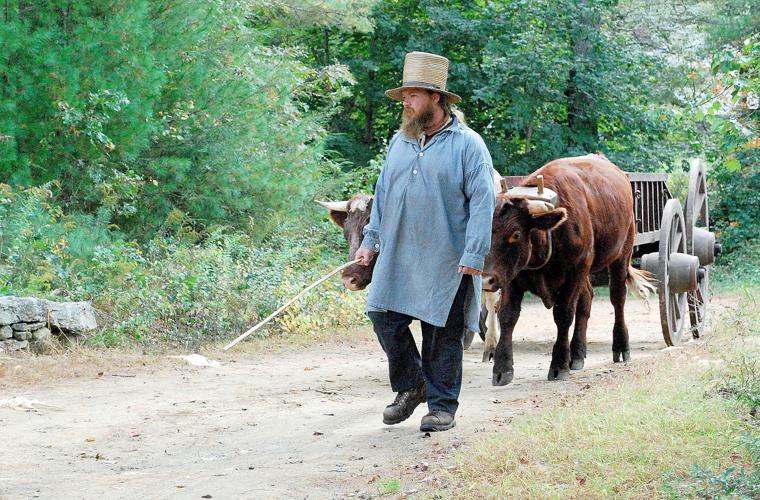
STURBRIDGE, Mass. – Old Sturbridge Village is an outdoor living history museum that shows visitors what life was like in the 1830s. It was a time that was a generation before the Civil War and the American Revolution was a distant memory.
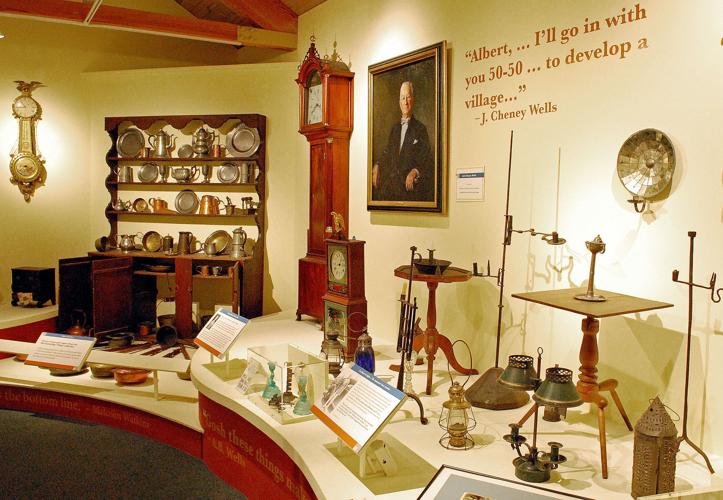
The Village was founded by industrialists and brothers Albert B., Channing M. and Joel Cheney Wells who lived in nearby Southbridge. Over the years the Wells family had collected thousands of artifacts relating to early New England including tools, utensils, furniture, glassware and clocks. Joel Cheney Wells focused his collecting activities on clocks and paperweights. The brothers decided to display their unique collection in a working 1830’s village so visitors could see how the items were originally made and used.
In 1936 the brothers purchased the former David Wight 153 acre farm in Sturbridge. The site was ideal for what they had in mind. It had sloping meadows, wooded hillsides and the Quinebaug River could provide water power. The property included a sawmill, gristmill and mill pond.
People are also reading…
Old Sturbridge Village opened on June 8, 1946. Since that day more than 21 million people have visited the village. The complex of more than 40 antique buildings that now cover more than 200 acres and contains such things as a blacksmith’s shop, sawmill and covered bridge.
Disaster struck the village on August 18, 1955 when Hurricane Diane hit the area. Gale force winds created flood waters that broke dams in the surrounding towns and flooded Old Sturbridge Village. The damage was estimated to be about $250,000 in 1955 dollars. In spite of all the destruction workers managed to re-open the Village in just nine days.
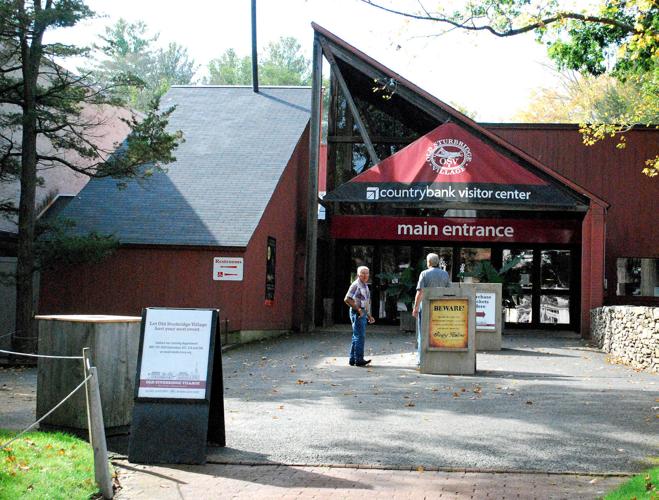
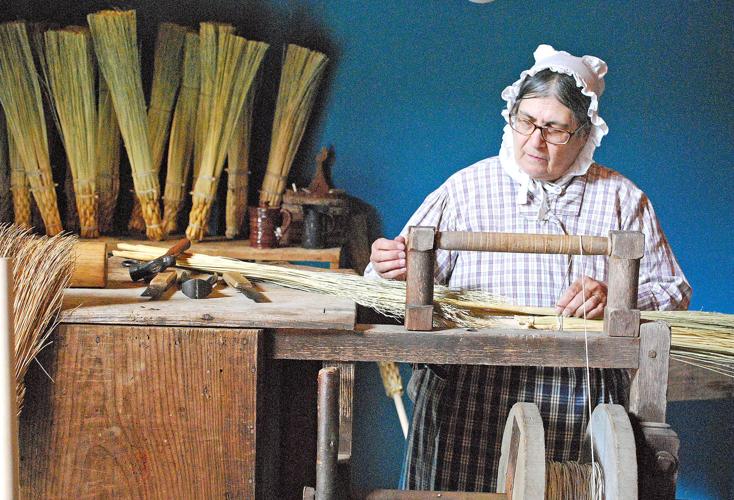
The first stop on a tour of Old Sturbridge Village is the Country Bank Visitor’s Center to purchase tickets and enter the village. On a recent tour of the village a costumed re-enactor was in the Visitor’s Center demonstrating how brooms were made back in the early 1800s. There are also displays in the Center showing the early beginnings of the Village. Attached to the Center is the Clock Gallery where examples of Early American clocks are on display including a large collection of intricately carved grandfather clocks.
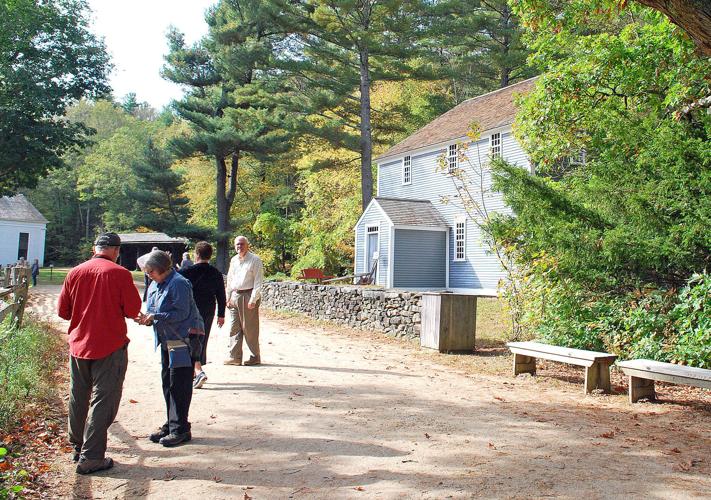
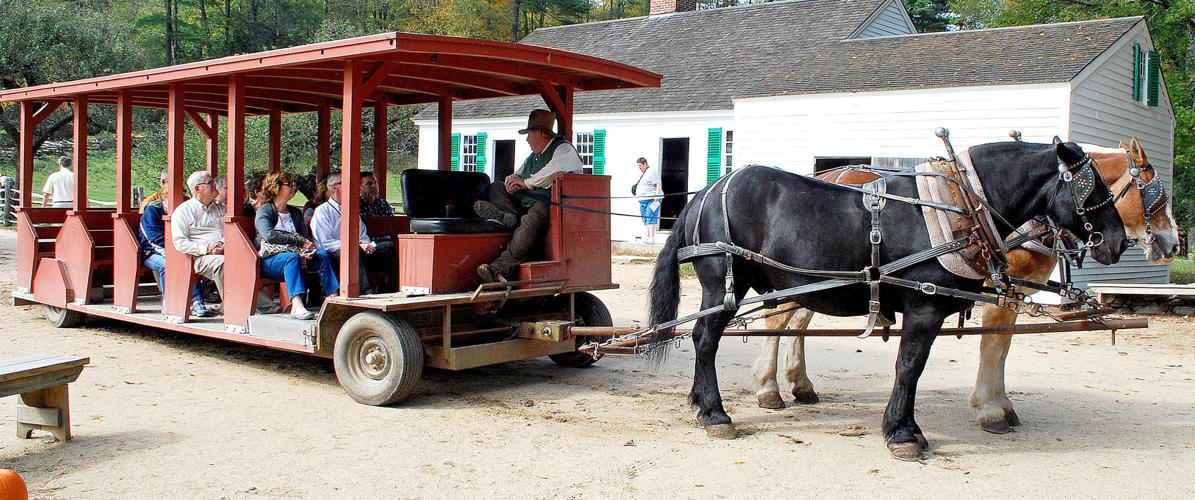
Visitors are given a detailed map of the Village to guide them along the paved walkways to the other buildings and displays. The Village can be seen by walking or by boarding a horse-drawn wagon with a costumed guide who relates the history of the Village and each of the buildings.
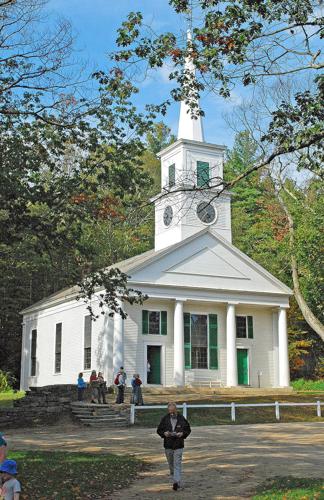
One stop on the path is the Village’s most visible building, the Center Meeting House. The Meeting House was once used as a church and belonged to a local Baptist Society. It was moved to Sturbridge in June 1948. The church was used for town meetings, elections, lectures and political events.
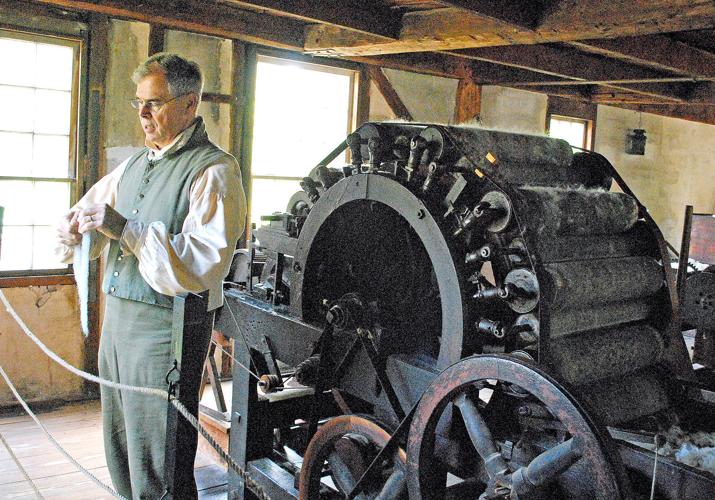
The Carding Mill at Old Sturbridge was built in 1840 and was used in South Waterford, Maine until it was moved to the Village in 1963. Carding mills prepared wool for spinning by brushing the fibers to evenly align them. The machines were built mainly of wood and brushed the wool into rolls for spinning or to be used as batting for quilts. Like many machines of that time they were powered by water. Although there were many such mills in New England the one at Sturbridge is the only surviving water powered carding mill in existence.
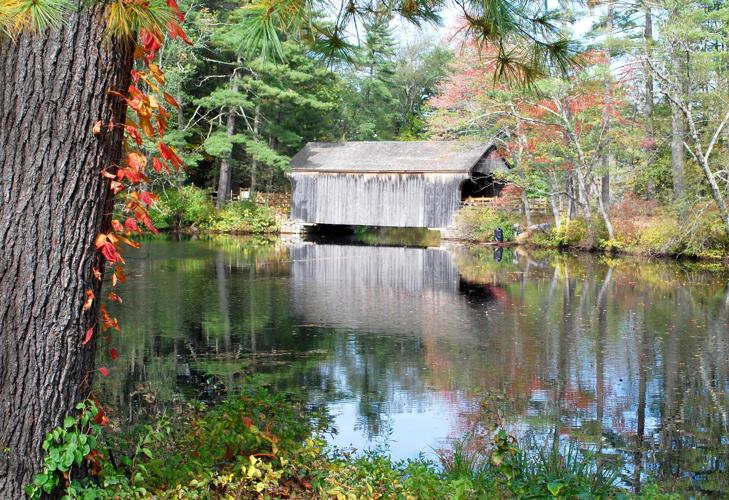
One of the most picturesque places at Old Sturbridge Village is the Vermont Covered Bridge. More than 1,000 covered bridges were built in New England in the 19th and 20th centuries but today less than 200 survive. The covered bridge in the Village is one of only 12 left in Massachusetts. It is especially unique because of its lattice truss design.


